A wooden door slides open in a narrow Gion street. A woman steps out in a silk kimono, her collar low on her neck, her steps short and precise. She is a geisha, and she is not a courtesan. A geisha is a professional artist who trains for years in dance, music and conversation, then entertains guests at private banquets. Her work is performance and hospitality, nothing else.
Key points
- Geisha means "person of the arts", from the kanji 芸 (art) and 者 (person).
- The job became exclusively female around 1800; the first geisha were men.
- A maiko (舞妓) is an apprentice, recognizable by brighter kimono and a longer obi.
- Prostitution was excluded from the profession in the 18th century; the confusion comes from shared districts and Western fiction.
- Around 200 geisha remain today, mostly in Kyoto's hanamachi districts.
Geisha word signification
The word "geisha" (芸者) joins two characters: "art" and "person". It literally means "person who practices the arts". A geisha is first of all a Japanese artist.
She has the skills needed to entertain her clients while carrying forward old traditions. Because of her elegance and her strength, the geisha belongs to the world of flowers and willows, the karyūkai (花柳界).
Evolution and origin of geisha's profession
The idea of the artistic muse appeared in 794, under Emperor Kamu, who invited dancers to entertain samurai and warriors. That pairing of art and entertainment later produced the geisha we know.
1. Geisha origin
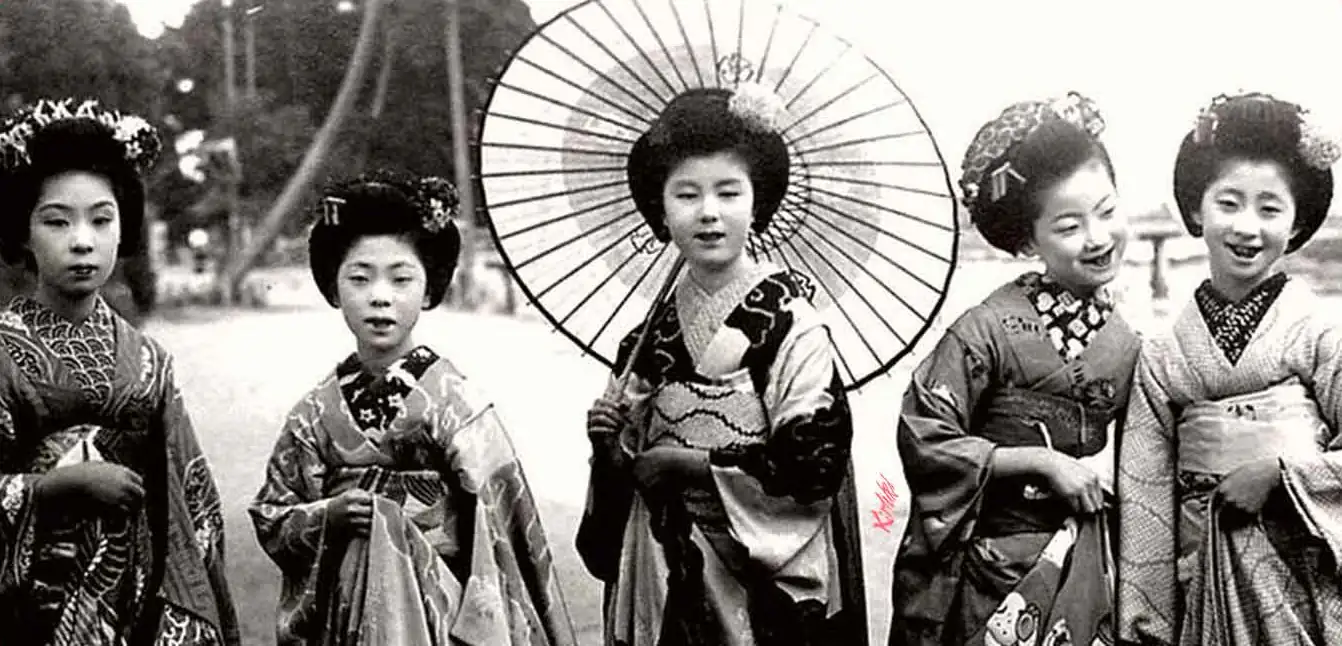
The trend developed during the Edo period in the old capital. Bit by bit, the dancers learned other talents: singing, poetry, classical music, the art of conversation. They were often invited to banquets, the ozashiki (お座敷), as companions who served sake and entertained a noble clientele.
The first official geisha were men. Women called onna geisha joined the trade until they became the majority. Only around 1800 did the profession become exclusively female.
2. Geisha profession
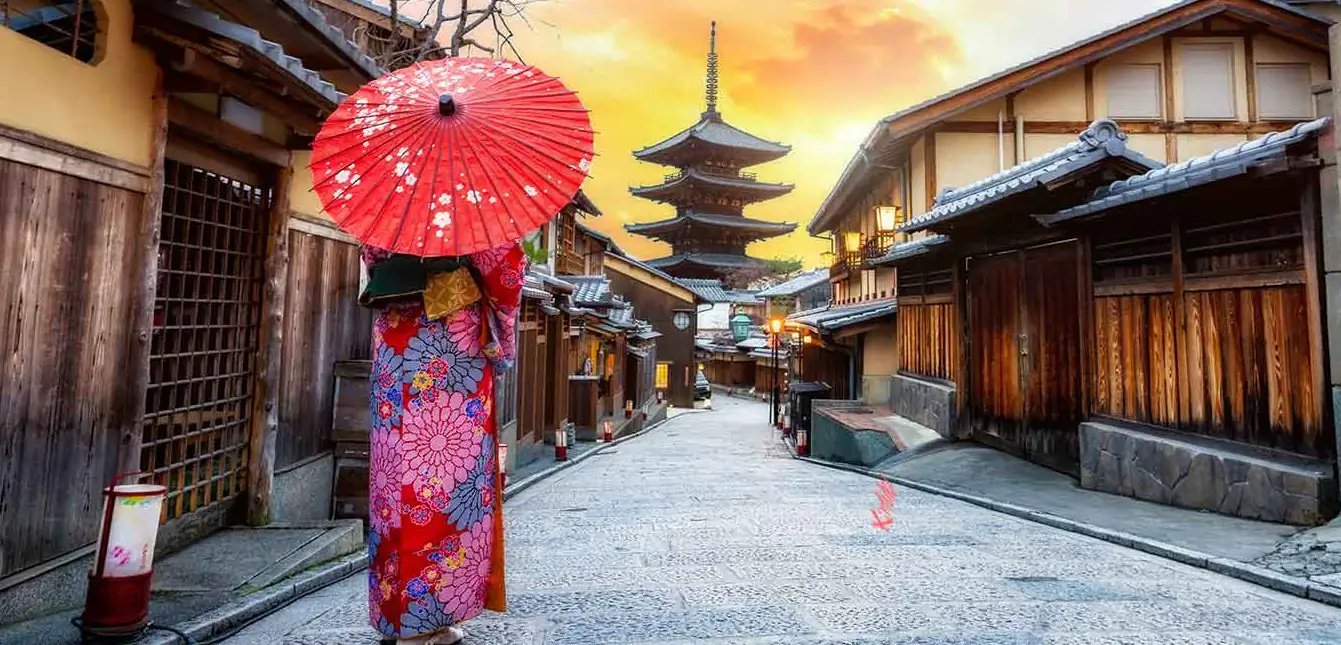
Over the years the profession was officially recognized, with a very strict code of conduct. Its growth is tied to the rise of tea houses.
There were hundreds of thousands during the Edo period and up to the Second World War. Geisha are now rare. Estimates give about 15,000 in the 19th century and barely 200 today, mostly in the Gion district.
During the war the government closed the flower cities and sent geisha to work in factories. Young women are also now required to finish secondary school before entering the trade.
The number of professionals has fallen sharply, yet media attention has brought a modest revival. The number of apprentice geisha, the maiko (舞妓), has been rising again.
The silhouette that survives from all this is the kimono itself: a long straight robe closed left over right, held by a wide belt. It is the one piece of geisha dress that anyone can wear today, and the one customers ask me about most.

What exactly does a geisha do?
The geisha, also called geiko, is a hostess who masters the traditional Japanese arts. She embodies Japanese folklore and culture with refinement. Her appearance is controlled to the detail: worked make-up, an impeccable bun, a silk kimono (着物), and a fan she handles brilliantly.
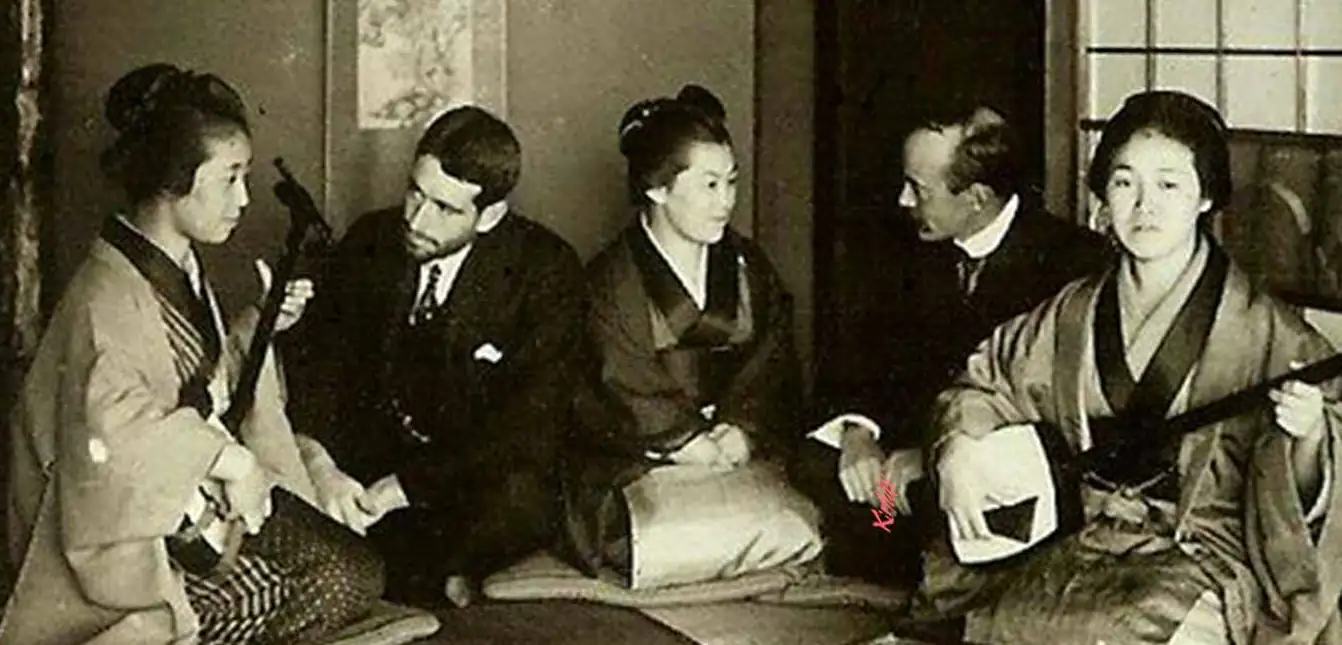
1. Geisha tea ceremony
These hostesses have every quality needed to make a guest's evening pleasant, for the eye and for the mind. They work mainly in tea houses, the ochaya (お茶屋), and in restaurants, hosting banquets and entertaining wealthy customers.
They move inside circles of influential men and guard Japanese customs, which gives them a real role in society. The profession is highly respected, and the company of a geisha stays a privilege.
2. Geisha dance
The geisha masters dance, singing and music. She plays the shamisen (三味線), a three-stringed lute, and the taiko (太鼓), a drum. The tea ceremony, party games, poetry, calligraphy and conversation hold no secret for her. Her general culture is wide. Until the 20th century, the geisha was treated as a fashion ambassador.
The Miyako Odori festival is one of the best places to watch geisha dance. It takes place in Kyoto over the first three weeks of April.
Geisha code of conduct
Many rules govern a geisha's life. Her duty of refinement means she controls every gesture to respect a strict code. Young women are not free to go where they want or do what they want, because precise criteria bind them to tradition.
1. Geisha dress code
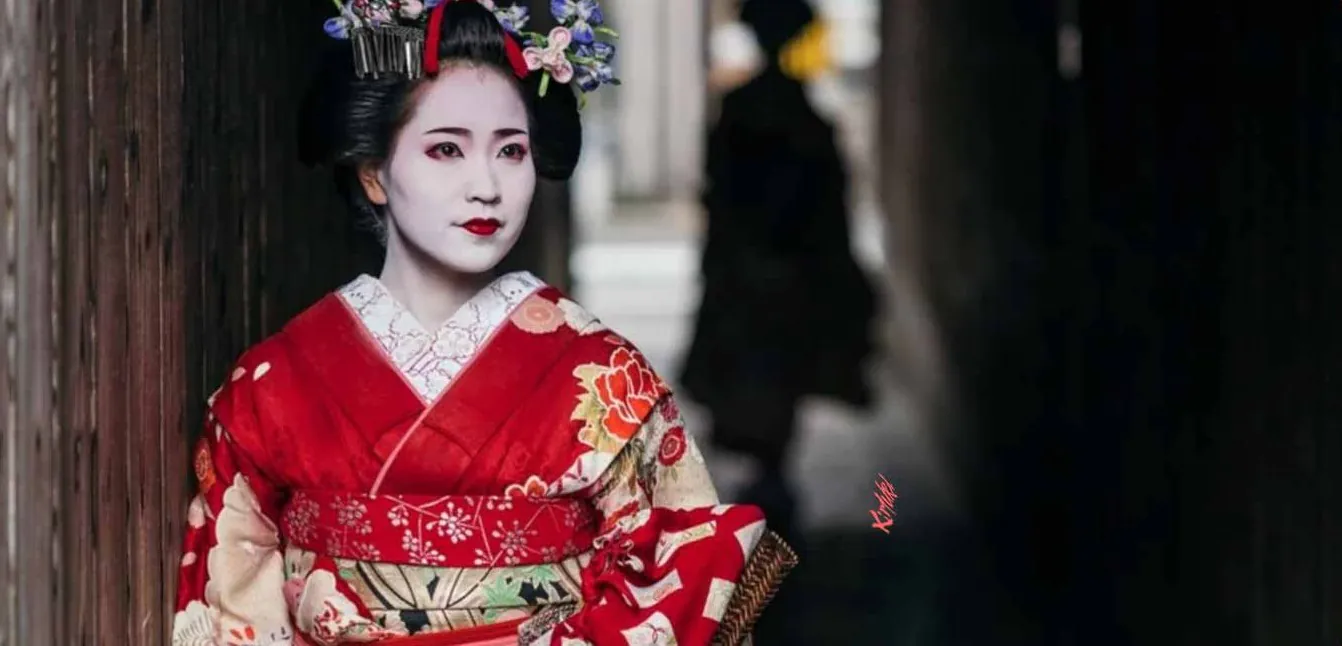
Every detail of the outfit reveals rank and experience. A full ceremonial set can weigh more than 20 kg. The maiko wears a colourful kimono with a wide, showy belt, the obi (帯), while the geiko wears a soberer outfit with quieter patterns. The sandals, geta (下駄), have wooden soles of varying thickness. That thickness signals rank, and so does the colour of the straps.
One practical note for anyone assembling a geisha-inspired outfit: Japanese sizes run about one size smaller than US and EU sizes. A US M is usually a Japanese L. Check the shoulder and sleeve measurements rather than the letter on the label.

2. Geisha hair
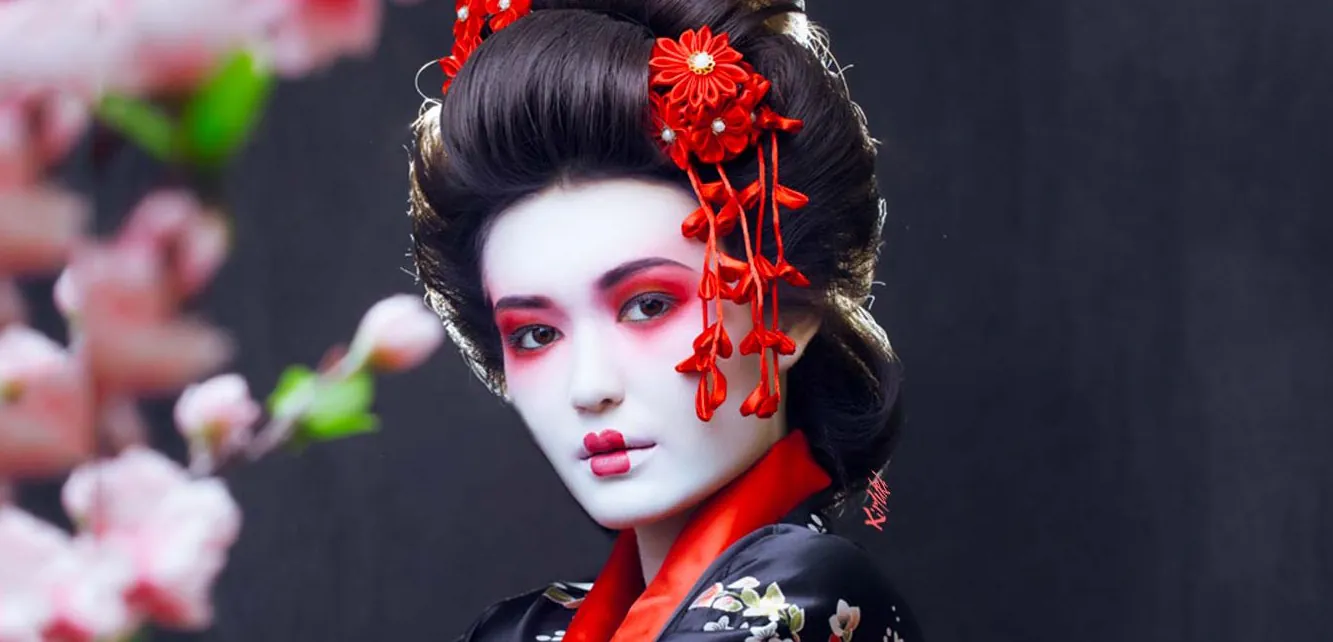
They wear long black hair pulled up into a traditional bun, held by pins and dressed with floral ornaments. Most geisha today use a wig to avoid damaging their hair and to get a clean result without hours of work. The hairstyles of experienced geisha are less elaborate than those of the maiko.
3. Why is a geishas face white?
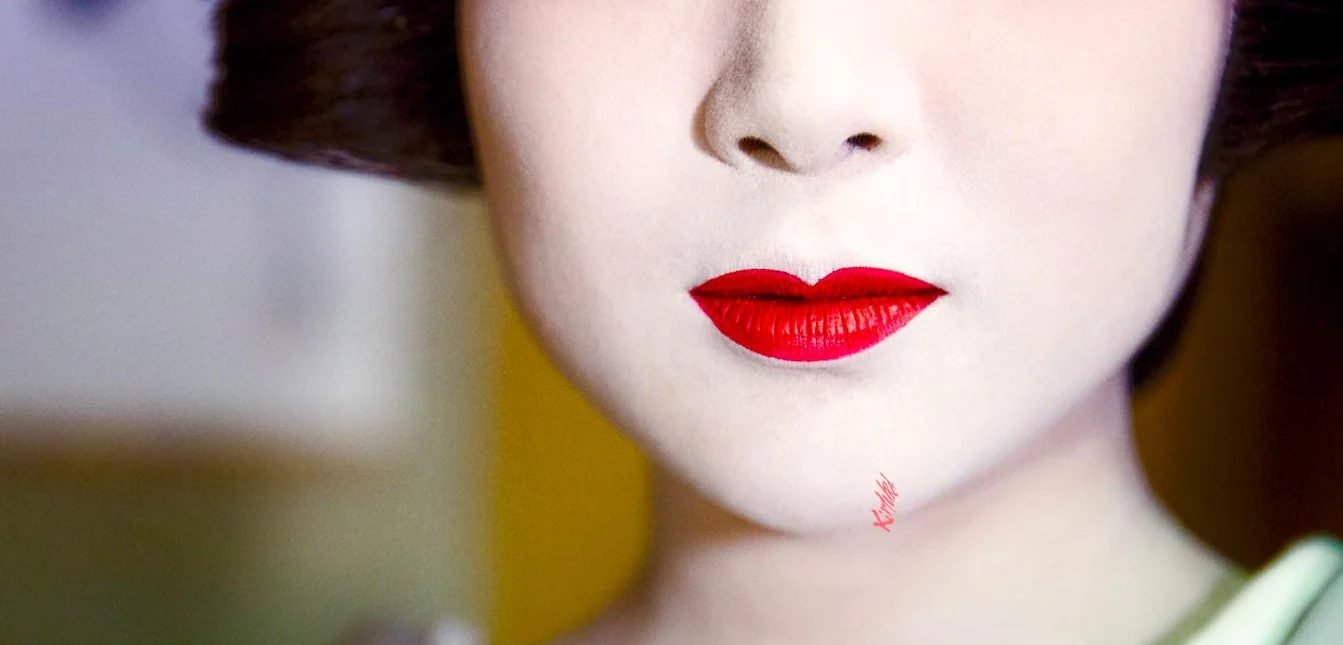 Geisha make up with red lips
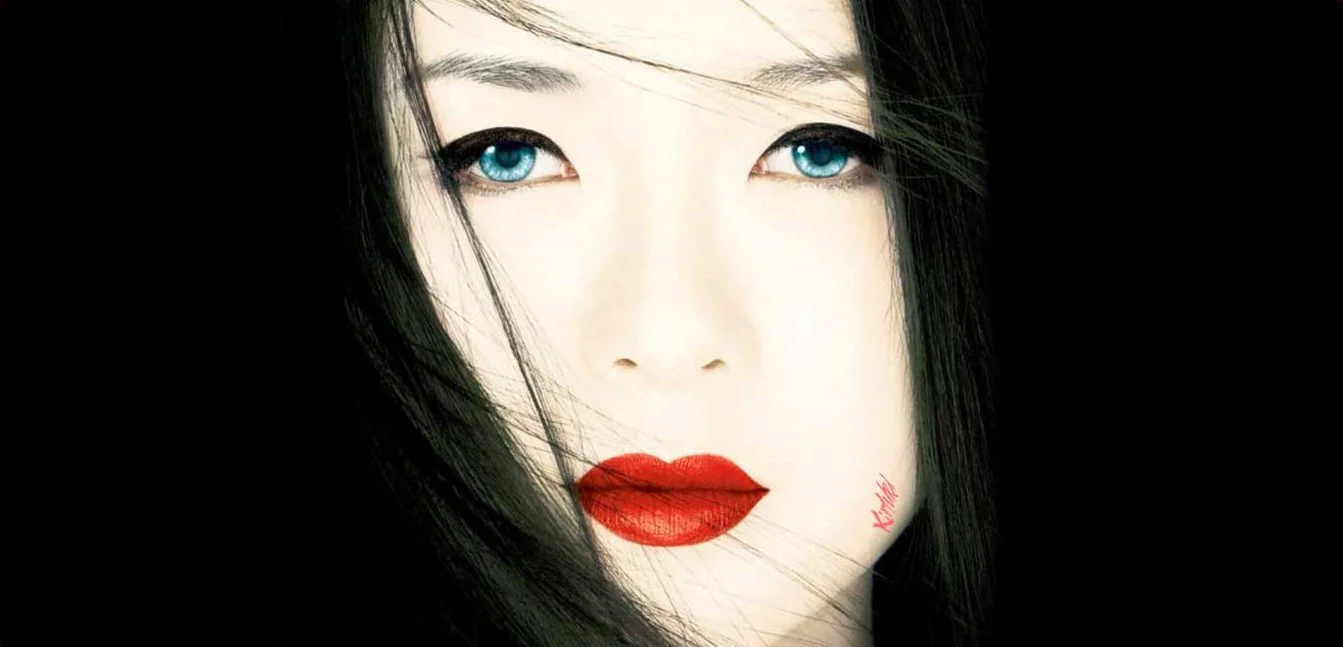
The geisha, and above all the maiko, wears a very recognizable make-up. The complexion is covered in white rice powder, an echo of Japanese masks. The mouth is partly tinged red. The eyes are lined in black, with touches of red at the corner of the eyelids and on the brows. In the past, some geisha blackened their teeth, which was then read as a sign of beauty. Tastes change.
The make-up of an experienced geisha is more discreet, so her natural features show. The maiko leaves her upper lip white; the accomplished geisha colours only the lower lip.
4. What is a geisha house called?
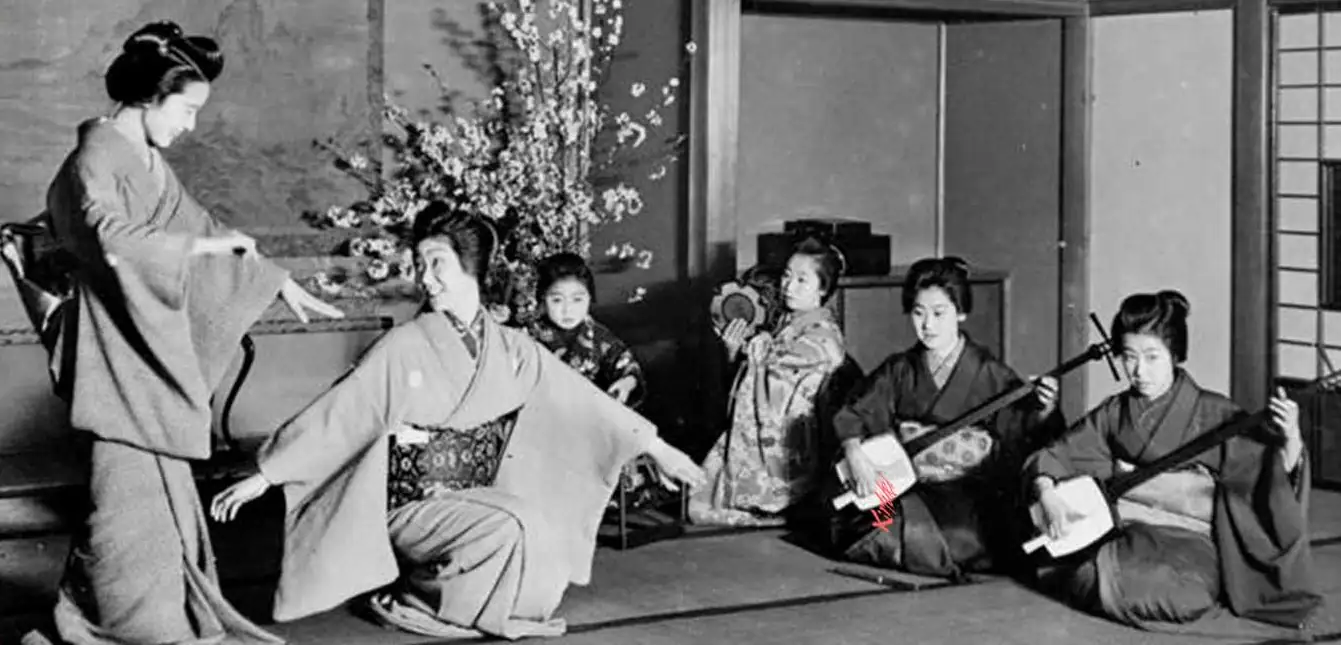
Geisha generally live in an okiya (置屋), a lodging house, inside the flower cities, the hanamachi (花街), of Kyoto. Each house has a mother, the okasan, and several geisha under the same roof, sometimes with staff for cooking and cleaning. The okasan educates the young women and takes them under her wing during training.
5. A typical day of a geisha
During the day, a geisha works on her artistic and cultural skills so she stays at her best. She also spends long hours on her appearance. In the late afternoon she goes discreetly to the tea houses, taking the small streets, to welcome her guests.
Geisha training
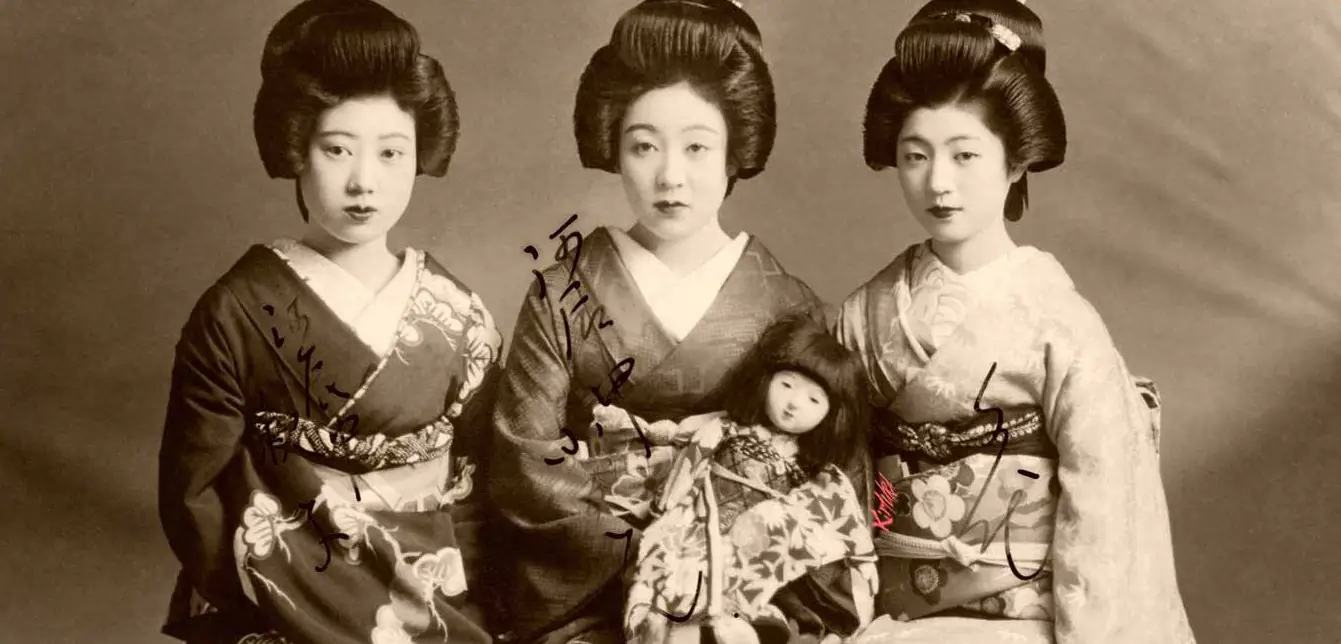
Many Japanese girls dream of becoming a geisha. The profession asks for at least five years of training and a very strict apprenticeship.
In the past, little girls entered the okiya from the age of six. That era is over. A candidate must now be at least 15 and have completed secondary school.
For five years, the maiko learns every code attached to the profession: etiquette, the art of dressing, make-up, how to stand, move and sit with elegance.
She also studies traditional arts: dance, singing, tea service, flower arranging, literature. By the end of the training, a geisha is fluent in all of them. This slow, patient improvement is Kaizen in its oldest form.
The maiko accompanies the geiko through daily life and appointments. The bond with her elder is strong, and it is how she earns her place in a very closed community.
Are there any real geishas left?
Geisha and maiko are found mainly in Kyoto, and more precisely in hanamachi such as Gion, Pontochō, Kamishichiken and Miyagawachō.
Planning a trip to Japan and hoping to meet one? These women have become rare, but you can still see them, above all in Gion where they live and work.
If your budget allows it, book the services of a geisha through a tea house, a restaurant or a hotel. Good contacts often help, since most clients arrive by recommendation.
Otherwise you may cross paths with one while walking through Gion in the evening, on her way to an appointment or heading home after work. Please do not block her path or grab her sleeve for a photo. She is going to work.
Public and tourist performances are another option. If the old capital is not on your route, you can also find hanamachi in Tokyo: Asakusa, Shimbashi or Kagurazaka.
Is a geisha a concubine?

No. Geisha are often reduced to prostitution in Western imagination, yet the practice was officially excluded from the profession in the 18th century.
The confusion has several sources. Geisha and courtesans shared the same districts, the kagai, streets dedicated to pleasure. They worked in the same tea houses and served the same wealthy clientele.
Sexual favours were possible even though they sat outside the trade. In the Edo period, granting such favours or selling a geisha's virginity at a high price did happen.
Some high-ranking courtesans also dressed and made themselves up in a way close to the geisha, which blurred the line further. One reliable marker: a courtesan tied her obi at the front, a geisha ties hers at the back.
Literature and cinema finished the job. Memoirs of a Geisha spread the mix-up to a global audience.
Prostitution is not part of the duties of today's geisha.
How much does a geisha cost?
The rate is high. A banquet appearance is billed by the hour, through the tea house, and a private performance costs several times more. The bill arrives after the evening rather than at the door. Consider it a privilege, and an evening you will remember.
Geisha are true artists, and they keep making Japanese people and visitors dream. You never know: you may meet one on your next trip to Japan.
FAQ
Can geisha have lovers?
Yes. A geisha's private life is her own, and relationships are not forbidden. Historically, some had a patron, the danna, who supported their career costs. That arrangement was financial and social rather than part of the job description.
Why can't geisha marry?
A geisha who marries traditionally retires from the profession. The rule is professional, not legal: her availability for evening engagements and her status as an independent artist are central to the work. Some return to the trade later, after a marriage ends.
Why do girls want to become geisha?
Most are drawn by the arts themselves: classical dance, shamisen, the discipline of a craft learned over years. It is one of the few careers where traditional Japanese performance is a full-time living. The training is hard, and many candidates leave during the first year.
What is the difference between a maiko and a geiko?
The maiko is the apprentice, usually between 15 and 20, and she wears brighter kimono, a long trailing obi and thick-soled okobo sandals. The geiko is fully trained, dresses in quieter colours and wears a wig rather than styling her own hair. If the outfit is loud, you are looking at an apprentice.