
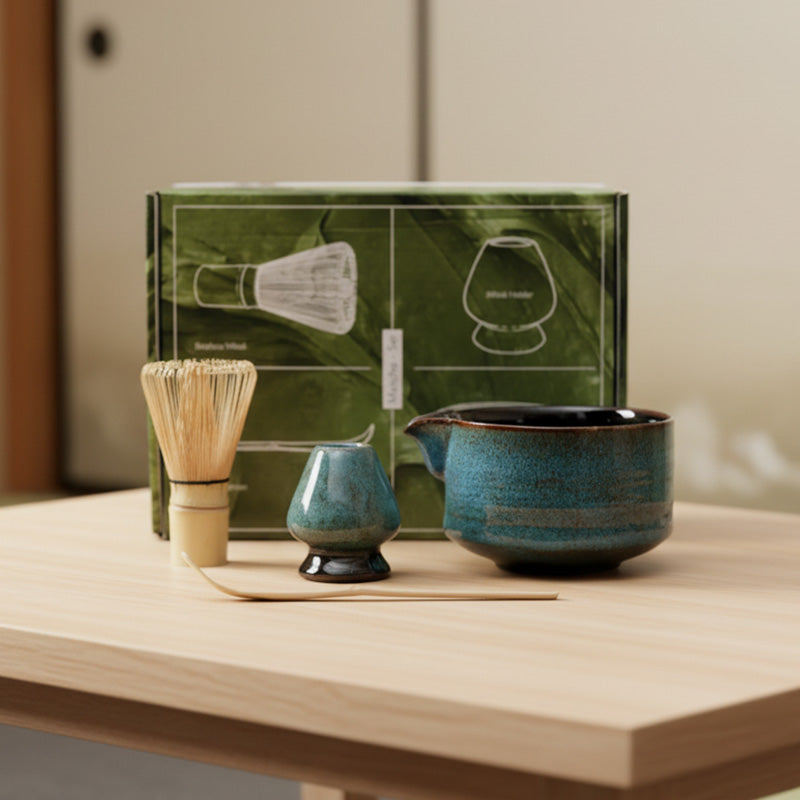
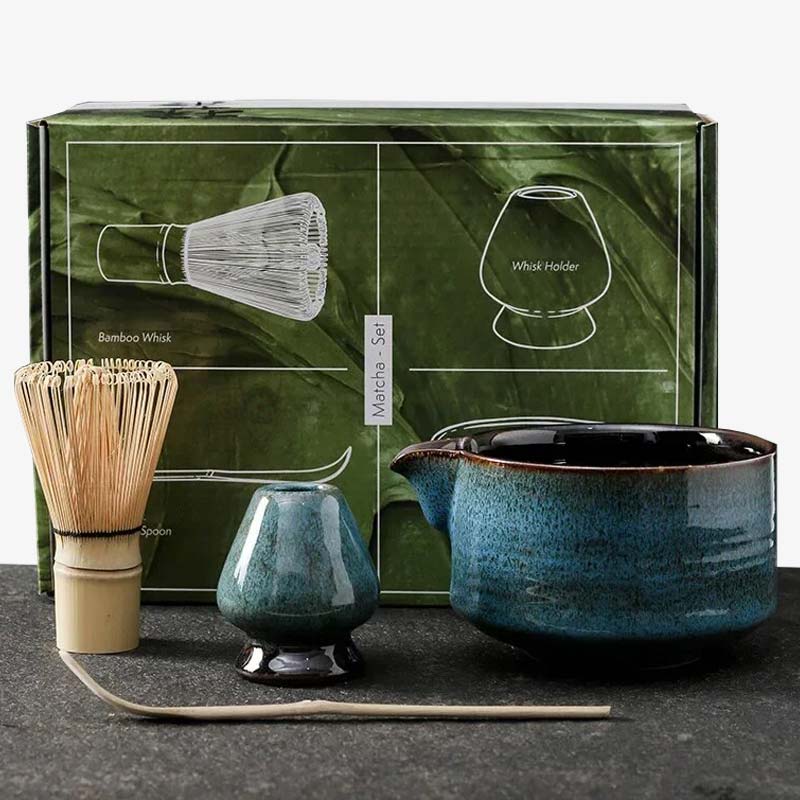
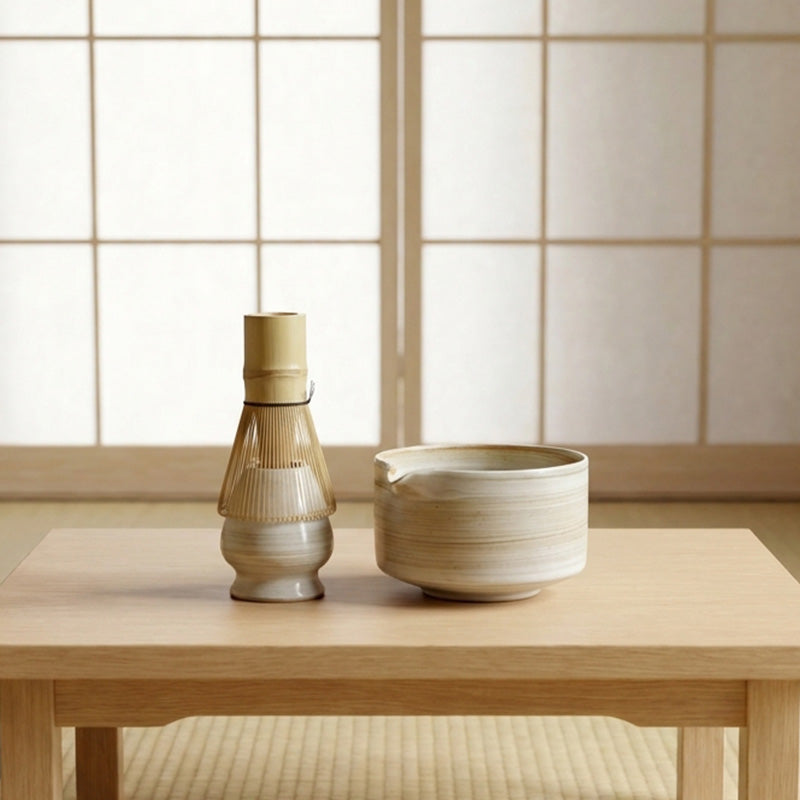
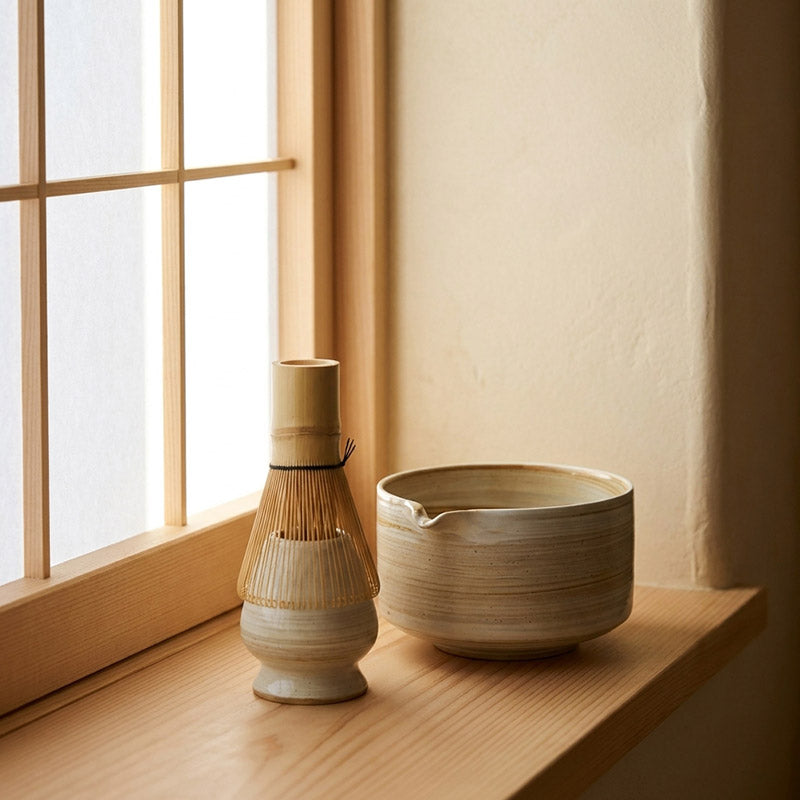
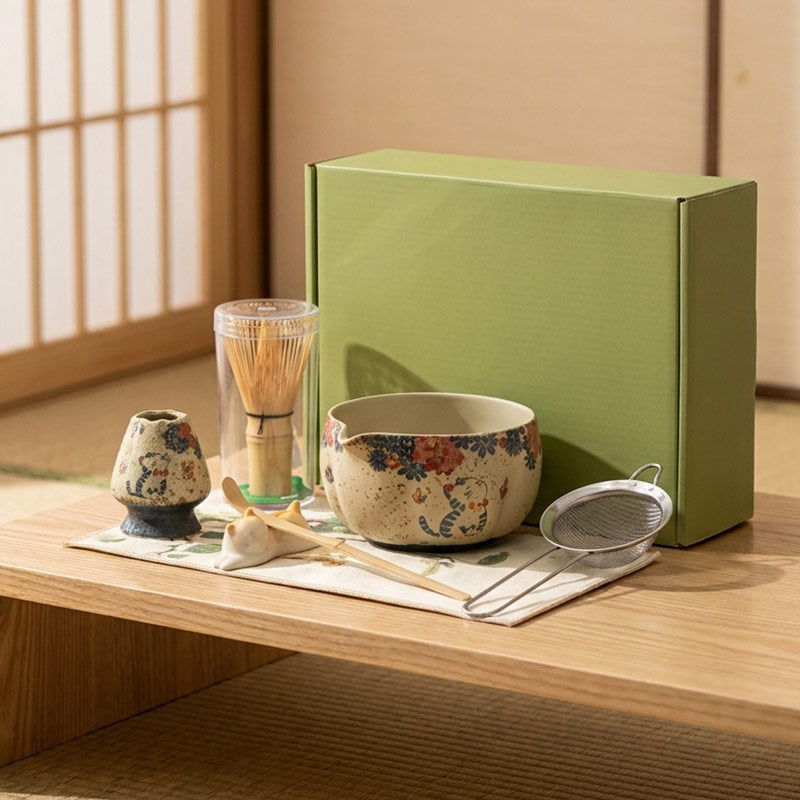
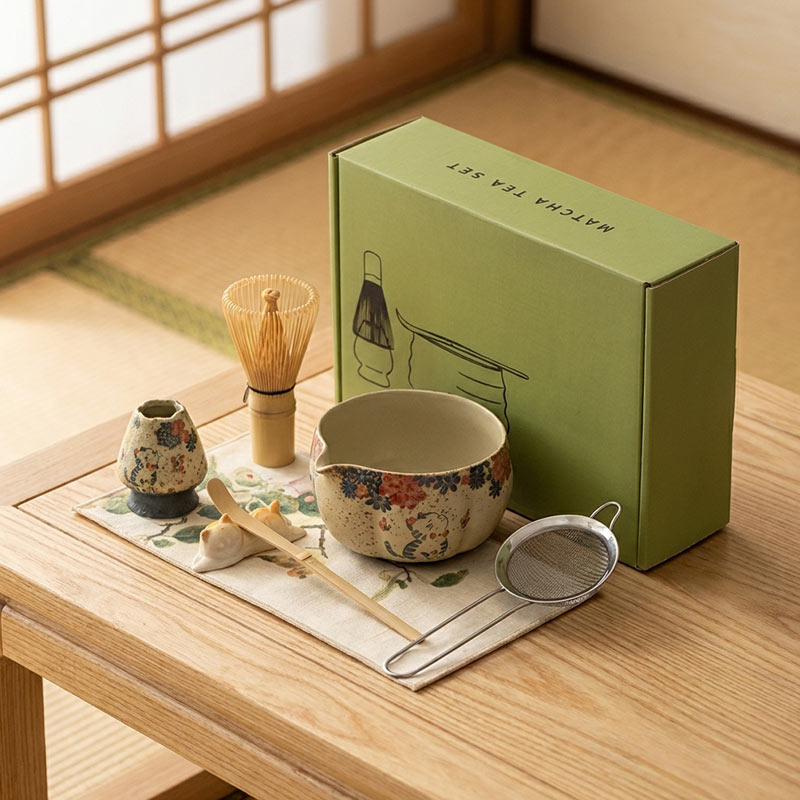
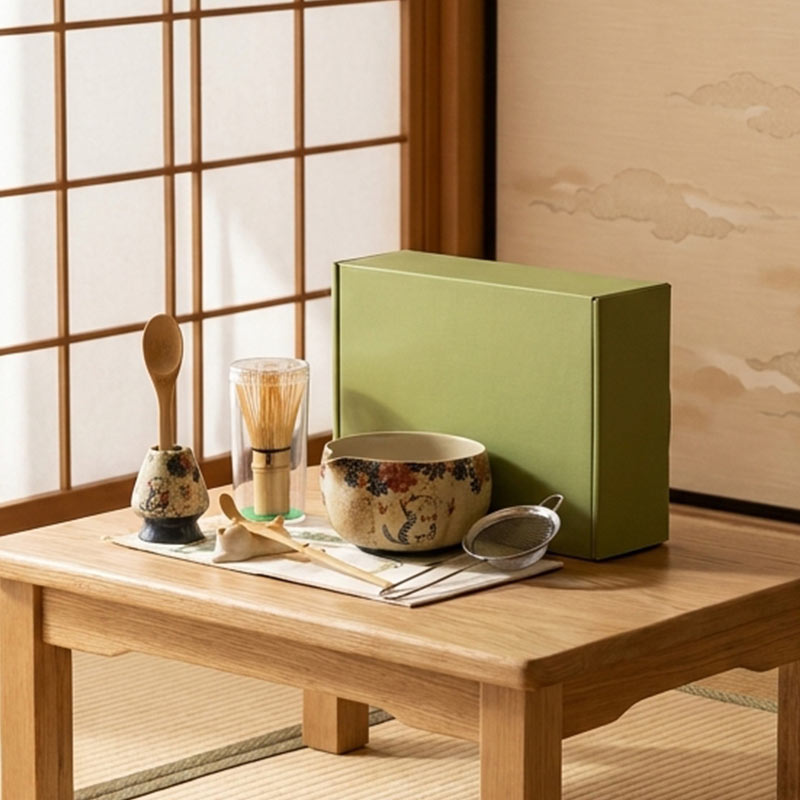
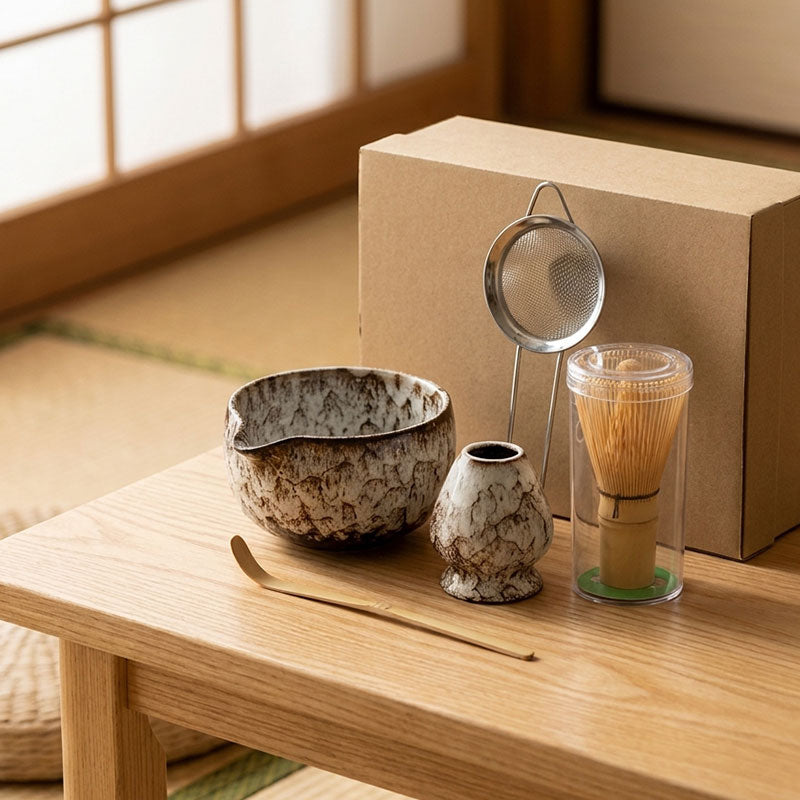
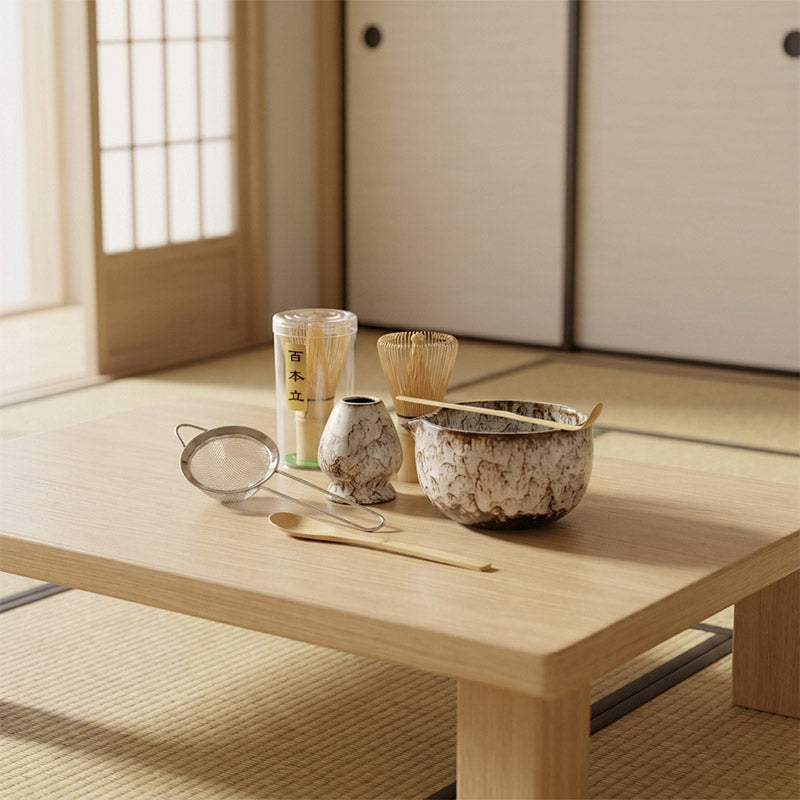
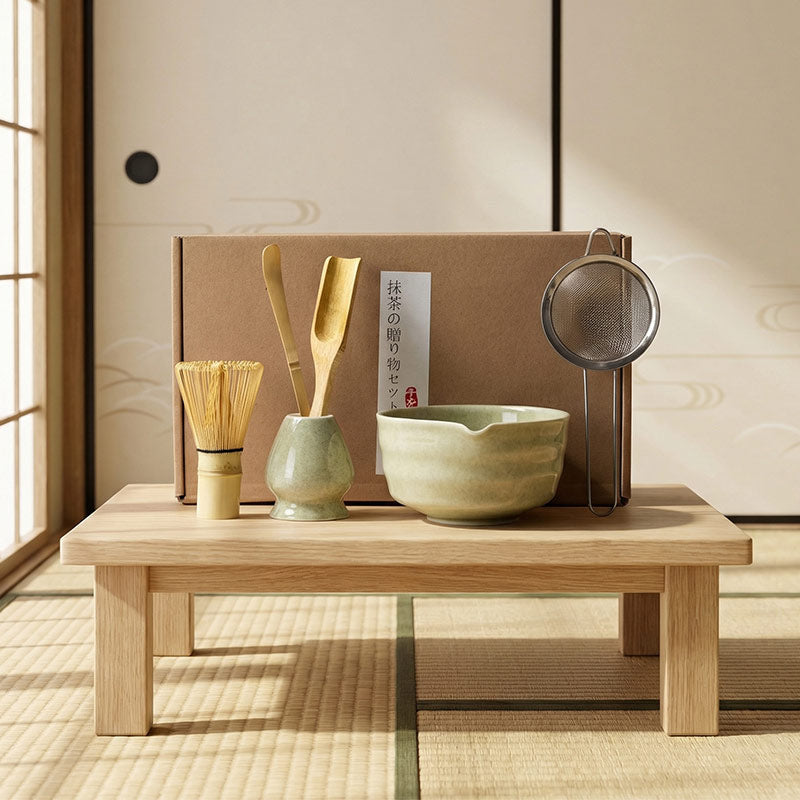
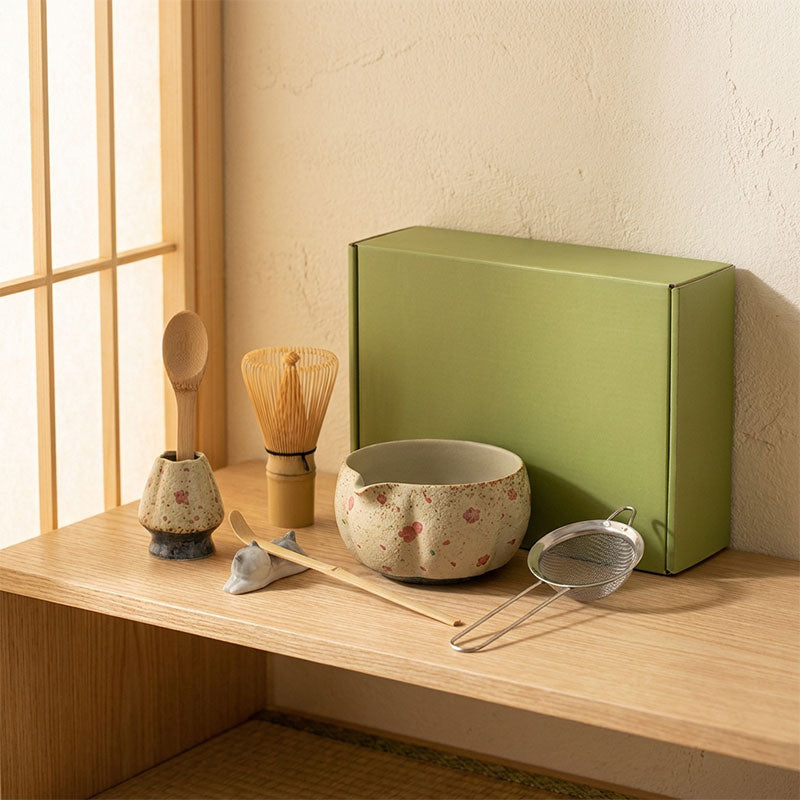
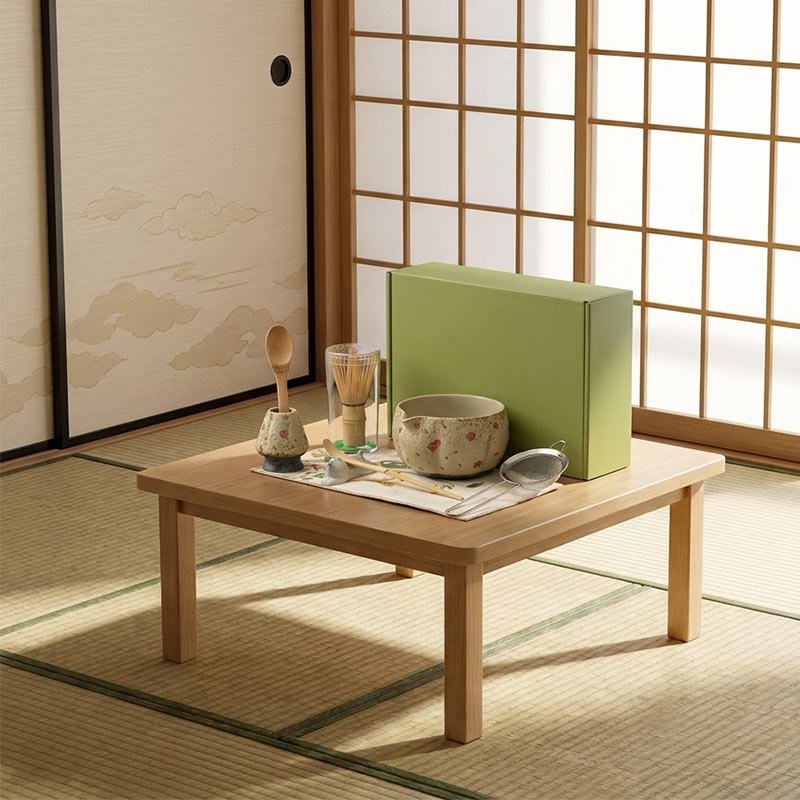
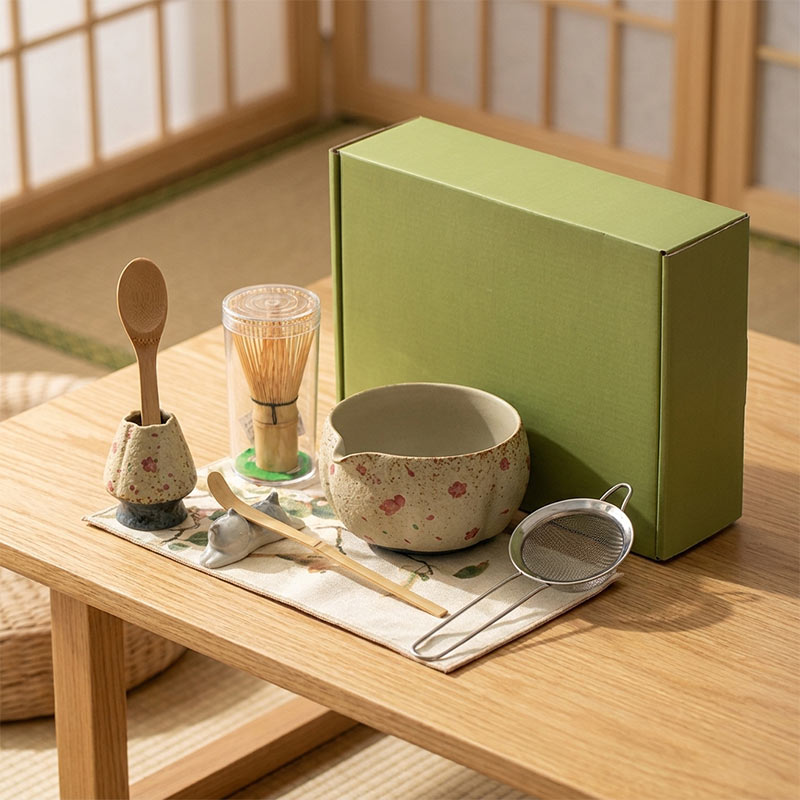
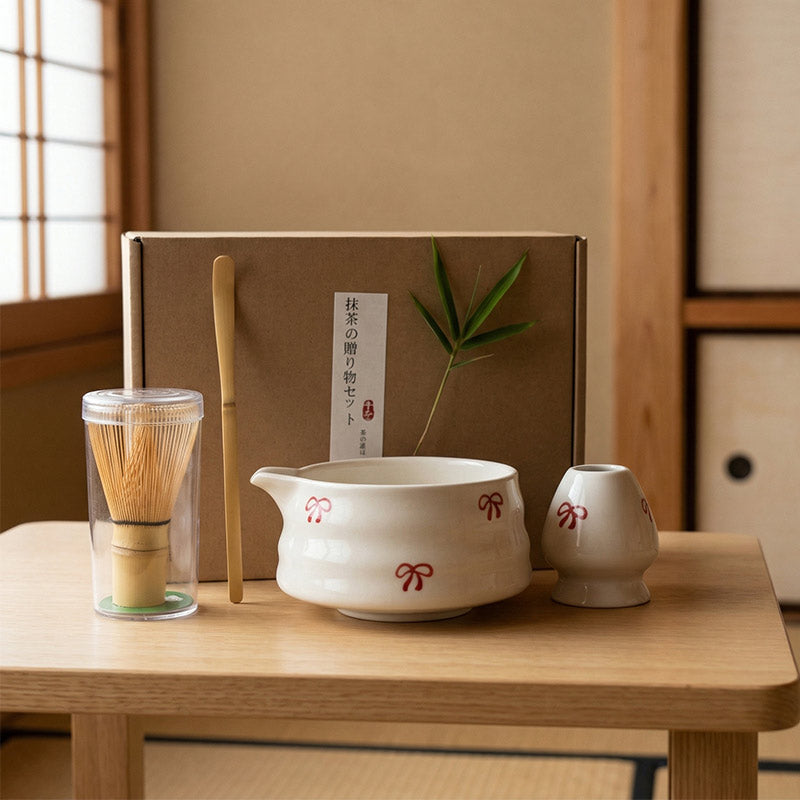
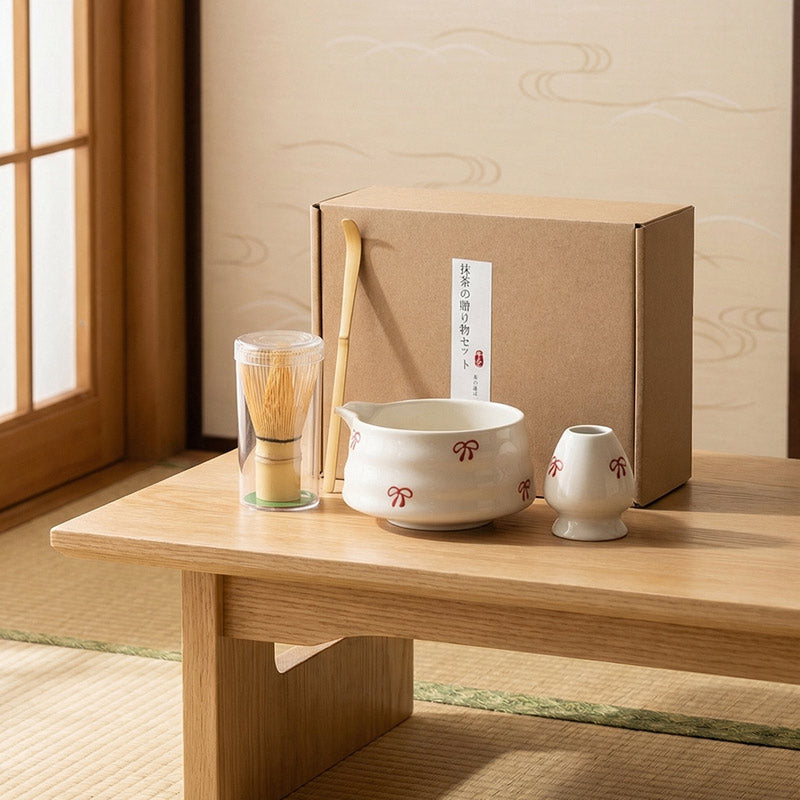
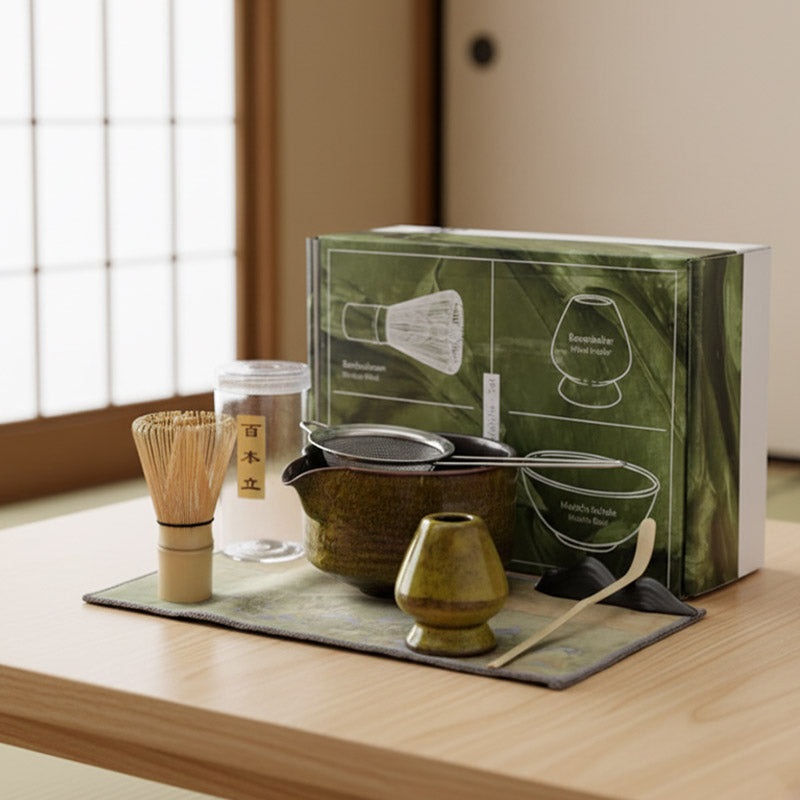
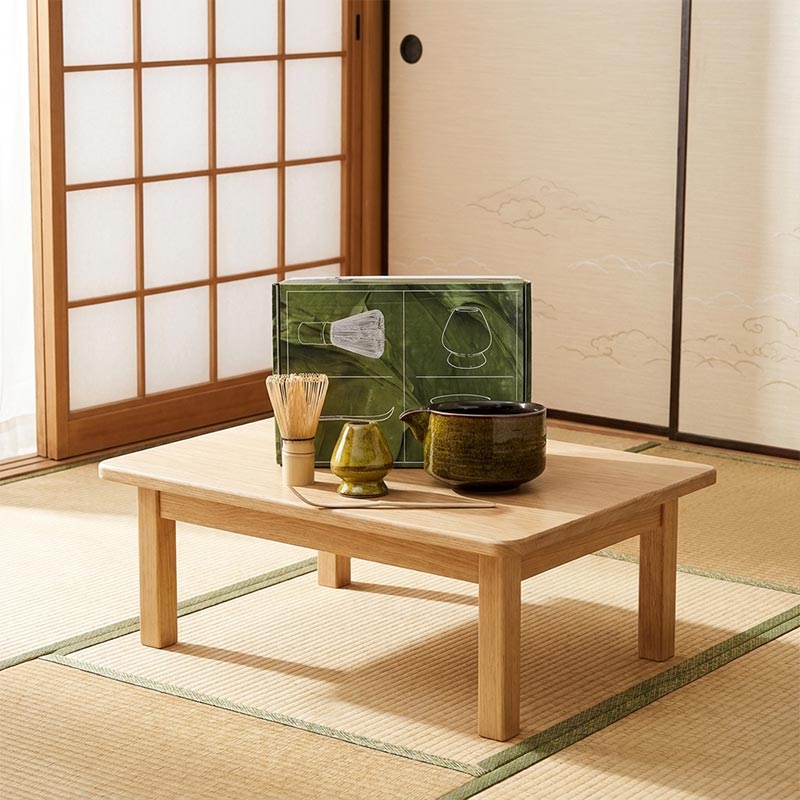
A matcha set brings together the few tools needed to whisk powdered green tea the way it has been prepared in Japan since the chanoyu tea ceremony took shape: a wide bowl, a bamboo whisk, a scoop and a rest. Each piece has one job, and together they turn a simple cup into a slow, deliberate ritual at the kitchen counter or on a low table. Served with sweets on small plates from the Japanese Tableware collection, it becomes a full moment rather than a quick drink.
Read more
What goes inside a Japanese matcha set
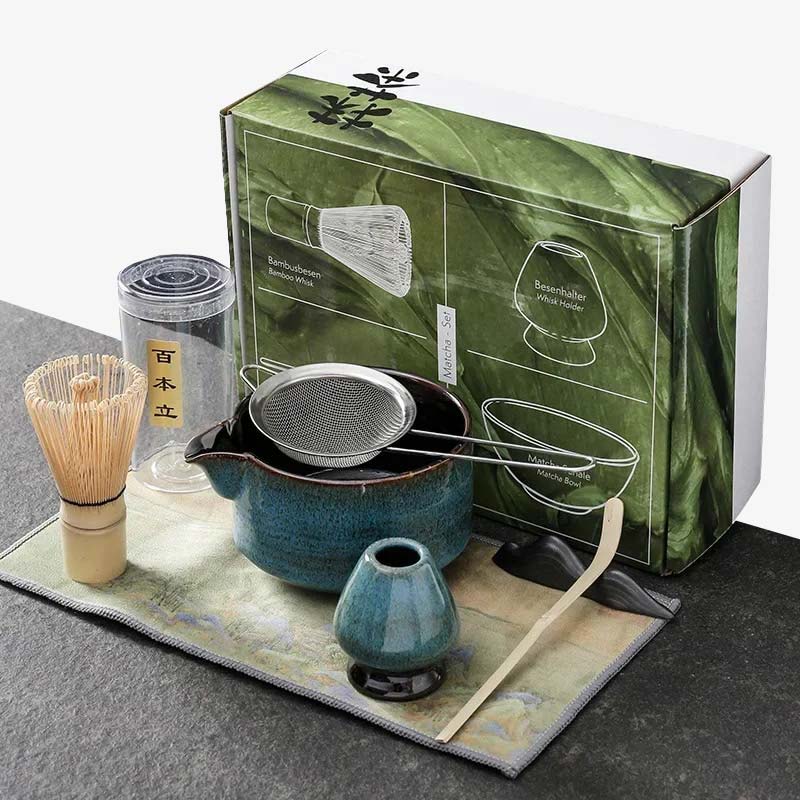
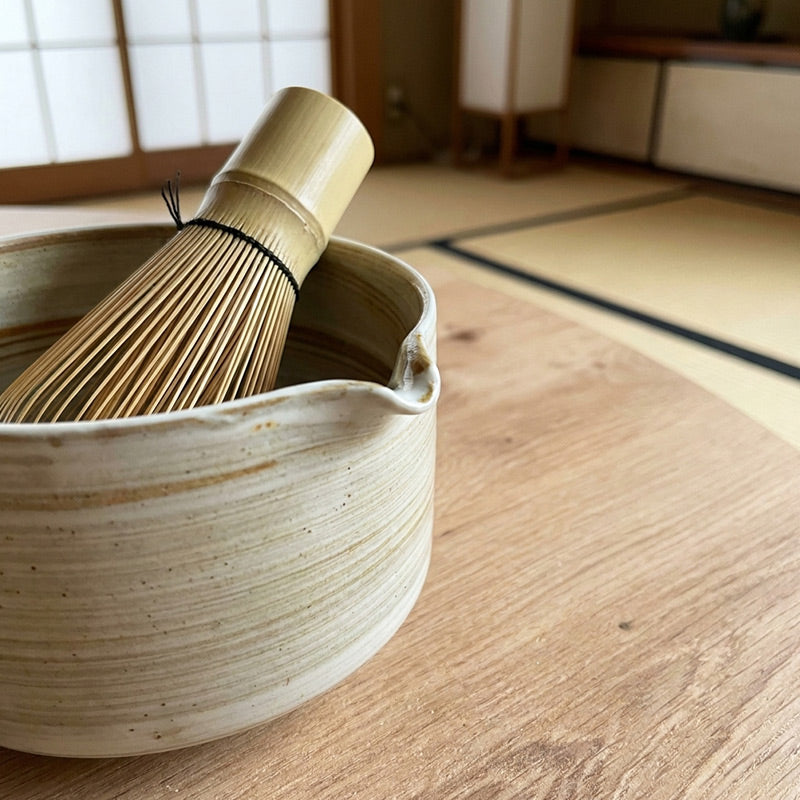
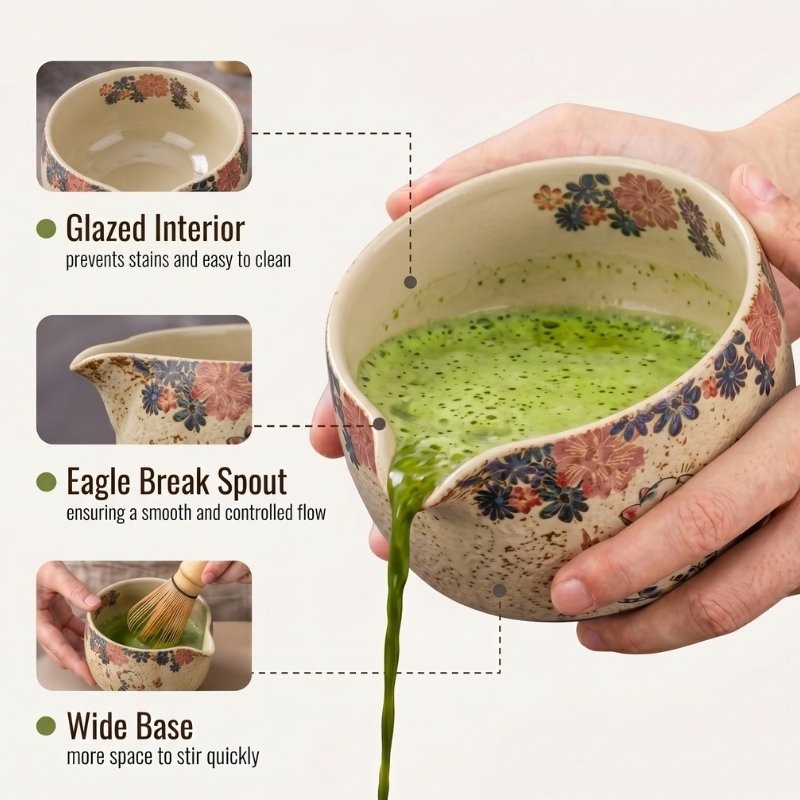
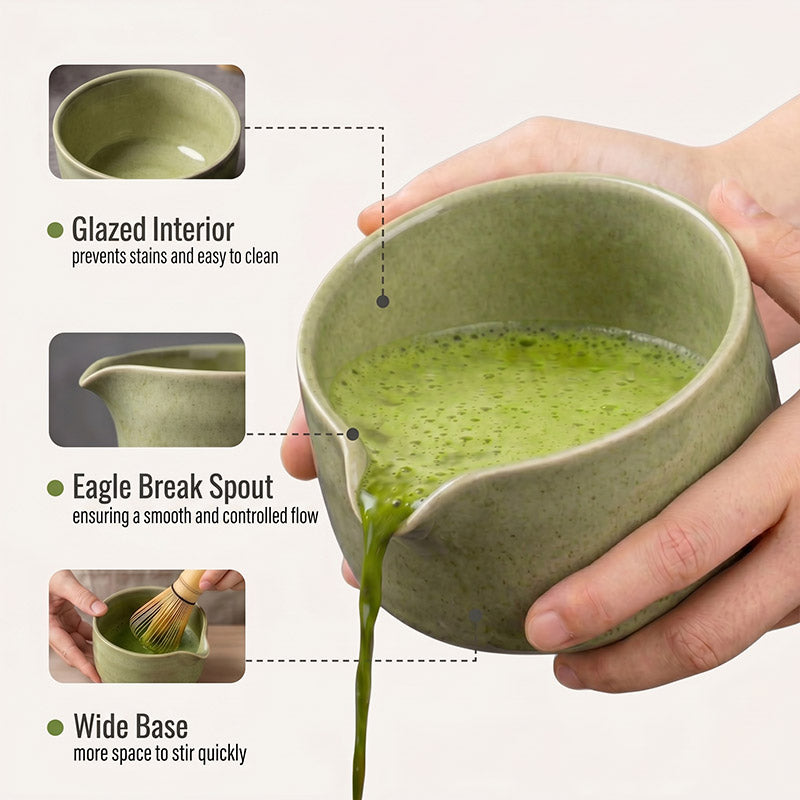
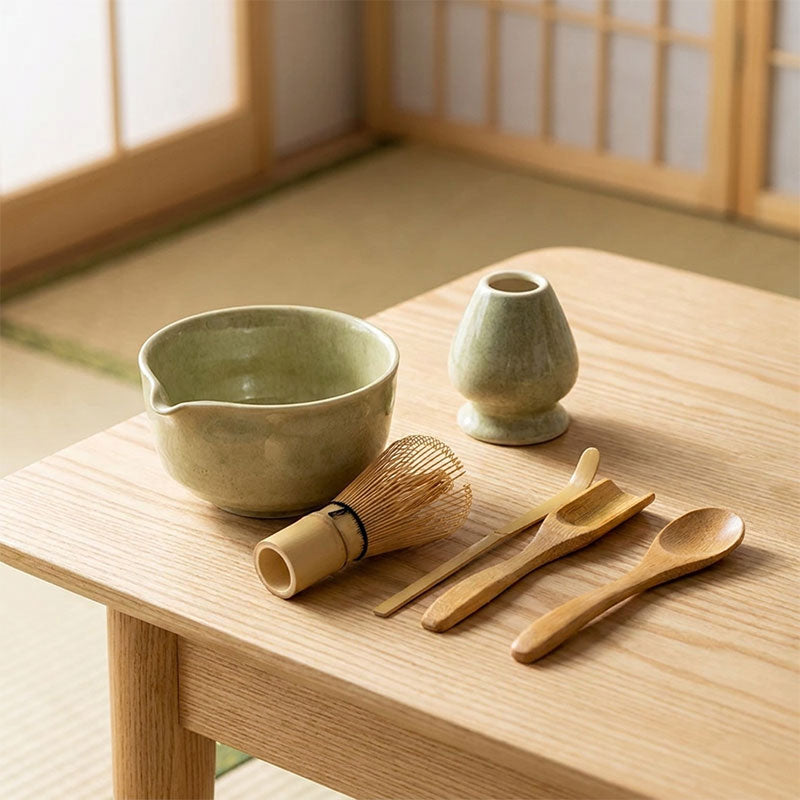
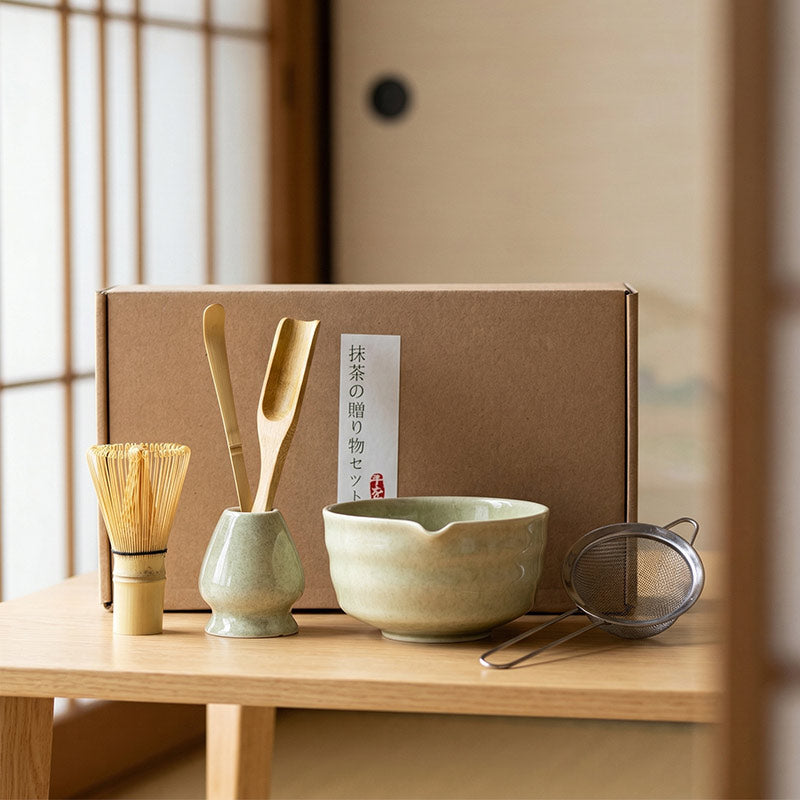
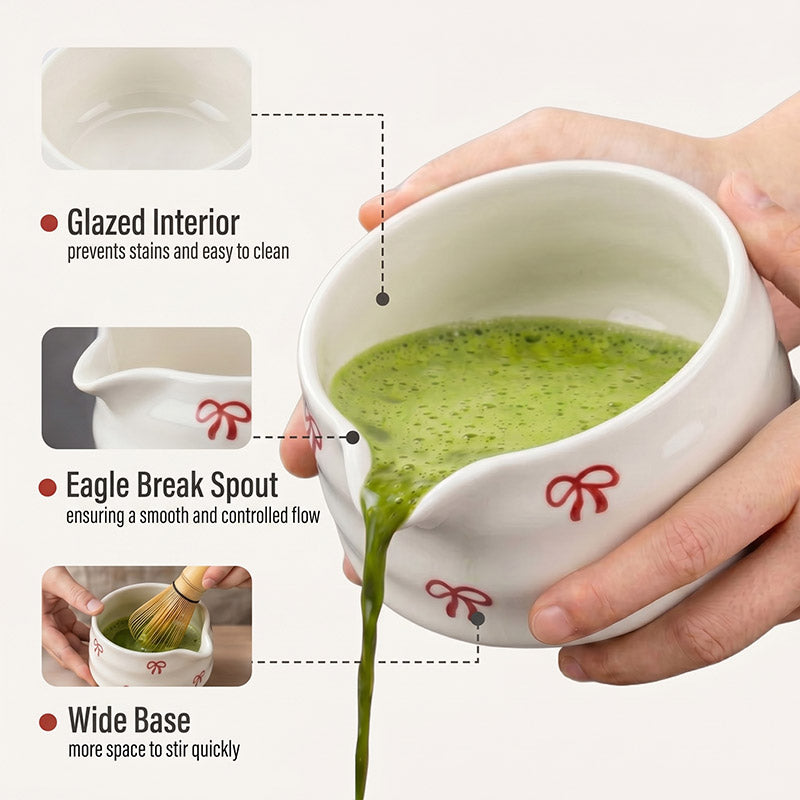
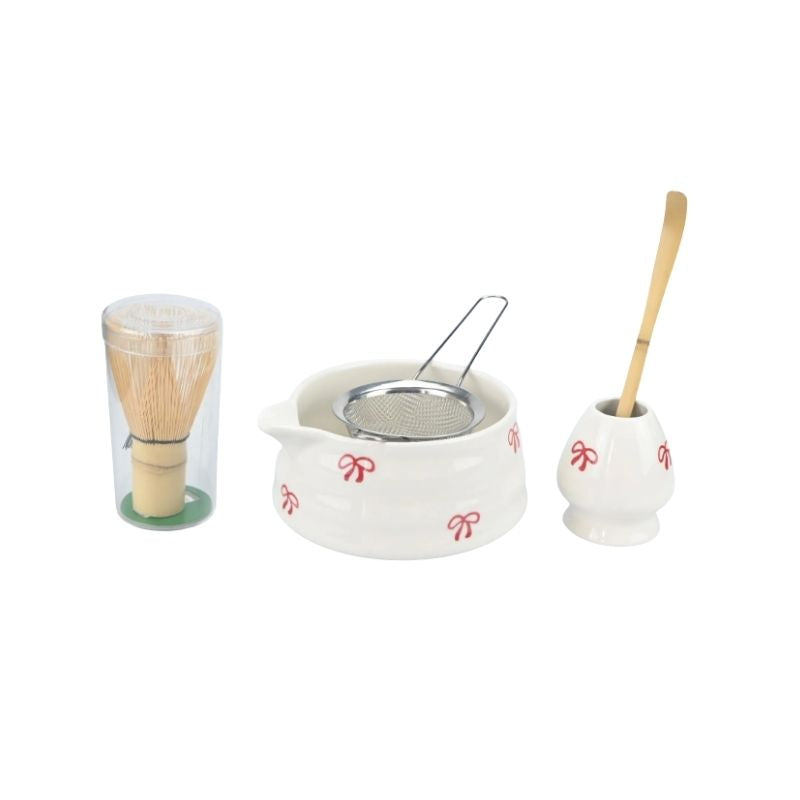
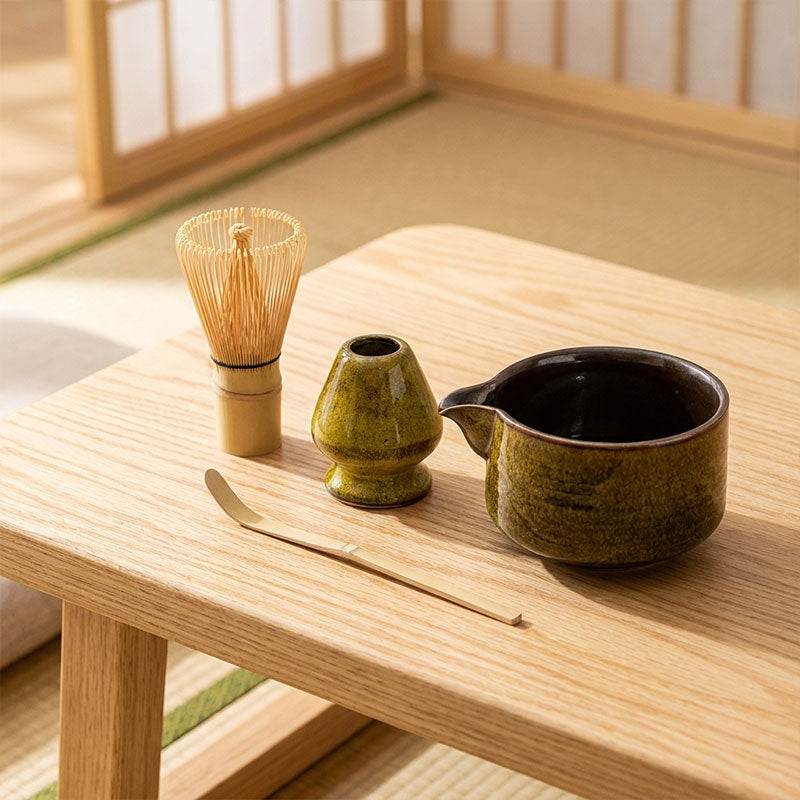
Most kits are built around four elements. The chawan is the tea bowl, wide enough to let a whisk move freely and deep enough to hold the froth. The bamboo whisk breaks up the powder and lifts air into the tea. The bamboo scoop measures the dose, and the ceramic or bamboo rest keeps the whisk dry between uses. Some sets add a sifter, a small caddy or a linen cloth.
How to choose your matcha set
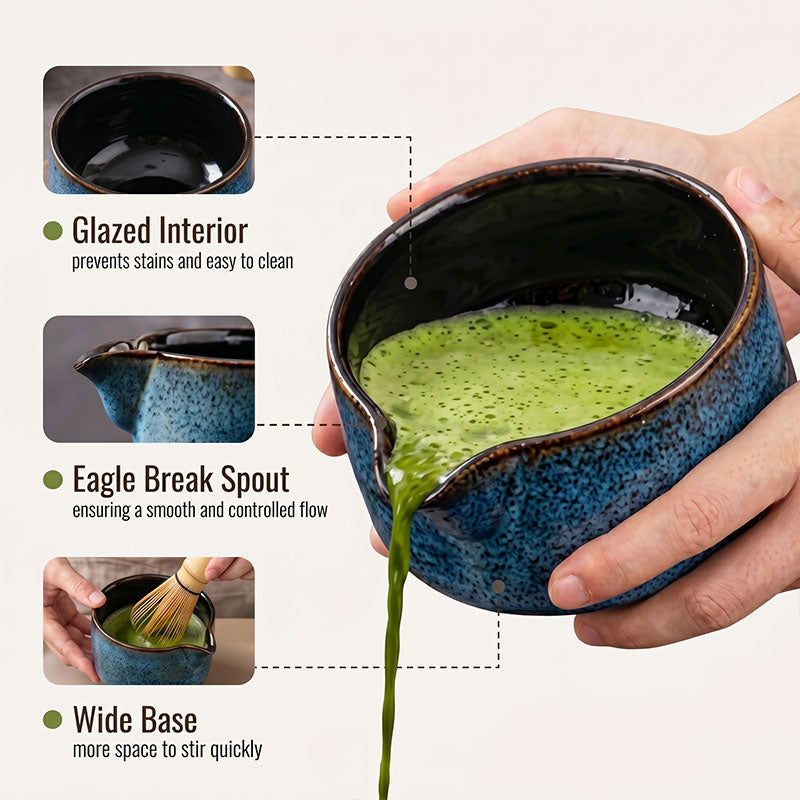
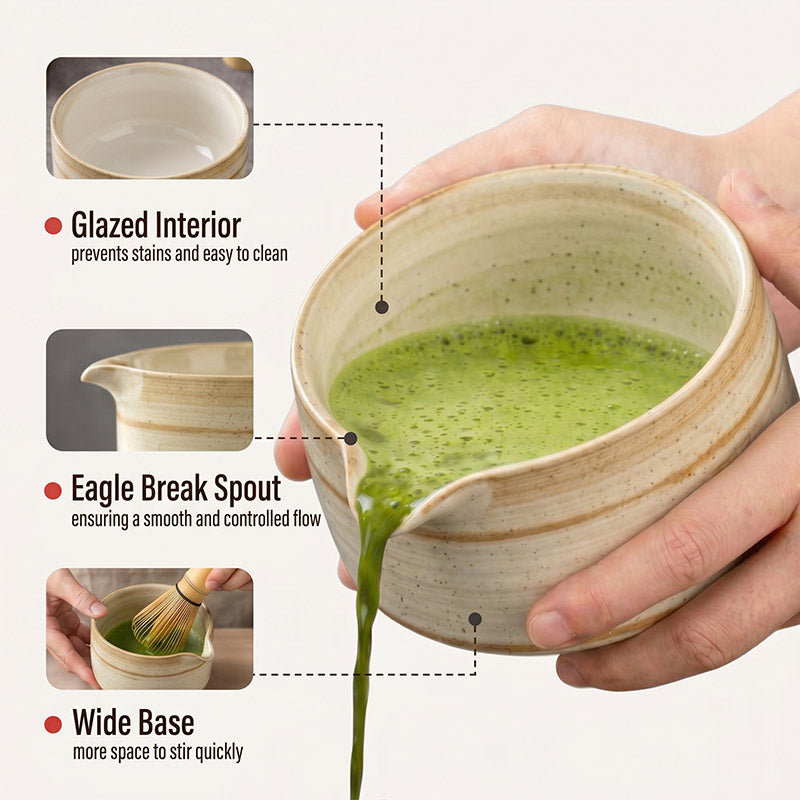
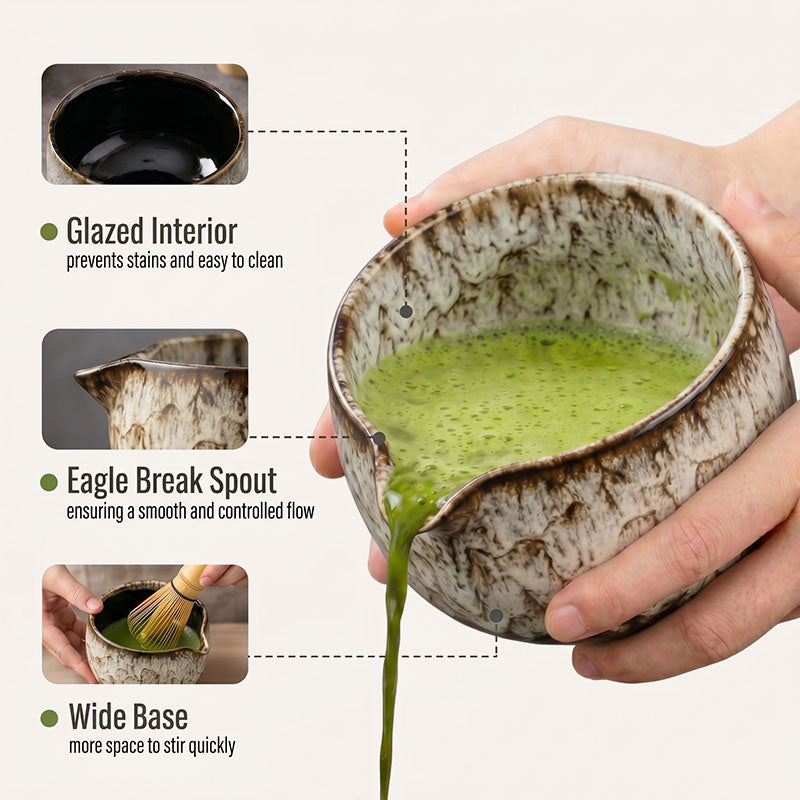
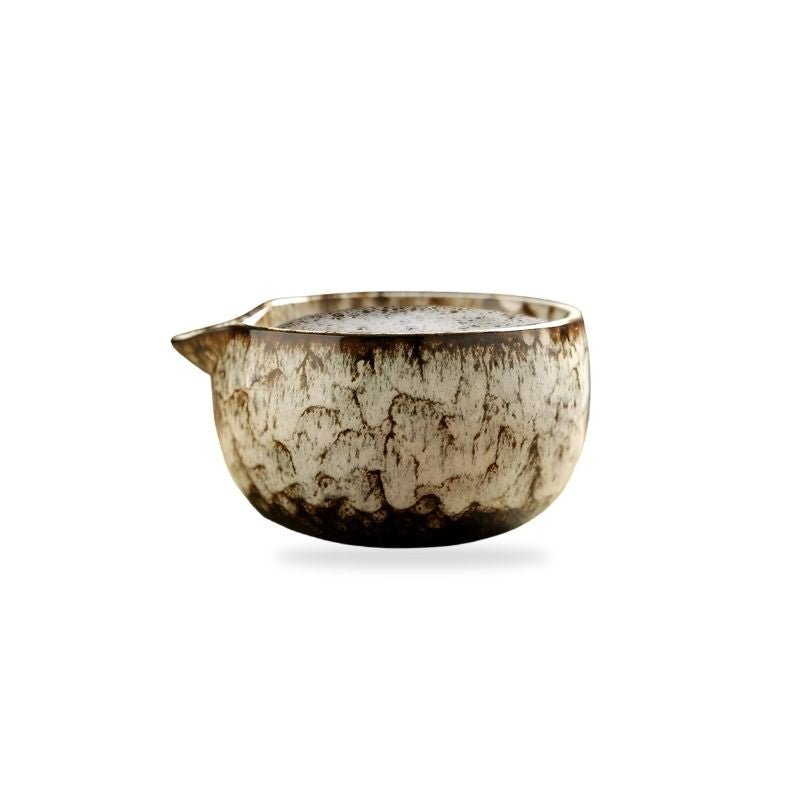
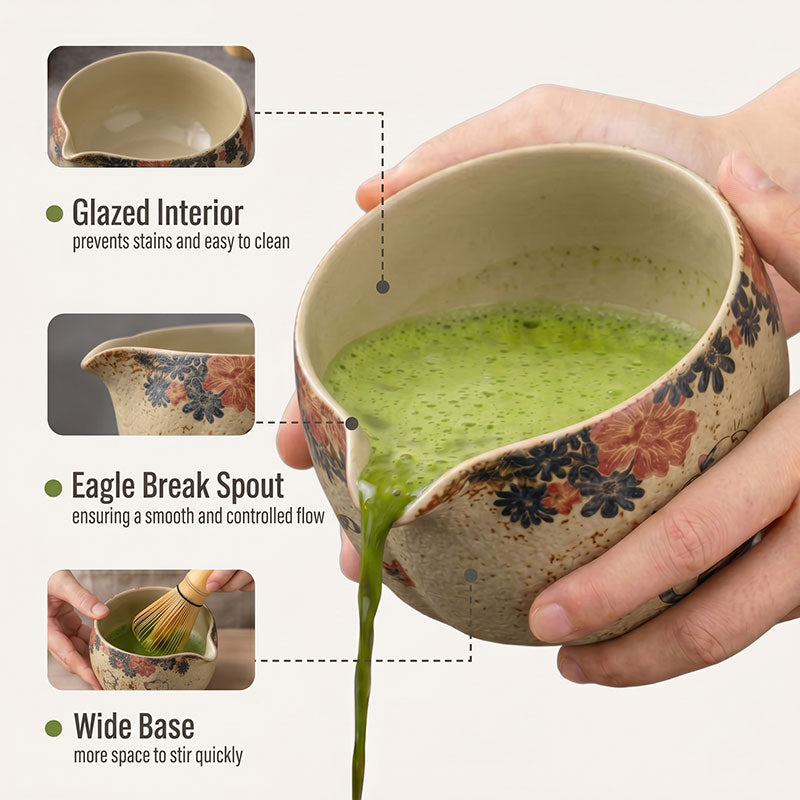
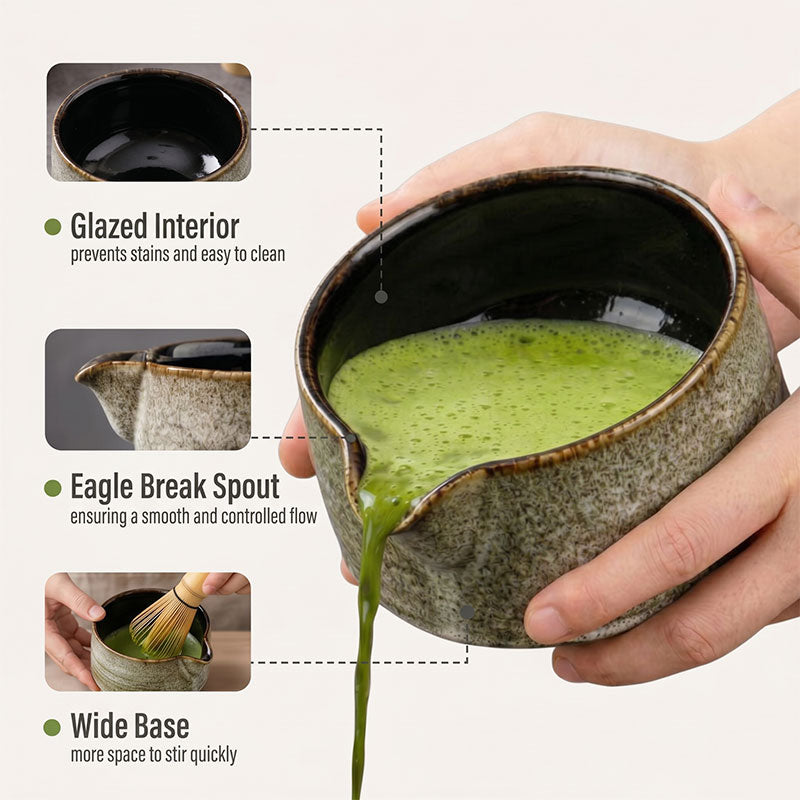
Start with the bowl. A rounded, generous shape suits thick tea and gives room for the wrist; a straighter, smaller bowl feels lighter in the hand and stores easily. Then look at the whisk: a chasen with many fine tines produces a denser foam, while a whisk with fewer, thicker prongs is sturdier for daily use. Glazed stoneware holds heat longer than thin porcelain. Matte, uneven finishes carry the spirit of Wabi-Sabi, the beauty found in imperfection, while a smooth pastel glaze reads softer and more contemporary on an open shelf.
Preparing and caring for a matcha tea set
Warm the bowl with hot water first, then sift the powder to avoid lumps. Pour water just off the boil, never fully boiling, and whisk in a quick W motion until the surface turns even. The usucha, or thin tea, needs less powder and more water than its thicker counterpart, so start there if you are new to the practice. Afterwards, rinse the bamboo whisk under warm water without soap and stand it on its rest to dry in open air. Wash the bowl by hand and dry it fully before storing. Bamboo splits when it stays damp, so this small routine matters more than any product.
Matcha set as a gift and as decor
These kits travel well as presents because they need no sizing and no guesswork. A matcha kit in muted grey or deep green sits comfortably in a minimalist kitchen, while pastel and floral versions suit brighter interiors and photograph beautifully. Left out on a wooden tray, the bowl and whisk read as objects rather than utensils, in the same way a lacquer plate or a small ceramic pot does.
Where the matcha ritual comes from
Powdered green tea arrived in Japan from China with Zen monks, and by the sixteenth century tea masters had shaped it into a codified practice built on attention and hospitality. Every gesture of the Japanese tea ceremony was refined over generations, an approach close to Kaizen, the idea of small continuous improvement. Using a set at home is a simpler version of that, and it rewards repetition. Take a look through the collection and find the bowl and whisk that suit your table.