
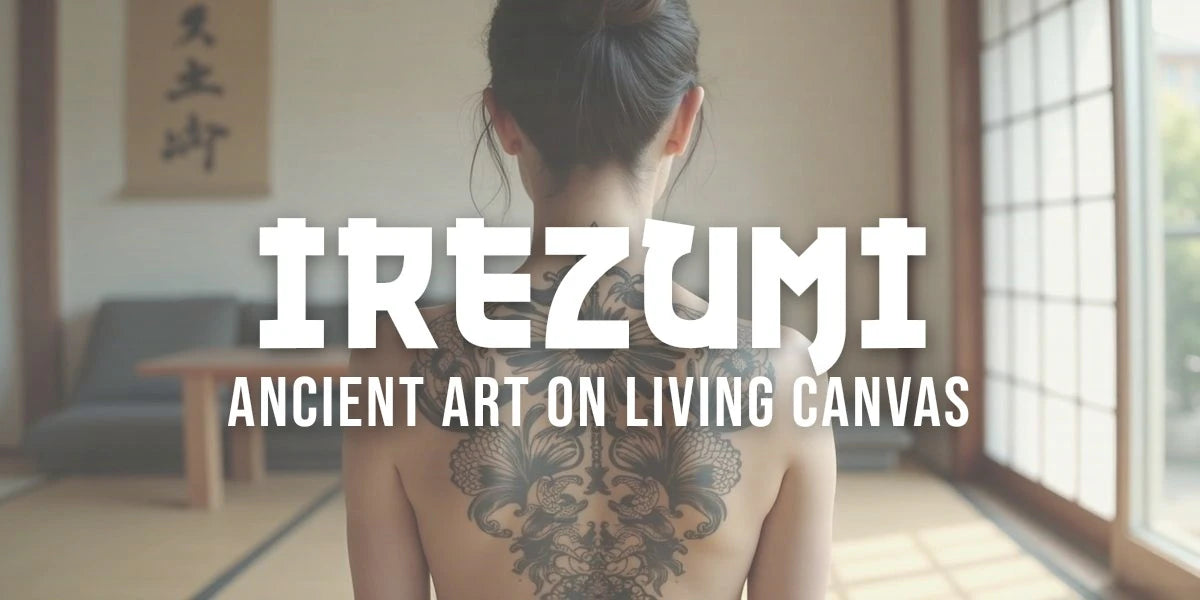
A full irezumi (入れ墨, "inserted ink") is rarely seen in Japan. It hides under a buttoned shirt, under a suit jacket, under the sleeve of a yukata at a summer festival. That is the point. A Yakuza tattoo is a coded story of loyalty, courage and honor, worn on the body and shown only to those who are meant to see it.
Below is the history of the Japanese mafia, the reason its members mark their skin with needles and Nara ink, and the meaning of the main motifs: dragon, tiger, samurai, sakura, koi, snake and phoenix.
Key points
- The Yakuza grew out of Edo period outcast groups: street peddlers (tekiya) and gamblers (bakuto).
- Irezumi covers the torso, back, arms and thighs, but stops before the forearms and the centre of the chest so clothing can hide it.
- Each motif carries a precise meaning: the dragon rules the sky, the tiger the earth, the koi stands for perseverance.
- Tattoos were banned in Japan until 1948 and still carry a strong social stigma, including in many onsen.
- The same imagery lives on in prints, clothing and streetwear, which is how most people outside Japan wear it today.
Who are the Yakuza, the Japanese mafia?
The Yakuza are a set of Japanese mafia groups whose history goes back at least to the Edo period. Like most organised gangs, they live off crime: racketeering, underground gambling, arms dealing.
Like many gangs in the United States, they developed their own style of tattooing. That style travelled far beyond the Japanese underworld and is now recognised across Europe and America.
Their origin is not perfectly documented. Japanese gangsters first appeared among groups of gamblers, bettors and swindlers who stood against the government during the Edo era.
The etymology is just as vague. "Yakuza" comes from a losing hand in a card game played by these groups and by members of the lower Japanese castes. The word also points to their social class and to how badly they were treated.
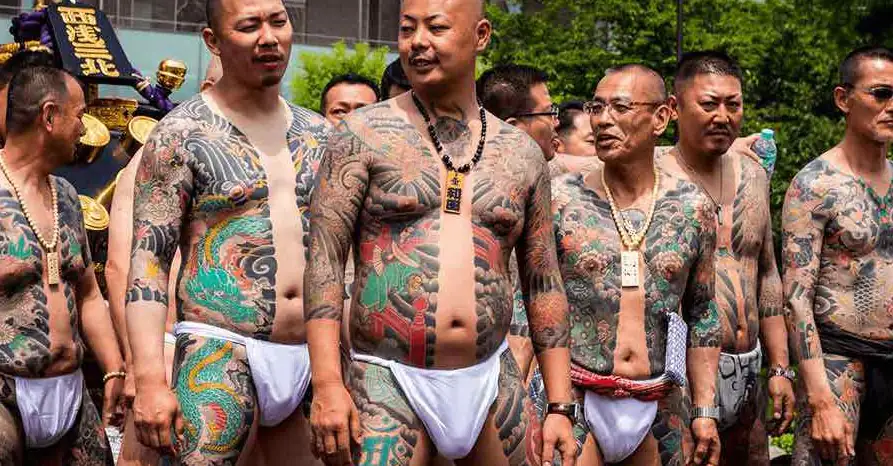
Today you would struggle to tell a Japanese businessman from a Yakuza. Members wear suits, keep offices, hold headquarters and hand out business cards. Many have moved part of their assets into finance.
What you will not see is the ink. Tattoos stay under the clothes, because body art is frowned upon in Japan and immediately read as a mark of a Yakuza clan. Many onsen still refuse entry to tattooed visitors for that reason.
This is also why the motifs travel better on fabric than on skin for most of us. A printed design lets you carry the imagery without carrying the stigma.

What is a Yakuza tattoo?
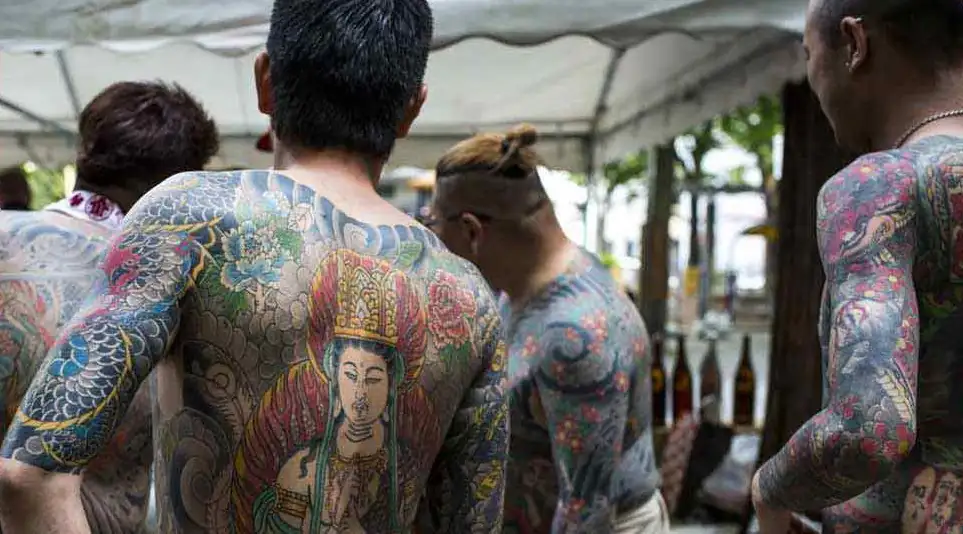
A Yakuza tattoo is personal to each member of the Japanese mafia. It shows what the wearer wants the world to know about him. Samurai designs are common because they say that the man is a warrior at heart, one whose choices are not ruled by fear.
This style usually covers the whole body, from the shoulders down to the legs. Most of the imagery comes from Shinto mythology and from the history of the Yakuza themselves. The other great source is ukiyo-e woodblock printing, several centuries old, which still sets the colour palette and the compositions.
In the early days the tattoo artist was often the woodblock carver himself, using the tools of his trade. He would cut the design into the client's skin with Nara ink, named after the region famous for its ink sticks.
That ink has one peculiarity: under the skin it shifts towards a blue-green tone. The dragons, tigers and flowers of Yakuza tattooing come largely from a novel, the Suikoden, whose tattooed heroes became a printmaking sensation.
The Yakuza also held that the greater the pain, the greater the commitment to the group. That belief is one reason the designs run over the entire body.
Getting inked was a ritual. Members would ask others to attend the sessions as witnesses, much like witnesses at a wedding. The finished work was then shown only to other members of the clans.
The Yakuza tattoo and its history
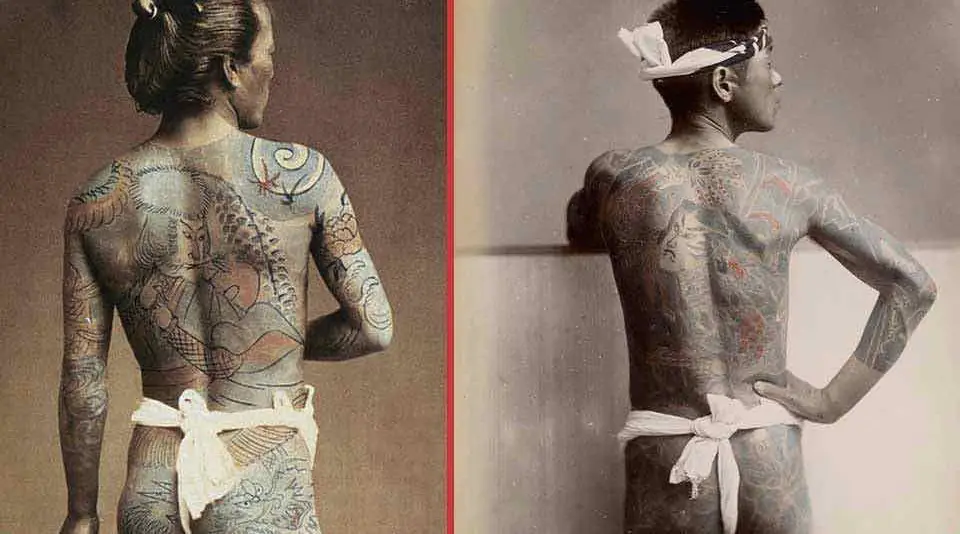
Japan had a strict caste system enforced by the shogunate, and the burakumin ("hamlet people") were pushed to the bottom of it. Some were criminals. Others simply did the work nobody else would touch. They faced heavy discrimination from the authorities and from the upper classes, and much of their life happened in the street.
Sticking together was survival. That is where the family spirit of these groups comes from. By the middle of the Edo period (1603-1868), two low-ranking burakumin groups had formed the base of the early Yakuza.
The tekiya traded stolen or dubious goods, and the bakuto, hanafuda card players, ran illegal gambling houses. From the bakuto came yubitsume, the practice of cutting off the first joint of the little finger to punish a member who had failed. It was meant to instil fear and loyalty towards the boss.
A member who wanted to leave the gang would also lose that joint, and would still be seen as a former Yakuza. During the same period, the lower castes were developing their own decorative tattooing, called irezumi, the foundation of Japanese tattoo art.
The authorities used punitive tattoos too, marks placed on the forehead or the arm of outlaws. They were put where everyone could see them, so the offender could not find work and could never escape his rank. Tattooing was banned, and ink became the sign of criminals and outcasts.
The Yakuza kept growing despite the repression. They lived half-hidden, kept tattooing, and learned to operate inside a society that had no place for them. That tension between visibility and concealment is still the heart of the yakuza outfit: a sober exterior over a story only a few people get to read.

The Irezumi tattoo: a stigmatized traditional Japanese art
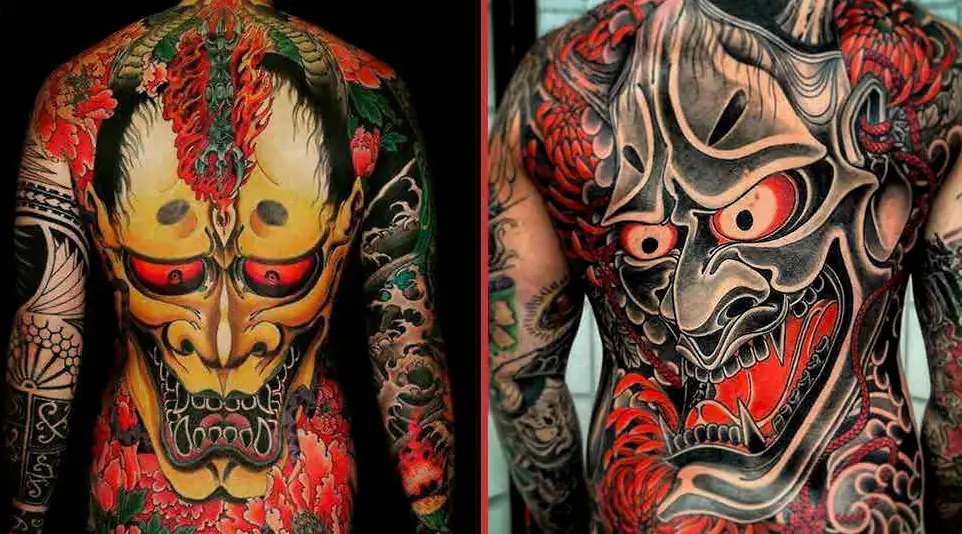
When the Yakuza were taking shape, tattoos also spread among merchants, dockworkers, firefighters, builders, anyone whose trade was hard on the body.
For the meaning of more than thirty motifs, from the Kitsune to the Kirin and the Japanese demon, we put together a full guide to the tattoo irezumi.
The stigma never really went away. Tattoos stayed associated with criminality and with conduct judged contrary to Confucian values. The ban was lifted in 1948. Since then the convention has held: the ink sits on the torso, back, shoulders and upper arms, so short sleeves still cover it. Tattooed Yakuza avoid the forearms and leave a clear strip down the centre of the chest.
Many Japanese companies still turn away applicants with visible tattoos, on the assumption that ink means gang ties. Meanwhile the style itself is copied worldwide by people drawn to its imagery and its outlaw edge. Traditional Yakuza work is done in full colour and always carries a message.
That message runs through a set of recurring Japanese symbols. Here are the meanings of the most common ones.
Significance of Yakuza tiger tattoo
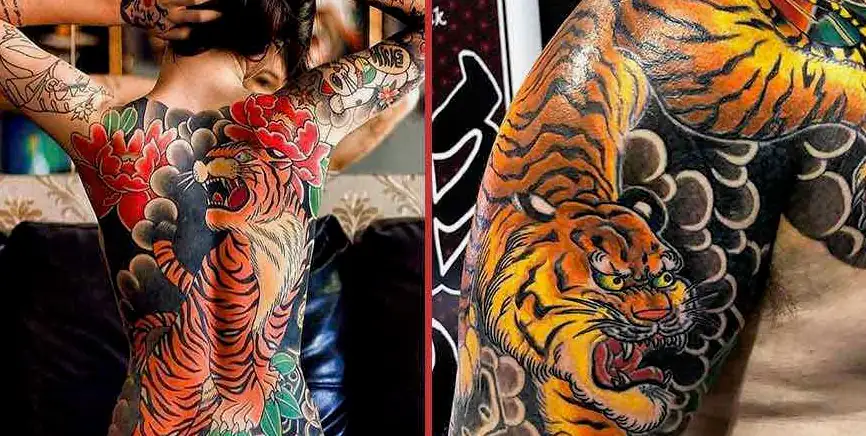
Unlike dragons, tigers are the masters of the earth. They are drawn large, covering a wide section of the body. The Japanese tiger tattoo faces upward when a dragon is there to challenge.
The tiger is believed to give guidance in the afterlife, along with strength and perseverance. It looks up from the lower world and lends its support to those who need it.
Yakuza dragon tattoo design
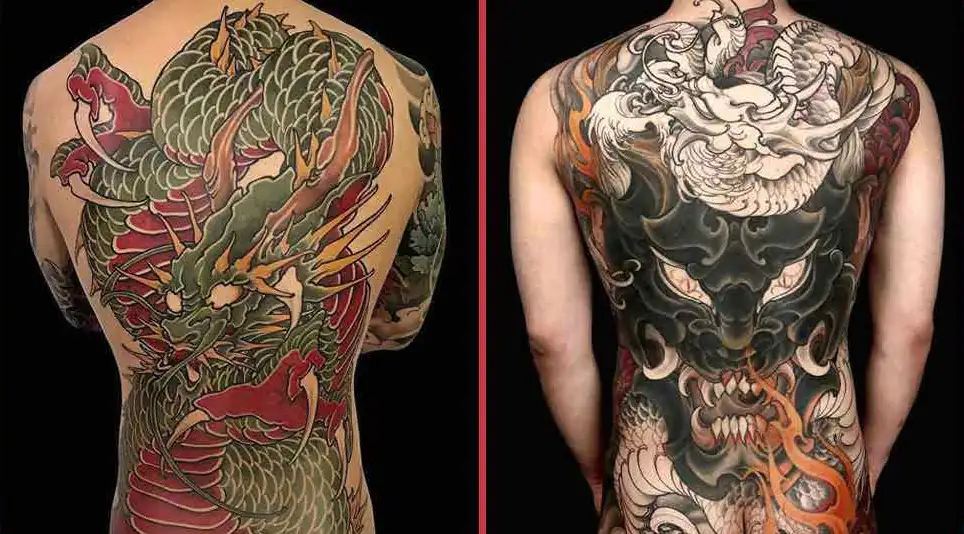
The dragon is one of the most popular designs in irezumi art. It is a magical creature of great power. In Japanese culture dragons rule the sky, which is why they usually sit on the upper body.
A traditional Japanese dragon tattoo stands for the struggle between heaven and earth, and so for strength and patience. That struggle never ends, and it produces neither winner nor loser.
Yakuza samurai tattoo design
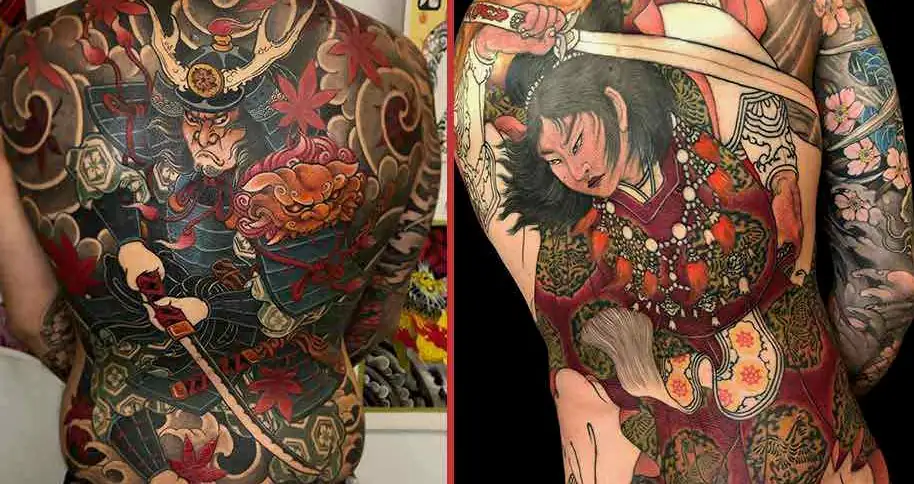
The Yakuza borrowed many rituals from the samurai and from the Bushido code, and admired their courage. Samurai figures are inked to stand for the value of a code of honor. The motif speaks of bravery, loyalty to the group and respect for the Yakuza code of conduct.
Yakuza cherry blossom tattoo design
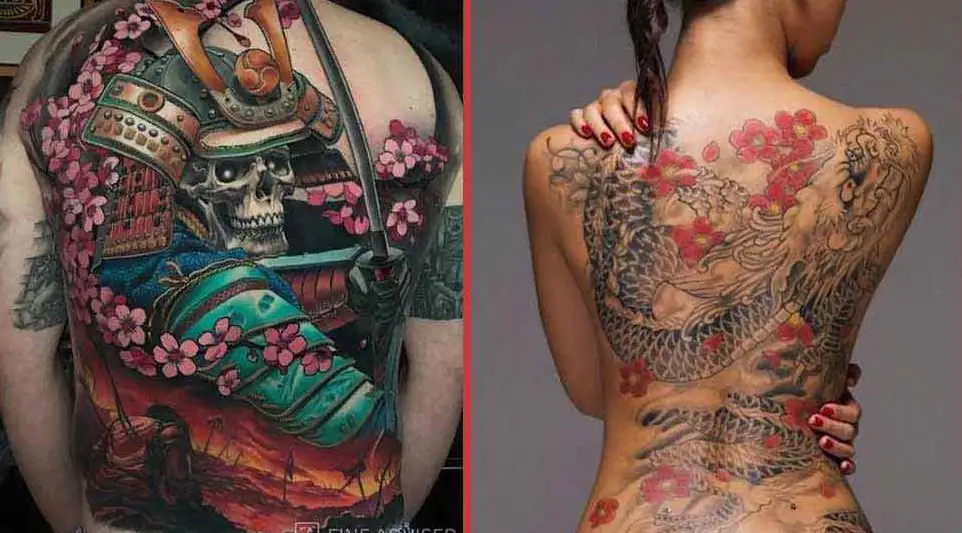
The cherry blossom, sakura, was the emblem of the kamikaze pilots. It carries the fleeting nature of all life, the same idea celebrated at hanami. For a Yakuza, the sakura tattoo means life is short and must be lived fully while there is time. It is also a samurai symbol of prosperity.
Koi Yakuza carp tattoo design
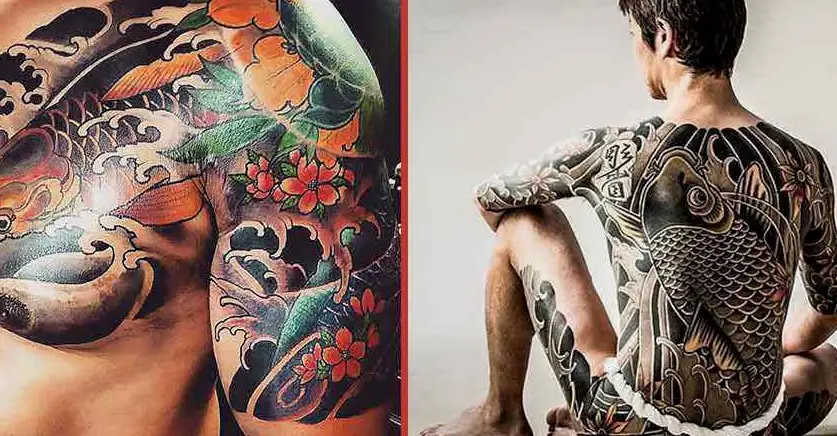
The Japanese koi fish stands for luck, fortune and courage. In the old legend, the koi swims up the waterfall against the current. It carries strength and persistence towards a goal.
A koi tattoo says the wearer is not afraid to chase what he wants. It also says he has already cleared serious obstacles and is ready for the next one.
Yakuza snake tattoo design
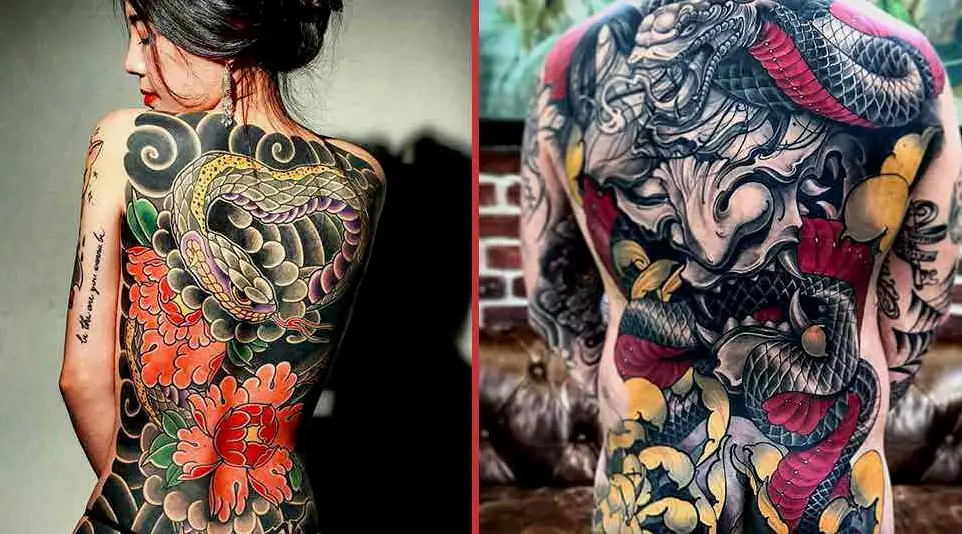
The snake is usually placed across a large part of the back or the chest. Its symbolism is double: misfortune on one side, power and wisdom on the other.
It is one of the motifs most closely tied to Yakuza imagery.
The snake often appears beside a Hannya, the horned mask of a woman consumed by jealousy, a vengeful figure taken from Nō theatre.
Yakuza Phoenix tattoo design
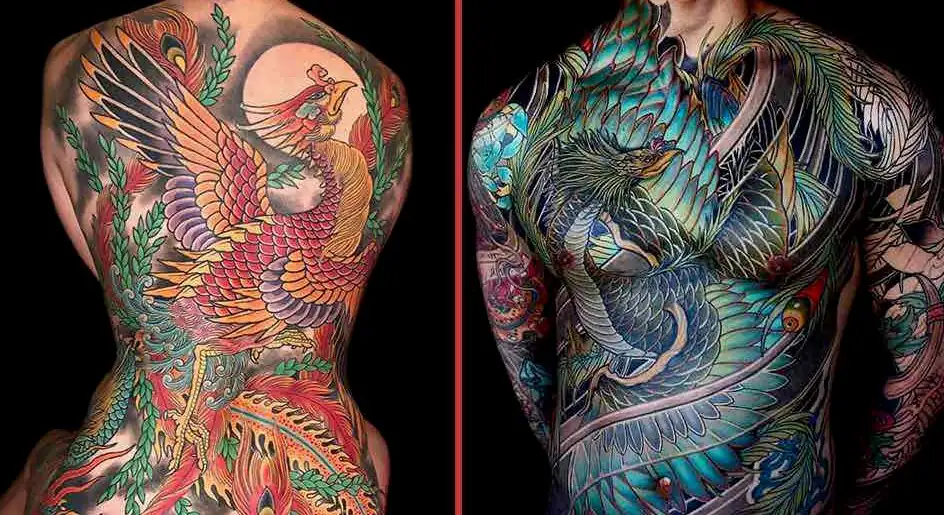
The Japanese phoenix means rebirth and victory over hardship. The bird embodies a new beginning: a new life inside the organisation, or, for anyone drawn to the imagery, a new direction that reduces the old one to ashes.
Japanese Yakuza gangs today
Like the Italian mafias, the Yakuza have lasted for centuries. Their pride remains tied to their tattooed bodies, even as police pressure and anti-gang ordinances have shrunk their membership year after year.
People come from all over the world to be tattooed by a horishi, because the discipline is old and tightly codified. Beyond the historical woodcut method, tebori work is done by hand with a rod fitted with needles, once bamboo, now metal, pushing the ink under the skin. It is slow and it hurts.
The inks are often prepared by hand and the palette stays limited, since many artists use recipes passed down through their lineage. These styles are not simply decoration. They form a belief system, a cultural object that has held its shape for hundreds of years.
FAQ
The questions we receive most often about Yakuza tattoos, answered plainly.
Are Yakuza tattoos still relevant today?
Yes, though the context has shifted. Membership has fallen sharply under anti-gang laws, and some younger members skip the ink to stay unnoticed. The motifs themselves remain very much alive in tattoo studios, prints and clothing worldwide.
Can I get a Japanese-style tattoo if I am not Japanese?
You can, and many horishi tattoo foreign clients. Learn what the motif means before choosing it, and be aware that a visible Japanese-style piece may be read as a gang marker while you travel in Japan.
Can I enter an onsen with tattoos?
Often not. Many public baths still refuse tattooed guests. Look for tattoo-friendly onsen, book a private bath (kashikiri), or use skin-tone cover patches for a small design.
How can I wear this imagery without getting tattooed?
Printed pieces carry the same ukiyo-e line work on fabric. Keep in mind that Japanese sizing runs about one size smaller than US and EU sizing, so check the measurements before ordering.
Explore the Japanese Tattoo Flash collection
If these motifs speak to you, come and see the Japanese Tattoo Flash collection: the same dragons, koi and Hannya, drawn in the old print tradition.
Browse the collection →

8 comments
I was born in okinawa on 1970,and loved there 5 years. I have always been intrigued with yakuza tattoos.
Great info. Gorgeous photos. Thanks for putting together.
hi!
i am very interesting to Asia culture and tattoo. I starts my Martial Arts career Jiu Jitsu, Sankukai Karate, Kobudo. My age to 8old to I starts Budo but I am now 35old and now I learning Shaolin Kung Fu and Kyokushin Kai Karate and weightlifting (ex bodybuilder). Gym I starts 16old. Talking more and I ask to later one maybe three question. Haapaniitty Joni
Thank you,, watching Tokyo Vice and was intrigued by the tattoos,, this was very informative.
Good read !