
Early November in Tokyo smells of damp maple leaves and roasted chestnuts, and on one morning the ticket counter at the national museum simply waves people through. Culture Day, or Bunka no Hi (文化の日), is a Japanese national holiday held every November 3 to celebrate the arts, learning and a culture built on peace. It marks the day the postwar constitution was announced in 1946, and it has been a public holiday since 1948. In Japan the day brings free museum entry, the Emperor's Order of Culture ceremony, campus festivals and craft demonstrations. Outside Japan you can honour it simply: wear a motif-rich kimono (着物) or haori (羽織), serve warm sake or matcha in handmade ware, and spend the evening with one Japanese craft you actually want to understand.
Key points
- Bunka no Hi falls on November 3 because the postwar constitution was announced that day in 1946, and the date was already a holiday for Emperor Meiji's birthday.
- The day is built around arts and academia: free or discounted museums, the Order of Culture award, shrine displays, parades and student culture festivals.
- November is also craft season in Japan, with textiles, ceramics, lacquer and the new sake pressing all in the spotlight.
- At home, two gestures carry the holiday: wearing traditional motifs with intention, and serving sake or matcha in craft ware instead of ordinary glasses.
What is Culture Day in Japan (Bunka no Hi)?
Bunka no Hi combines a postwar constitution with a celebration of arts and learning. Below we explain the roots of this date and how Japan honours it.
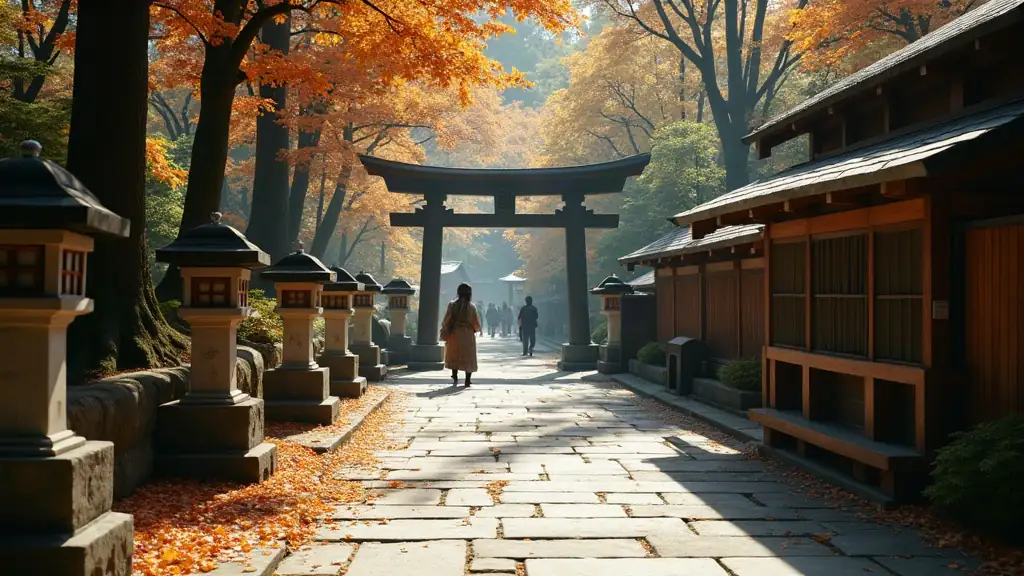
Bunka no Hi is pronounced roughly "boon-ka no hee". The three parts mean culture (文化) and day (日). It is one of Japan's sixteen national holidays, so banks, offices, post offices and schools close. Shops, trains and museums stay open, which is why the holiday feels like a day out rather than a day of rest.
Why Bunka no Hi is held on November 3
The Constitution of Japan was promulgated on November 3, 1946. It came into force six months later on May 3, 1947. The date was already a holiday: Emperor Meiji was born on November 3, and after his death the day returned in 1927 as Meiji-setsu. When lawmakers chose to celebrate culture and peace in 1948, they kept the same date. The constitution renounces war and commits the country to cultural development, so the promulgation day became the ideal marker for the holiday.
Culture Day as a holiday of arts, learning and peace
The state marks the day by honouring people, not by staging a single ritual. The government presents the Order of Culture (Bunka Kunshō) and names Persons of Cultural Merit for work in science, literature, art and scholarship. Cities, schools and museums fill the calendar with exhibitions, archery demonstrations, school shows and parades. There is no nationwide procession and no fixed dish.
What to wear for a Bunka no Hi museum or shrine visit
The next sections break down three approaches to dressing for Culture Day: a haori over modern clothes, a full kimono outfit, and the layering that works between them. Each option suits a different setting, from a quiet museum to a shrine ceremony.
Early November in Tokyo sits around 11 to 18°C (52 to 64°F), colder in Kyoto mornings and after sunset. You want one warm layer you can open indoors. Museums and shrines also reward restraint: muted colours, covered shoulders, and shoes you can slip off without sitting down.
Choosing a haori for a shrine event in early November
A haori is an open-front jacket worn over a kimono. It is never tied with an obi and never closed at the front, and it usually falls between hip and mid-thigh. For a shrine or museum visit I reach for a plain black haori, because it stays quiet in a respectful setting and works later over jeans in a café. Japanese sizes run about one size smaller than US and EU equivalents, so size up.

Wearing a kimono respectfully on Culture Day
One rule matters above all others: the left panel always crosses over the right. Right over left is reserved for dressing the deceased, and people notice immediately. Keep the hem at ankle length, wear tabi socks, and choose a seasonal colour range such as deep green, plum, charcoal or rust. Save the most formal pieces for formal invitations. A furisode with long swinging sleeves or a gold-heavy outfit reads as wedding dress, not museum visit. Also skip strong perfume near an altar, and keep drinks away from your sleeves.
Layering options for Bunka no Hi
| Option | Pieces needed | Best for |
|---|---|---|
| Full traditional outfit | Kimono, obi, koshihimo ties, tabi, zori or geta | Shrine ceremony, tea event, photographs |
| Haori over modern clothes | Haori, plain tee, dark jeans, low sneakers | Museum day, city walking, dinner afterwards |
What happens across Japan on November 3
Culture Day brings specific celebrations and events across Japan, from museums to imperial ceremonies. Below we explore the official celebrations and public activities you might encounter.
Free museum days and art exhibitions on Culture Day
Several national museums and public gardens offer free museum admission or reduced entry on November 3, usually for permanent collections rather than special exhibitions. The policy varies by institution and changes from year to year, so confirm before travelling. Expect queues at the best-known venues by mid-morning.
The Order of Culture ceremony and Meiji Jingu celebrations
A small group of recipients receives the Order of Culture from the Emperor at the Imperial Palace. Recipients include scientists, novelists, painters and scholars. Meanwhile, Meiji Jingu in Tokyo holds its autumn festival with martial and performing arts demonstrations: kyūdō (弓道) archery, horseback archery, aikido and noh. Across the country, schools and universities hold their bunkasai culture festival (文化祭), where clubs show work, stage plays and run food stalls. If you live outside Japan, look at Japanese cultural institutes and consulates in your city: many run Culture Day programmes with calligraphy, tea or film screenings.
Crafts in the Culture Day spotlight: cloth, clay, lacquer
November is when Japanese craft is most visible, partly by season and partly by design. Three techniques explain most patterned cloth you will meet. Shibori (絞り) binds, folds or stitches fabric before dyeing, leaving soft white resist marks. Kasuri (絣) dyes the threads before weaving, so motifs appear with slightly blurred edges. Nishijin-ori (西陣織) is Kyoto's figured brocade, woven with multiple coloured wefts and often metallic thread.
Ceramics and lacquer on the November table
Pottery towns each have a temperament. Hagi ware is pale and crazed and changes colour with use. Mino ware from Gifu covers a huge range of everyday glazes. Bizen ware is fired without glaze at all.
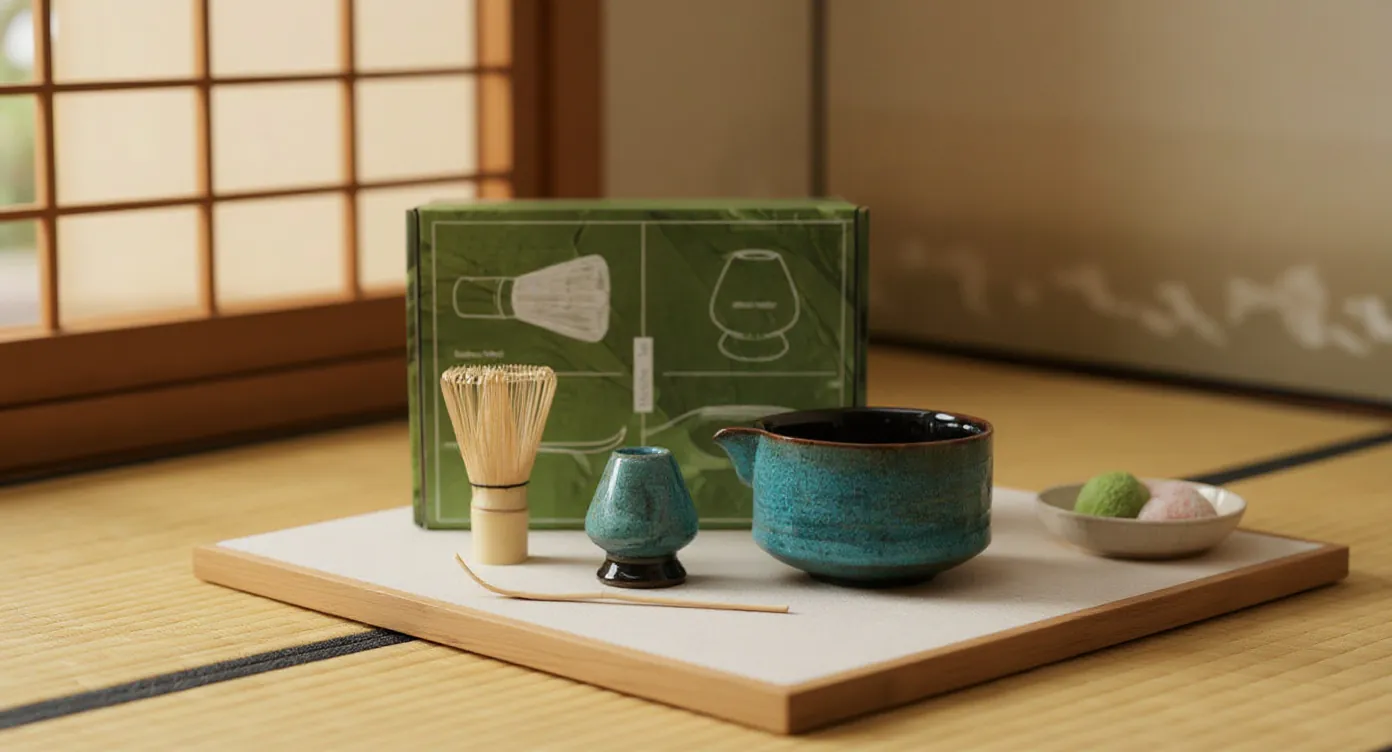
Urushi (漆) lacquer is sap from the lacquer tree, applied in many thin coats over wood and polished between layers. To judge handwork, look for small asymmetries, visible tool marks and a maker's stamp. That accepted irregularity is Wabi-Sabi in practice. A handmade matcha set teaches more than description, because holding the chawan (茶碗) bowl and bamboo chasen (茶筅) whisk shows what real craftsmanship feels like.
The new sake brewing year
Japan's sake brewing year begins on July 1, but the real work starts in autumn, once the new rice crop is in. Breweries press their first batches from late autumn, and the freshly pressed style, shiboritate (しぼりたて), arrives unpasteurised and lively. Many breweries hang a sugidama, a ball of cedar branches, above the door to announce that new sake is on the way. As the green needles brown, the sake inside matures.
Reading traditional motifs on kimono and haori
Japanese patterns carry meaning and season. Wearing the right motif in November is a quiet way to show you understand the garment rather than just like it.

| Motif | Origin | Meaning | Ideal season |
|---|---|---|---|
| Asanoha (麻の葉) | Stylised hemp leaf, a geometric grid | Fast growth, resilience | All year |
| Seigaiha (青海波) | Overlapping arcs of blue sea waves | Calm, continuity, good fortune | All year, favoured in summer |
| Kiku (菊) | Chrysanthemum, imported from China as a medicinal flower | Longevity, nobility, the imperial house | Autumn, especially October and November |
| Tsuru (鶴) | Crane, said to live a thousand years | Long life, fidelity, celebration | Festive occasions, autumn to New Year |
The kiku chrysanthemum motif is the November pattern. The flower is tied to the imperial family, whose crest is a sixteen-petal chrysanthemum. Momiji (紅葉), the maple leaf, works from October through November and pairs well with rust, gold and deep brown grounds. Avoid summer motifs in November, such as morning glories and goldfish.
Hosting a small Culture Day evening at home
The simplest way to mark Bunka no Hi at home is with a warm drink and one craft object. Below we detail the sake ritual and how to set the scene.
You do not need a shrine to mark the day. One craft object, one warm drink and one hour of attention are enough. Warm sake is the natural centrepiece in early November.
Warming sake and the ochoko ritual
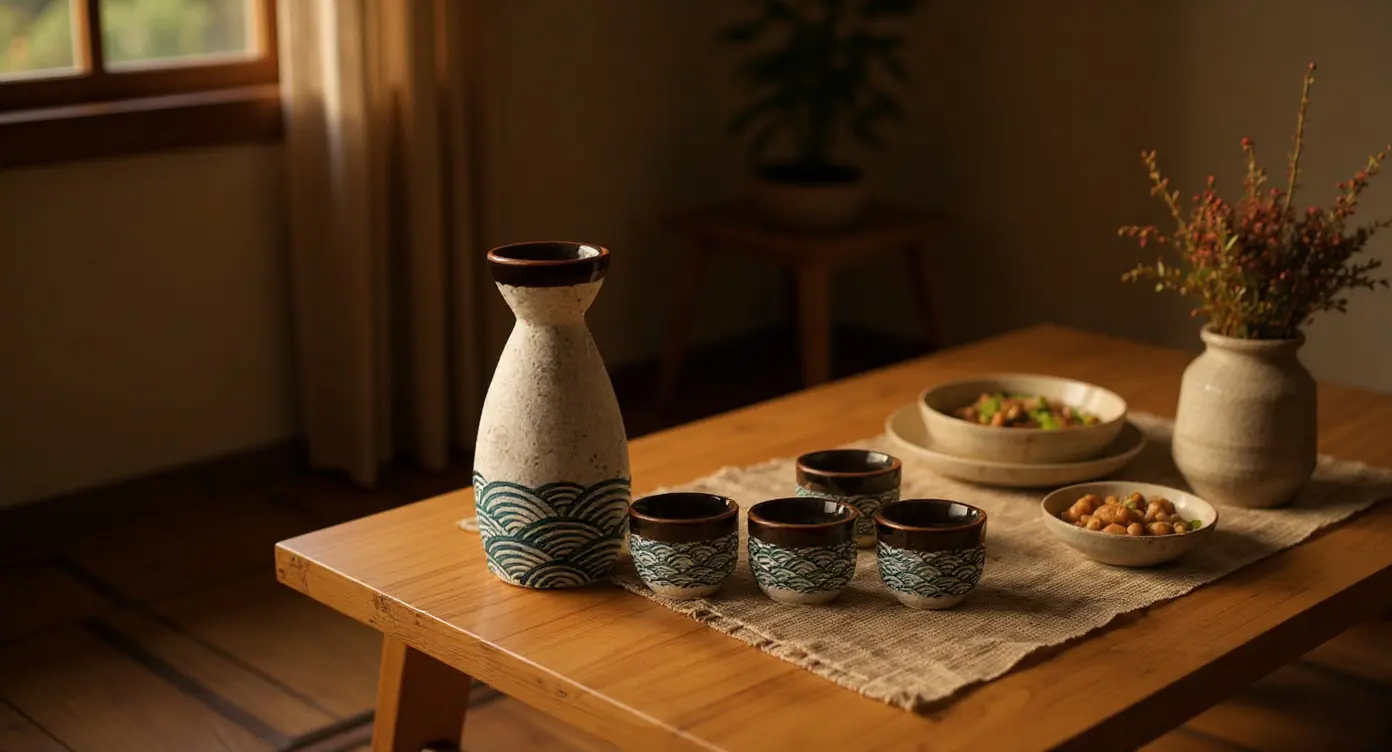
Warm nihonshu is poured from a tokkuri (徳利), a small flask with a narrow neck. Fill the tokkuri and stand it in a pan of hot water off the heat. Avoid the microwave, which heats unevenly and drives off aroma. Sake is poured for others, not yourself. Watch your neighbour's cup and refill it before it empties, and let someone else do the same for you. The small tokkuri and ochoko (お猪口) pairing I keep on the shelf for these evenings is a vintage-style sake set, because the thick ceramic holds heat long enough to finish a conversation.

| Style | Temperature | Character |
|---|---|---|
| Nurukan | About 40°C (104°F) | Rounded, gentle, very easy to drink |
| Jōkan | About 45°C (113°F) | Fuller aroma, clear rice sweetness |
| Atsukan | About 50°C (122°F) | Sharp and warming, good with grilled food |
Keep the evening simple. Put one craft object on the table and let people hold it. Serve chestnut rice or grilled fish with pickles, both in season. Finish with matcha or sencha, which lets guests who do not drink alcohol share the same ritual.
FAQ
If you have questions about Culture Day timing, etiquette or expectations, we answer the most common ones here. The FAQ below addresses both history and practical details.
What is Culture Day in Japan?
Culture Day, Bunka no Hi, is a Japanese national holiday on November 3 dedicated to the arts, learning and a peace-based culture. It was created by the Public Holiday Law of 1948. The day combines museum events, craft demonstrations and the Order of Culture ceremony.
Why is Culture Day on November 3rd?
Because the postwar constitution was promulgated on November 3, 1946, and the holiday honours the peace and culture that text promises. The date also carried earlier meaning as Emperor Meiji's birthday, celebrated as Meiji-setsu until 1947. Both layers explain why November 3 was chosen.
Are museums in Japan really free on Culture Day?
Many are, but not all. Several national museums and public gardens waive admission to their permanent collections on November 3, while special exhibitions usually still charge. Policies differ by venue and change year to year, so check the museum's own site before you go.
Is Culture Day a day off work and school in Japan?
Yes. It is one of the country's national holidays, so public offices, banks and schools close and most companies give the day off. Shops, museums and transport operate as usual. If the date falls on a Sunday, the Monday becomes the substitute day off.
What is frowned upon at a Japanese cultural event?
Closing a kimono right over left, since that style is used for the deceased. Also avoid photographing performers or inner shrine halls where signs forbid it, stepping on the raised edge of tatami, and pouring your own sake while others wait. Speaking quietly and following the queue takes care of nearly everything else.
If this is the year you want a piece with real motif meaning behind it, take your time with our Japanese kimono dress collection and choose the pattern that suits the season you will wear it in.
Explore the Japanese Kimono Dress collection
Browse our kimono and haori pieces with traditional motifs, asanoha, seigaiha, kiku and crane, with Japan, US and EU size charts for each one.
Browse the collection →