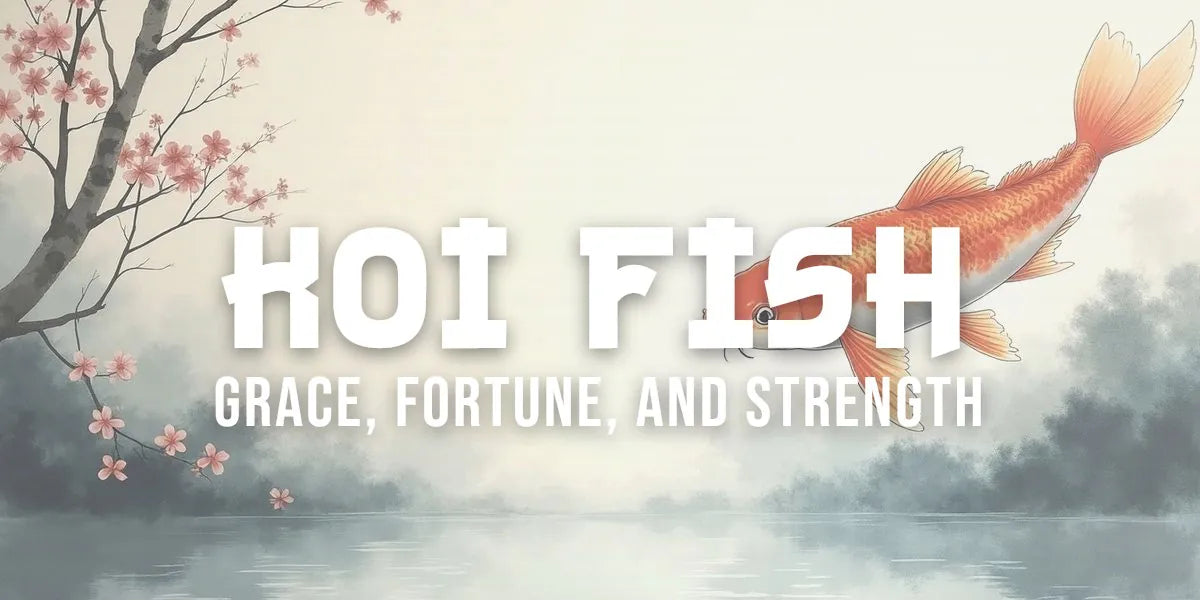
A pond in Niigata, early spring. The water is still cloudy, then a flash of red and white turns just under the surface. That fish is the reason a whole village became famous.
In Japan, the koi fish means courage, perseverance and love. This Japanese symbol is often used in irezumi tattoos. The koi fish motif is very popular in Japanese culture.
Key points
- The koi (鯉, carp) stands for courage, perseverance and love in Japanese culture.
- The waterfall legend of Longmen explains why the koi became a symbol of effort rewarded.
- Each colour carries its own reading: red for passion, gold for prosperity, red and white for honour.
- On 5 May, koinobori (鯉のぼり, carp streamers) fly for children across Japan.
- A koi tattoo swimming upwards signals determination; downwards, a goal already reached.
Travel to Japan and you will see koi carp designs on prints, on kimono (着物, the traditional wrapped robe), and in temple ponds. This fish carries a symbolic meaning. To understand its place in Japanese culture, this article covers the:
- Koi fish origin
- Types of fish koi
- Koi fish legend
- Koi fish symbol
- The different koi carp
- Japanese fish tattoos
Let's start with the origin of this legendary fish.
KOI FISH ORIGIN
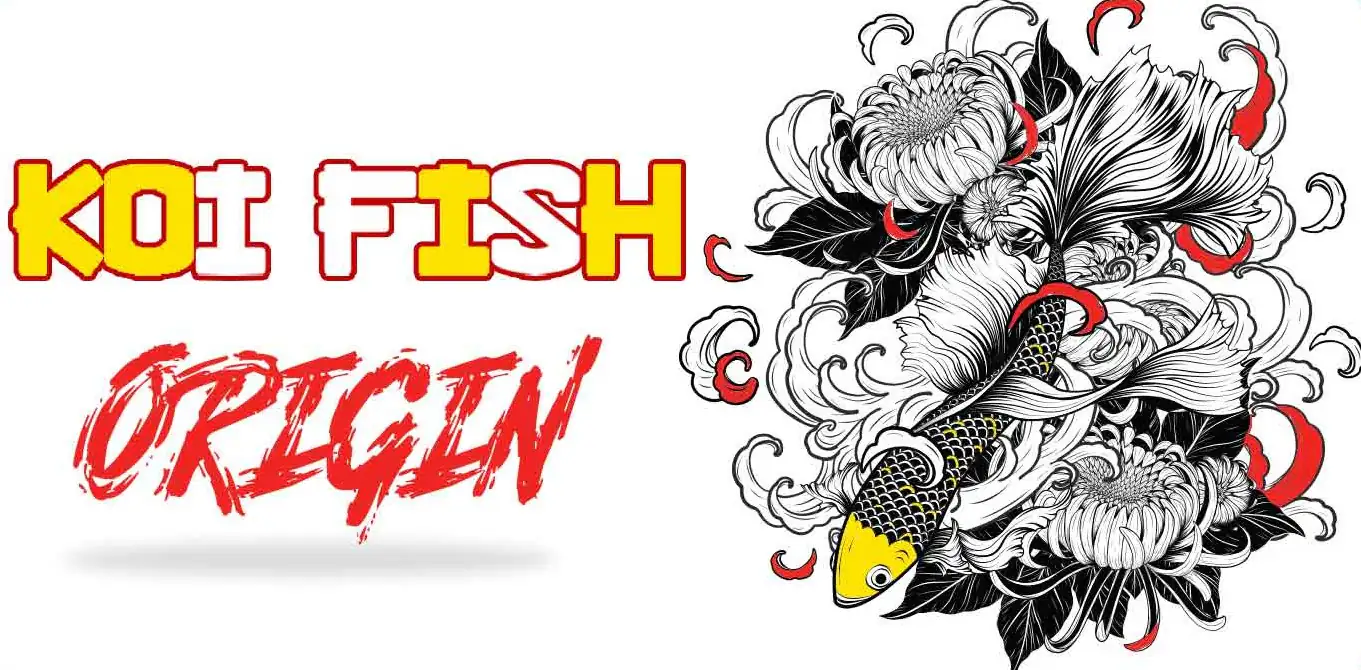
The first accounts of the koi carp date from the 5th century BC. The first fish came from Korea and China. They arrived in the Niigata province. They reached the Japanese archipelago during the Sino-Japanese invasions. The first carps were dark in colour.
The Japanese have farmed carp for centuries in ponds near rice fields. The aim was to diversify the diet. The first specimens of kohaku (koi) appeared in the 19th century. This mutation caused unexpected colour changes. First came red koi carp, then white koi carp, then bicoloured ones. These fish became popular for their bright colours. After several crossbreedings, hundreds of carp with yellow, orange, red and black tones were bred in the province.
In Japan, these colourful fish are also called "Nishikigoi" (錦鯉, brocaded carp). In the village of Yamaguchi, they are bred with passion. The place is known for one of the most coveted koi farms in the world. Local farmers keep them indoors in winter, then move them to the rice field ponds when the weather improves. The koi gained international attention after an exhibition in Tokyo in 1914. The Japanese emperor received a gift of eight magnificent carps. Today these freshwater gems are victims of their own success. They are exported all over the world for their beauty.
These fish have real value for collectors. Some Japanese carp are rare and sell for more than 200,000 dollars. The tancho koi is highly sought after. It is a white carp with a single red spot on the head. Those are also the colours of the Japanese flag.
The same motif travelled from the pond to the wardrobe. Koi swimming across a sleeve or a back panel is one of the oldest patterns I see on traditional garments, and one of the easiest to wear today.

FISH KOI AND NATURE
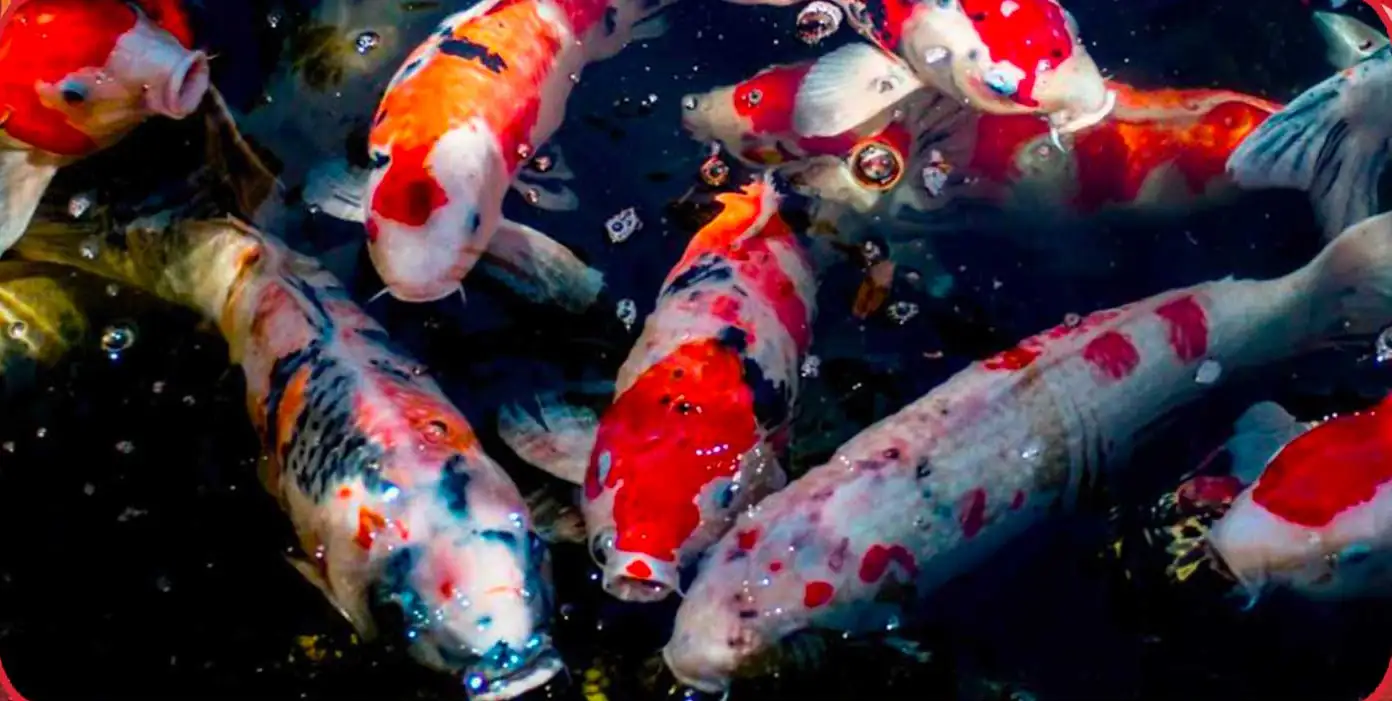
This legendary fish koi reaches an impressive size. It can measure more than a metre and weigh around 15 kilograms. These big fish are sociable and live in schools. They need a lot of space, which is why you rarely see them in aquariums. Koi are omnivorous. They feed mainly on algae and water plants. They also eat small molluscs and insects. The warmer the water, the more the carp eats and grows.
In winter, when the temperature drops, the koi settles into the mud in a semi-hibernating state to protect itself from the cold. The average lifespan is about 20 years, though some live up to 70.
KOI FISH LEGEND
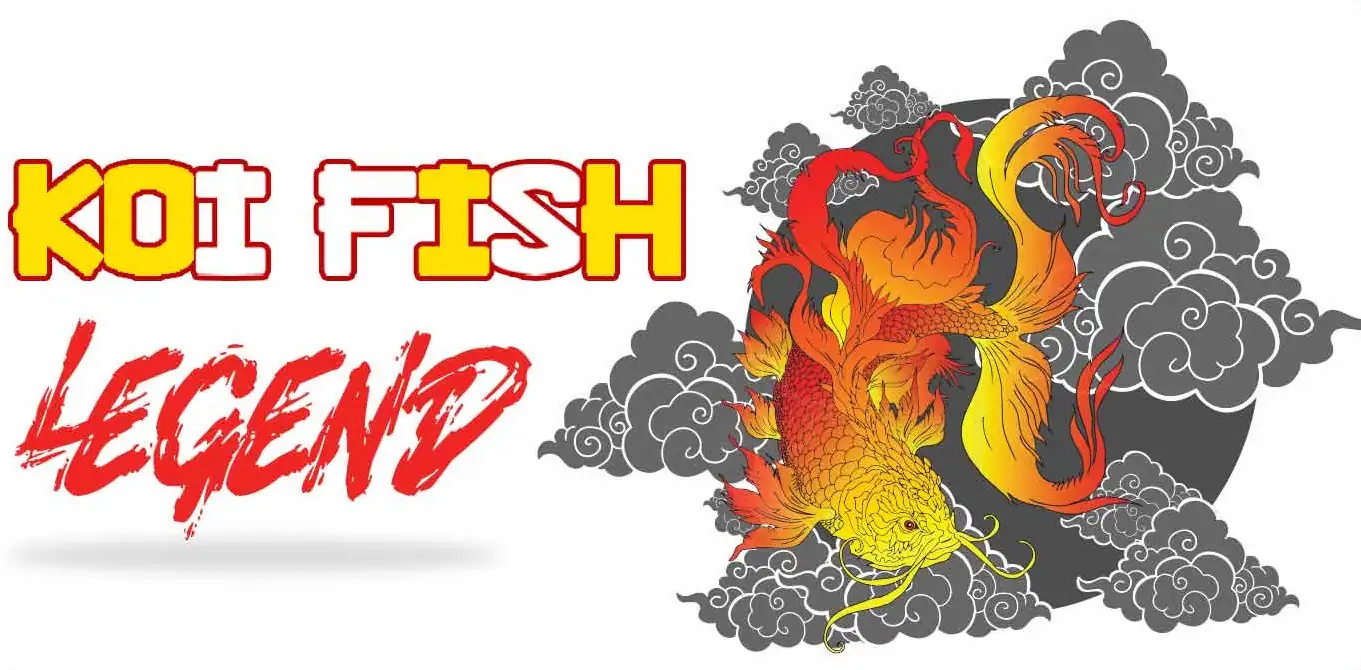
Here is the legend of the Japanese carp:
In the third month of each year, thousands of carp leave the sea and travel up the Yellow River. They have the strength to swim against the current and avoid predators on the way to their pond. They gather at the Longmen waterfall. A koi that manages to climb the falls turns into a Japanese dragon. Every year they try their luck again. They are courageous and daring. Teachers still use them as an example for schoolchildren.
This story is the reason the koi sits so close to Kaizen, one of our three guiding principles: small, repeated effort, year after year, rather than one dramatic leap.
KOI FISH MEANING
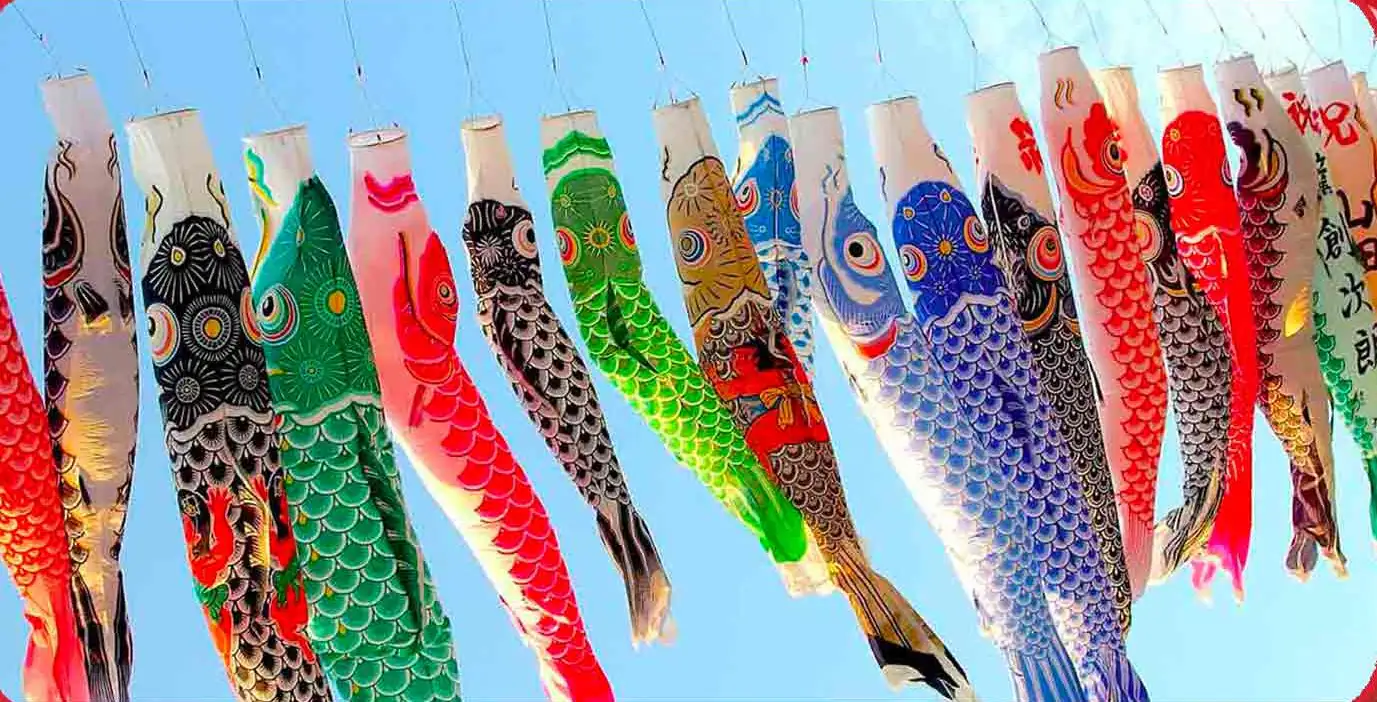
The koi is famous for bringing a sense of calm to Japanese gardens. Culturally, it stands for strength and perseverance in the face of life's challenges. Koi charms and cards are given to Japanese schoolchildren before exams.
The carp is also a symbol of strength and vigour. Every year, a festival is dedicated to children on 5 May. This day is called Kodomo no hi (こどもの日, Children's Day). Its older name was Tango no Sekku. During the Kamakura period, little boys received their first samurai armour on that occasion.
Today the warrior armour is replaced by a streamer shaped like a koi. The black carp represents the father, the red carp the mother, and each child has a carp in their own colour. In Japanese tradition, these fish are lucky charms. They bring good fortune to the home and encourage courage.
Small koi details work the same way in an outfit. A discreet carp at the ankle carries the motif without taking over the look.

TYPES OF KOI FISH
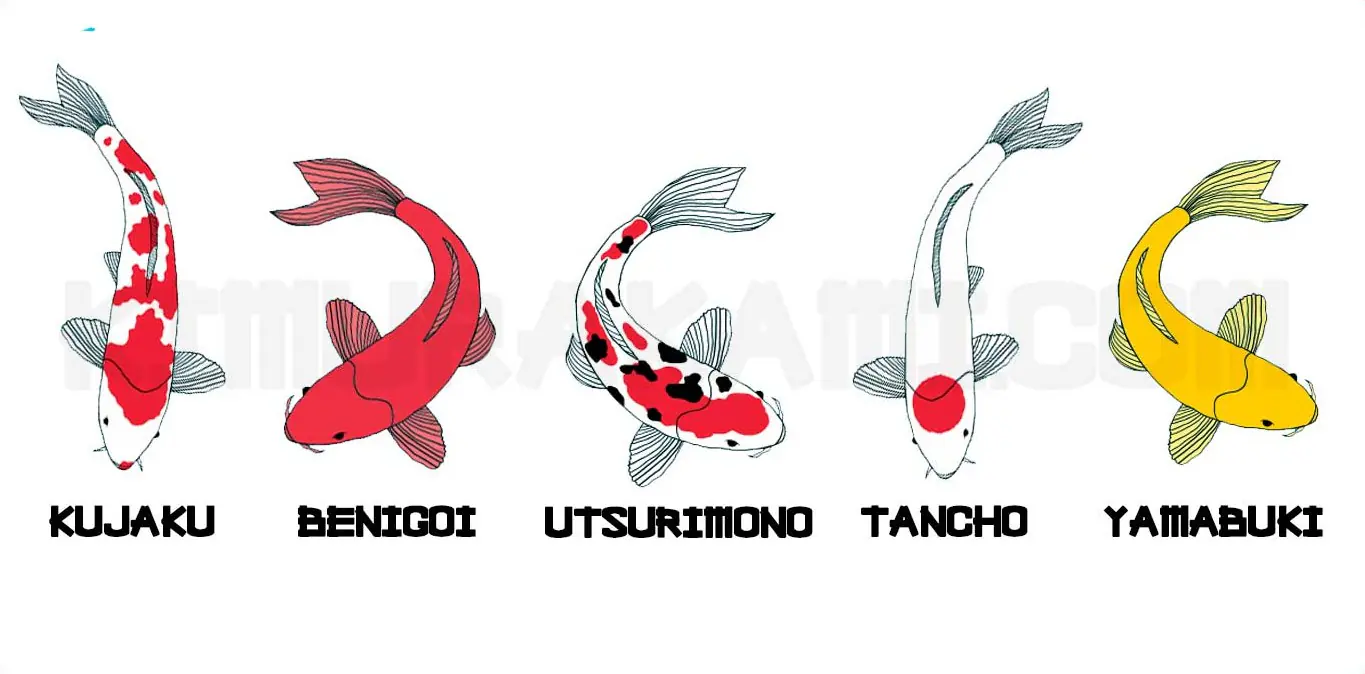
Here are five popular Japanese carps and what their colours are said to mean.
- The Tancho carp echoes the Japanese flag. It stands for honour. It is a red and white koi.
- The golden Yamabuki is associated with wealth and prosperity.
- The Kujaku, with its net-like scales, is linked to good fortune.
- The black Utsurimono, marked with coloured patches, is tied to spiritual growth and transformation.
- The deep red Benigoi is the carp of passionate love.
Those colour readings are the ones you will find on kimono, on tattoos and on festival banners. They are cultural associations, not guarantees, and Japanese breeders judge a koi first on body shape, skin quality and the sharpness of its markings.
KOI FISH TATTOO MEANING
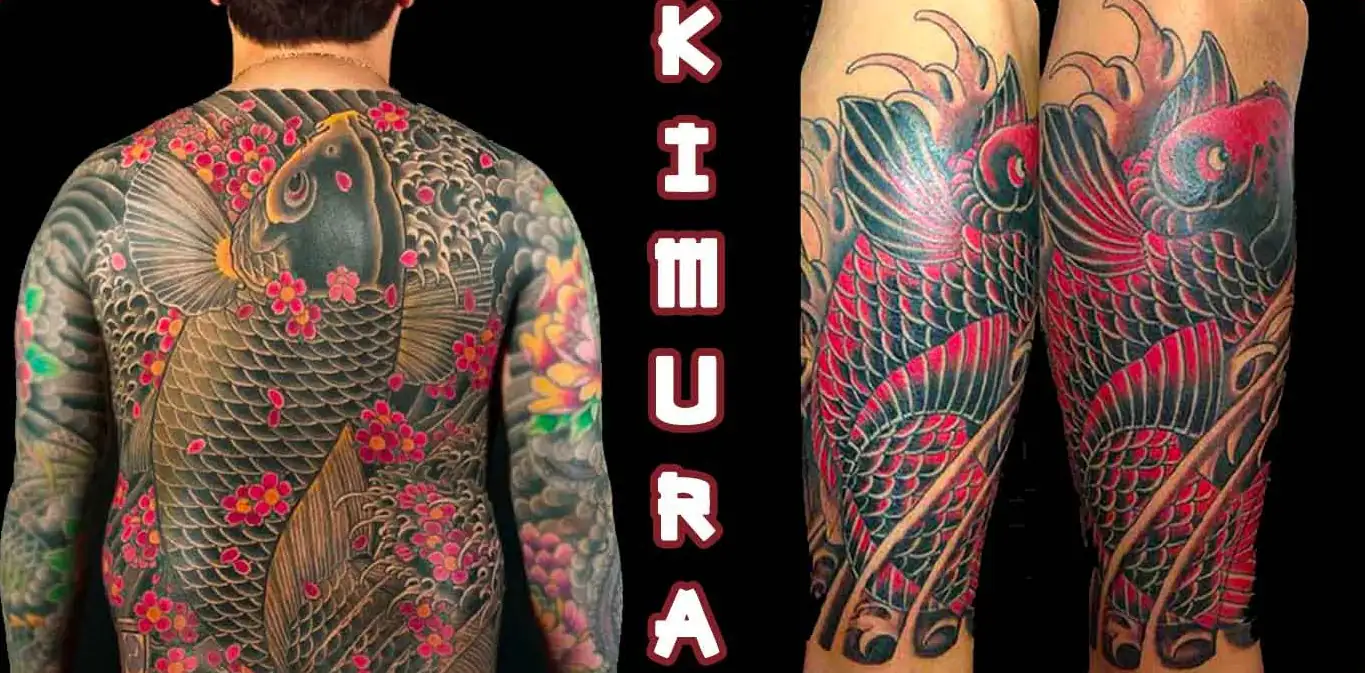
The meaning of a koi fish tattoo depends on:
- The colour of the carp
- The other elements around it in the tattoo design
- The direction the fish is swimming
A fish tattooed head upwards means the wearer is persevering and courageous. It refers directly to the Yellow River legend. A fish swimming downwards is often read as a goal already reached.
A Japanese koi fish drawing also stands for will, ambition and strength in the face of trials. It carries a link to love and to fertility. In irezumi (入れ墨, traditional Japanese tattooing), the koi is usually surrounded by water, maple leaves or lotus flowers, and each addition shifts the reading. The motif has long been part of the full-body designs associated with yakuza clans, where it signals purity, harmony, longevity and courage.
WHERE CAN I SEE THE FISH KOI SYMBOL?
The carp holds a real place in Japanese culture. This fish has a deep history and a layered symbolism. It is tied to Japan culturally and spiritually, and it stands for moral values rather than decoration alone.
If the carp symbolism speaks to you, look at how it is used on garments: a koi t-shirt, a carp kimono, or a Japanese hoodie with a koi swimming up the sleeve. We also carry the motif across our kimono dresses, where the fish usually runs along the hem.
One practical note before you order: Japanese sizes run about one size smaller than US and EU sizes. If you are a US M, take a Japanese L. Cotton koi pieces are best washed cold and dried flat to keep the printed colours sharp.
FAQ
What do koi fish mean spiritually?
The koi is read as a symbol of perseverance, courage and transformation, because of the carp that climbed the Longmen waterfall and became a dragon. In Japan it is also linked to love, through the wordplay between koi the fish and koi meaning romantic love. These are cultural meanings, not powers attributed to the fish.
What colour of koi is lucky?
Gold koi such as the Yamabuki are associated with prosperity, and the Kujaku with good fortune in general. The red and white tancho is the one most tied to honour, since it recalls the Japanese flag. Choose the colour whose meaning suits you rather than searching for a single lucky one.
What do 9 koi fish symbolize?
Nine is treated as a number of long duration in Chinese tradition, and the grouping usually appears as eight red or gold koi with one black koi. The black fish is said to absorb misfortune while the others carry abundance. You see this arrangement more often in Chinese feng shui paintings than in Japanese design.
Is there a wrong season to wear a koi motif?
Traditional kimono rules link motifs to seasons, and the koi is strongly associated with late spring, especially around Children's Day on 5 May. For everyday wear outside Japan, no one will hold you to that. If you are attending a formal Japanese event, spring is the safest moment for a koi pattern.