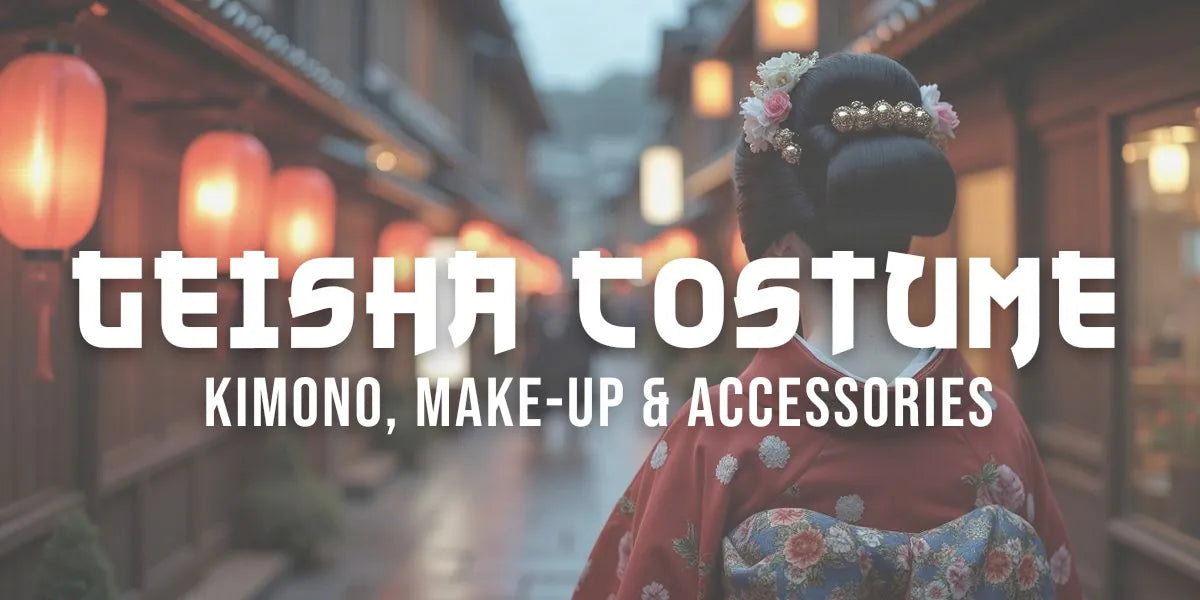
The first thing I notice on a maiko crossing a Kyoto street at dusk is not her white face. It is the sound. The hollow knock of wooden sandals on stone, then the rustle of silk.
The Geisha are an integral part of traditional Japanese culture. They are artistic icons in entertainment such as music, dance and the art of conversation.
But can we talk about a geisha without talking about her illustrious kimono and the various accessories that characterize her?
A Geisha's outfit consists of a traditional kimono (着物, "thing to wear"), a belt (Obi), white socks (Tabi) and wooden sandals (Geta). The geisha style is completed by accessories such as Kanzashi (hair ornaments) or the Sensu (Japanese folding fan).
This traditional Japanese garment is seen as a work of art around the world. Designers still borrow its lines for runway collections.
You will discover in this article how to build a true Japanese geisha look. In particular, we will see:
- What is a Geisha ?
- The Geisha costume
- Their unique makeup and their refined and sophisticated bun
- The Japanese Geta shoes and their luxurious appearance
Key points
- The full outfit is kimono, obi, tabi socks, geta sandals, kanzashi hair ornaments and a folding fan.
- A maiko wears bright colours, long sleeves and a trailing obi knot; a confirmed geisha wears muted colours and a compact knot.
- Makeup follows rank: the maiko paints only her lower lip, the geisha paints both.
- Japanese sizes run about one size smaller than US/EU, so size up when you order a kimono.
- A geisha kimono is always closed left flap over right, never the opposite.
What is a Geisha?
To understand what a Geisha is, look at the word itself. It is made of the kanji {Gei} for "art" and {Sha} for "person". A geisha is a person who practises the arts.
The profession appeared officially in the eighteenth century. It is closer to a way of life than to a job, since it asks for a whole life of practice. Trained from a young age in Japanese discipline, Maiko and Geisha live inside an Okiya (geisha house). That is where they live and complete their training.
Her main role as a hostess is to entertain her guests. For centuries, these performers have hosted, played and captivated. The profession should not be confused with that of a concubine. Geisha do not sell their bodies. They are artists, known for their many talents. Private relationships remain a personal matter.
Geisha do not entertain men only. Women also book their services and enjoy the elegance they display.
The different statuses of a Geisha
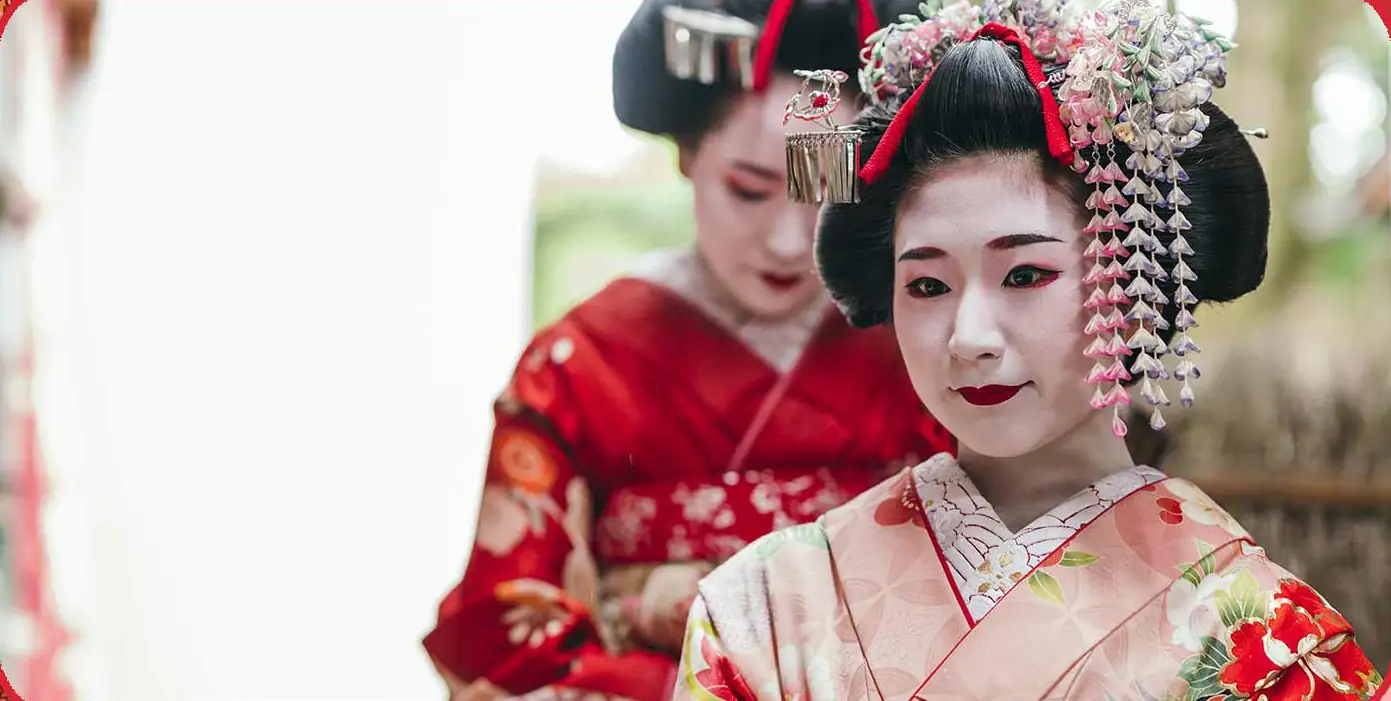
The rank of a Geisha depends on her level of training, her seniority and her experience. Reaching the rank of Geisha means mastering the traditional Japanese arts at the end of the apprenticeship.
The path begins with the status of "Shikomi", a young girl who handles the housework of the okiya. She becomes a "Minarai" when she shows artistic promise. The Minarai then obtains the status of "Maiko" after serious training in the Japanese arts. She becomes the apprentice of a geisha who passes on her knowledge.
The training lasts about five or six years. At the end, the Maiko must prove her mastery of every discipline she has learned. The apprentice, who speaks little and answers with a nod or a smile, gives way to the Geisha. The Geisha masters the art of conversation and keeps her guests at ease.
The Geisha costume: how to wear it ?
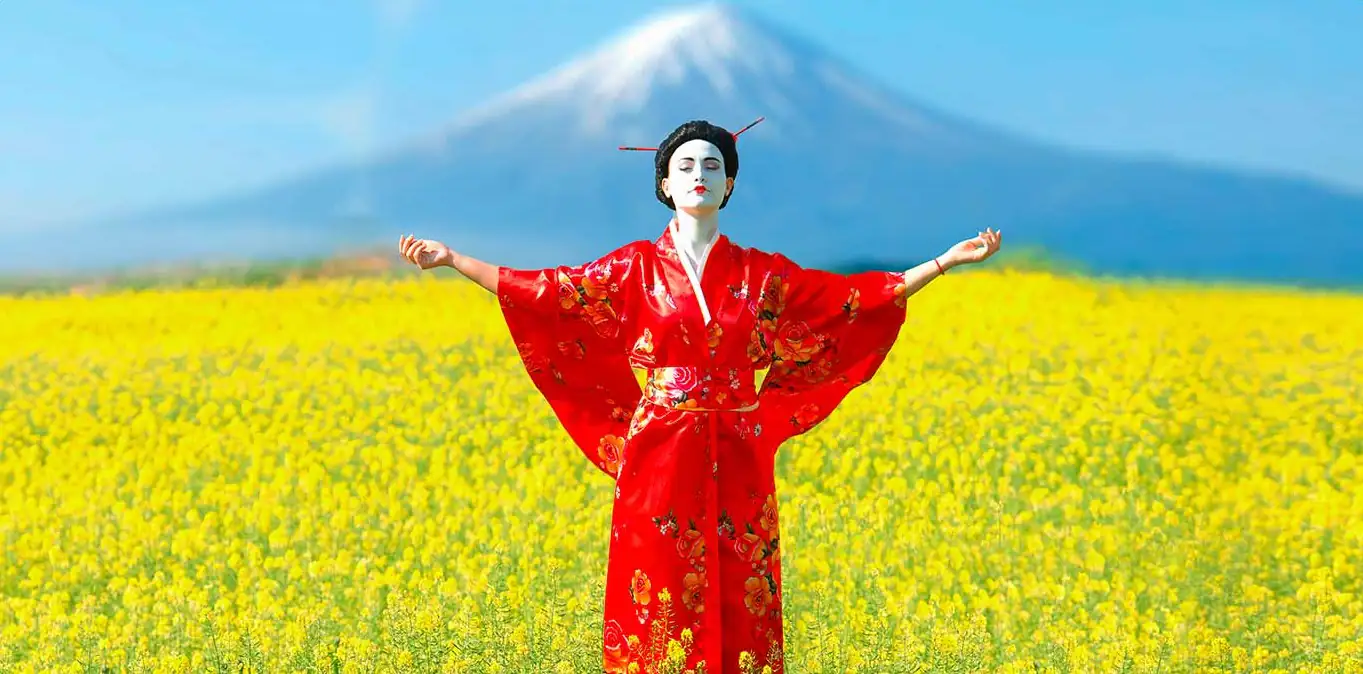
The kimono of these Japanese hostesses differs from the everyday kimono we know. It is much longer, it ends in a train, and it opens low on the nape of the neck. The emphasis is placed there because that part of the body is read as elegant and attractive in Japan.
These hostesses do not wear Western underwear under the kimono. It would add creases to the silhouette. They wear a "Koshimaki" instead, a cloth wrapped around the hips, then a set of underlayers chosen to match the kimono.
Given the complexity of the layers and the weight of the fabric, a professional dresser is required to put on the outfit. It is usually a man, and he is one of the few people allowed into the geisha house for this task. The garment also changes according to rank.
If you want a costume that reads "geisha" without the full weight of an authentic ensemble, a long women's kimono with a clean pattern and a wide obi does the job.
The Kimono for all occasions
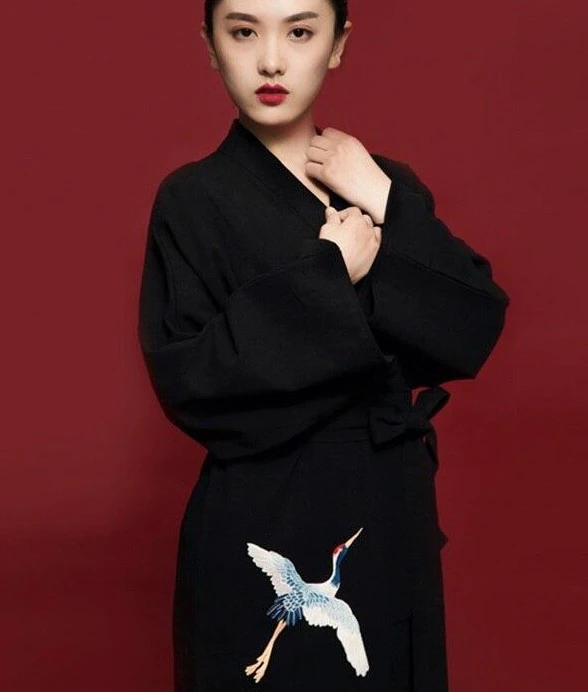
This traditional Japanese garment is one of the icons of these talented hostesses. The word comes from {Ki} for "wear" and {Mono} for "thing". This Japanese tunic, made of silk, cotton or polyester, is cut in a T shape.
The long Japanese dress has wide sleeves, reaches the heels and wraps around the body. Its character comes less from the cut than from the patterns. Motifs, colours and models signal the social rank or the situation of the wearer. You can see the same logic at work across our kimonos for women, where each pattern carries a meaning.
The kimono is closed by folding the left flap over the right side, then secured with a wide belt called "Obi". The garment is worn by women and men, and closed the same way for both.
One practical point before ordering: Japanese sizes run about one size smaller than US and EU sizes. A US/EU M usually corresponds to a Japanese L. If you are between two sizes, take the larger one.
If you wish to know the authentic kimono rules, have a look at our blog article on how to wear a kimono. The fourth rule is the one people get wrong most often.
The Kimono variations of Geisha
The apprentice, or Maiko, wears a kimono with bright, shimmering colours and longer, more elaborate sleeves. Geisha and maiko kimono are usually cut to the same size. The apprentice's version simply carries a longer train, which adds movement when she walks.
The experienced hostess wears shorter sleeves and muted, understated colours. The idea is to let the young apprentice draw the eye. The geisha keeps a mature, restrained appearance, and her elegance comes from that simplicity. In short, the kimono states the rank through its structure, its Japanese symbols, its ornaments and its colours. That balance between restraint and quiet beauty is exactly what Wabi-Sabi describes.
An Obi is a long, wide belt. Its function is to hold the kimono or Yukata closed by tying at the back. Women tie it above the abdomen, men at the waist. Obi designs change with the ceremony or the occasion.
The variations of the Geisha Obi belt
The main function of the Obi belt is to keep the kimono closed. It also shapes the silhouette. And it supports the back, which matters when you sit on the floor for hours with a straight posture.
The obi is also a rank marker. The Maiko wears the wide Nippon knot, richly decorated and left to hang down in a long train. The confirmed Geisha wears subtle colours, a narrower knot and no train.
The obi of these artists is made of silk and is worn lower than the obi of most Japanese women. It is always tied at the back. Tying it at the front used to be a sign of prostitution.
The unique and distinctive makeup of Geisha and its realization
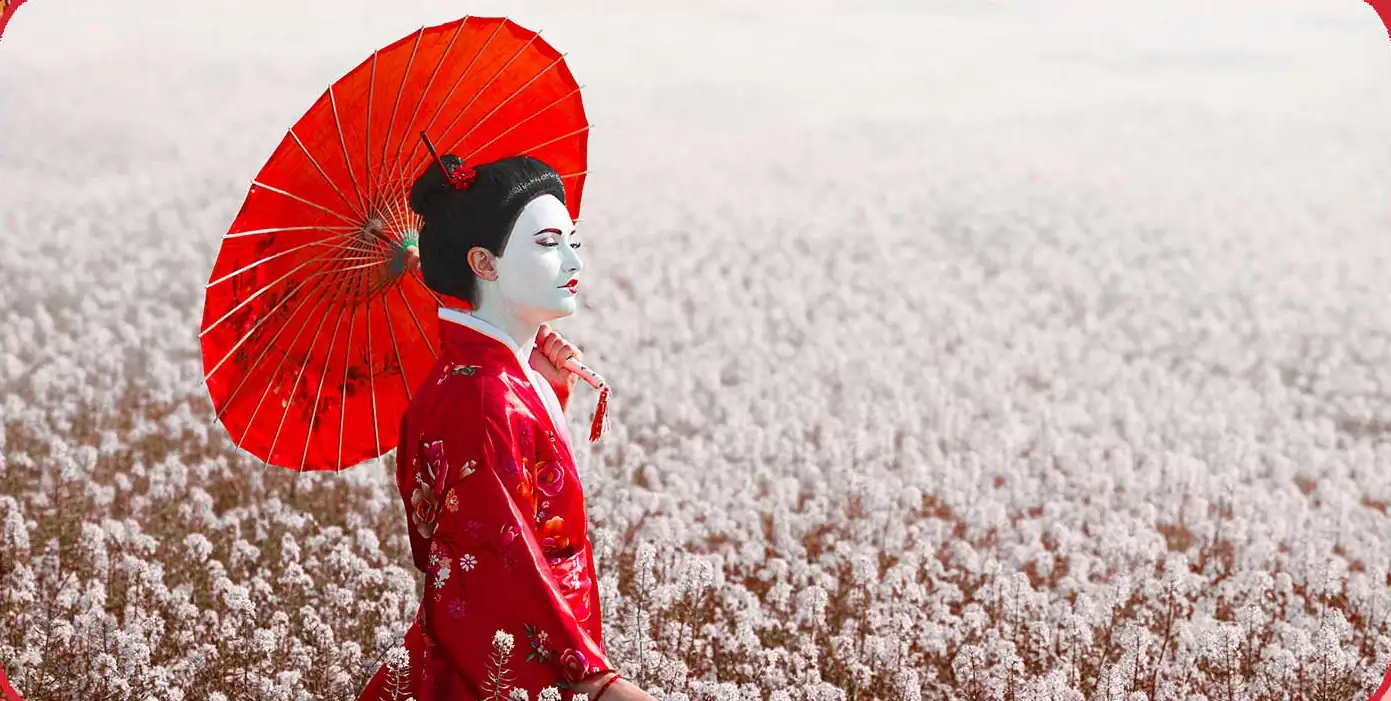
The white face is the common feature of every geisha, whatever her rank. The old powder contained lead, which caused serious health problems. It was replaced by a mixture based on rice powder.
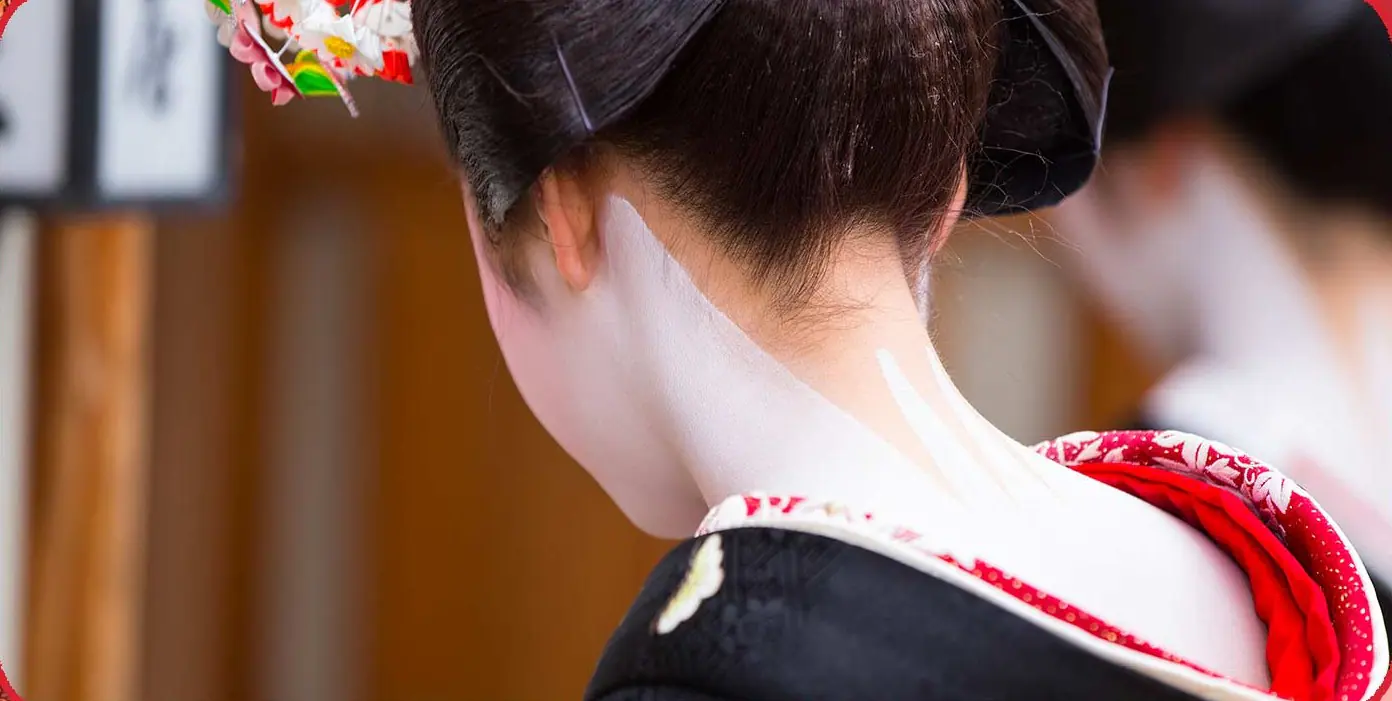
The face is first covered with an oily base. Water is then added to the powder to obtain a paste, which is spread evenly. The colour covers the face, the neck, the nape and the exposed part of the back.
Two or three unpainted lines are left at the hairline and on the nape. They are kept bare on purpose, as a contrast with the white. The eyebrows and the eye area are accentuated with charcoal. The lips depend on the rank.
Variations in makeup among Geisha
The best known version is the maiko makeup. White face, eyebrows and eye area darkened with charcoal, light pink tints on the cheeks and at the corners of the eyes. These colours underline the youth of the apprentice.
With age and experience, Geisha wear less makeup and let their natural features show. Full makeup is then kept for special events or performances. It marks the passage to adulthood and maturity.
The clearest difference between a Maiko and a confirmed Geisha is on the lips. A Maiko paints only the lower lip in red. A Geisha paints both. She also drops the pink shades on the cheeks.
The refined and sophisticated Geisha bun
Geisha wear elaborate buns held by decorative Japanese accessories called "Kanzashi". Maiko style their own hair into a bun set with rich ornaments (Kanokodome). Geisha wear a styled wig with fewer, more modest accessories.
The hairstyles of the Maiko are recognisable by a strip of red cloth at the front, called "Chinkoro". The bun called "Wareshinobu" also includes a piece of red cloth that echoes the Chinkoro. The geiko's wig is a "Katsura", dressed into a bun called "Shimada".
The hair of a geisha is usually dense and black, pulled back to open the face. These hairstyles take hours to build and must last about a week.
To protect them, the hostesses sleep on small wooden neck supports called "Takamakura".
Kanzashi follow the seasons or personal taste. When they follow the seasons, they reproduce the flowers of the month.
Shoes: an important accessory to a Geisha's finery
A Geisha's outfit is completed with white socks (Tabi) and wooden sandals (Geta). Geta are traditional raised wooden shoes standing on teeth. They are useful in rain or snow, since they keep the kimono off the ground.
These sandals also mark rank. The Pokkuri or okobo-geta worn by Maiko look like a tall wooden block, slightly slanted at the front. The okobo must be higher than a geisha's geta because of the long train.
Confirmed Geisha lean towards Zori, close in spirit to the Okobo but lower and lighter. Modern models come with soles of different heights. Made of silk or of contemporary materials, they are worn at ceremonies and formal events.
The Luxurious Look of Geisha
The kimono of these Japanese artists are made from the finest silk. A full women's ensemble can weigh up to 20 kilos and reach very high figures at auction. The obi can cost as much as the kimono, since it is hand embroidered.
The hairstyles are built by specialised hairdressers and take several hours. They are then kept intact for days. Some ornaments even include precious stones.
Few of us will wear a silk ensemble of that weight. A kimono with a woven pattern and a good drape gives the same graphic effect and stays wearable for a whole evening.

Another accessory that carries the luxury of the geisha look is the folding fan. It usually sits tucked in the folds of the obi. A geisha's fan is made of thick paper covered with paint, lacquer or gold leaf, on lacquered wooden ribs. It is used for dance, and to shield the face.
FAQ
What accessories do geisha wear?
The core set is the obi belt, tabi socks, geta or zori sandals, kanzashi hair ornaments and a folding fan. Maiko add a red cloth at the hairline and a decorative obi cord. For a costume, the kanzashi and the fan are what people recognise first.
What type of kimono do geisha wear?
They wear long silk kimono with a train, cut to sit low on the nape. Maiko wear bright colours with long swinging sleeves. Confirmed geisha wear muted colours with shorter sleeves and a simpler knot.
What makeup do geisha use?
A rice powder base applied over an oily primer, charcoal for the eyebrows and the eyes, and red pigment for the lips. Lines of bare skin are left on the nape as a contrast. A maiko paints only the lower lip, a geisha paints both.
What size should I order for a geisha kimono?
Japanese sizes run about one size smaller than US and EU sizes, so order one size up from your usual. Check the total length as well: a geisha silhouette needs the hem to reach the ankle or lower. Our size chart on each product page gives the chest and length in centimetres.
Explore the Kimonos For Women collection
Take a look at our Kimonos For Women collection to find the piece that will carry your own geisha look.
Browse the collection →