
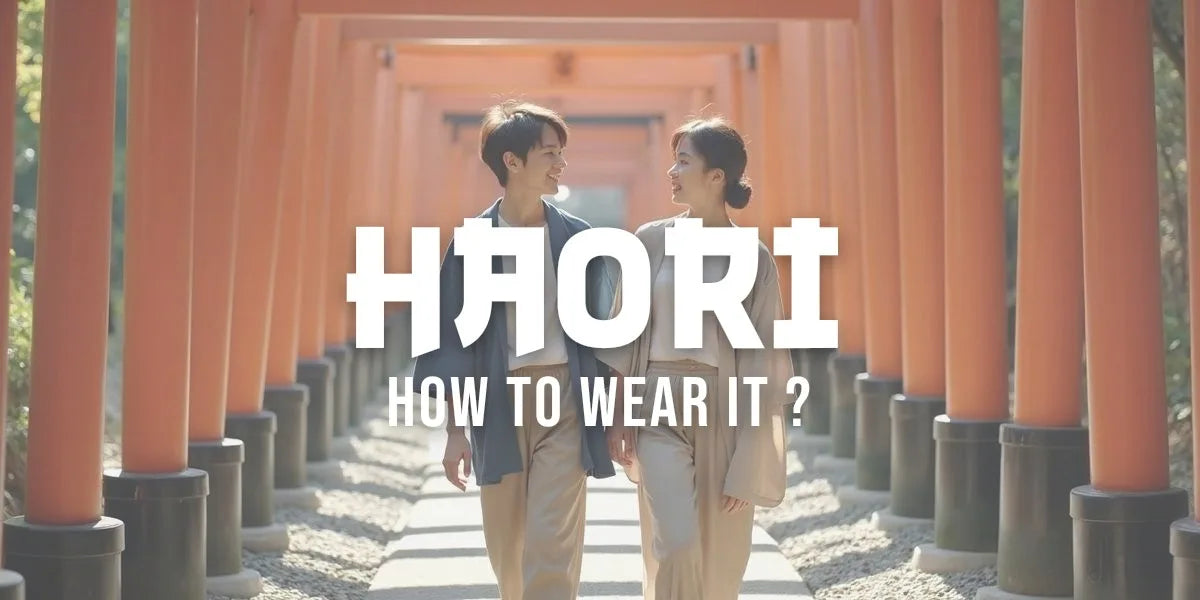
At seven in the morning in late September, the gravel path to a neighbourhood shrine is damp, the air smells of cedar, and you can hear the broom of the caretaker before you see anyone. Three hours later the same path is 26°C and you are carrying your jacket in your hand. That swing is the whole problem of dressing for Silver Week, Japan's September holiday cluster that links Respect for the Aged Day (Keirō no Hi, 敬老の日) with Autumn Equinox Day (Shūbun no Hi, 秋分の日), the week when shrines and temples fill with families marking o-higan and small neighbourhood matsuri (祭り) light up the streets after dark. A good Japan autumn shrine visit outfit is simple: shoulders covered, clothes clean and quiet in colour, shoes you can slip off without sitting down, and one light layer you add at dawn and remove by noon. A haori (羽織), the short traditional jacket worn open over other clothes, thrown over jeans and a plain tee is the formula I come back to every autumn.
In short
- Silver Week combines Respect for the Aged Day and the Autumn Equinox holiday, and in some years a bridge day turns it into a five-day run.
- O-higan is the seven-day Buddhist period around the equinox when families visit graves and pray, so expect calm crowds rather than party crowds.
- Shrine etiquette is short to learn: rinse at the water pavilion, bow twice, clap twice, bow once, and keep your shoulders covered.
- September mornings are cool and afternoons still warm, so a light layer you can fold into a bag beats any heavy coat.
What is Silver Week in Japan and the holidays it links
Silver Week is not an official name. It is the nickname for the September holiday group, an autumn echo of Golden Week in spring. Two national holidays sit close together: Respect for the Aged Day on the third Monday of September, and Autumn Equinox Day on the 22nd or 23rd. Depending on the calendar, they produce a long weekend, a split week, or a rare five-day break.
Respect for the Aged Day (Keirō no Hi) and what happens
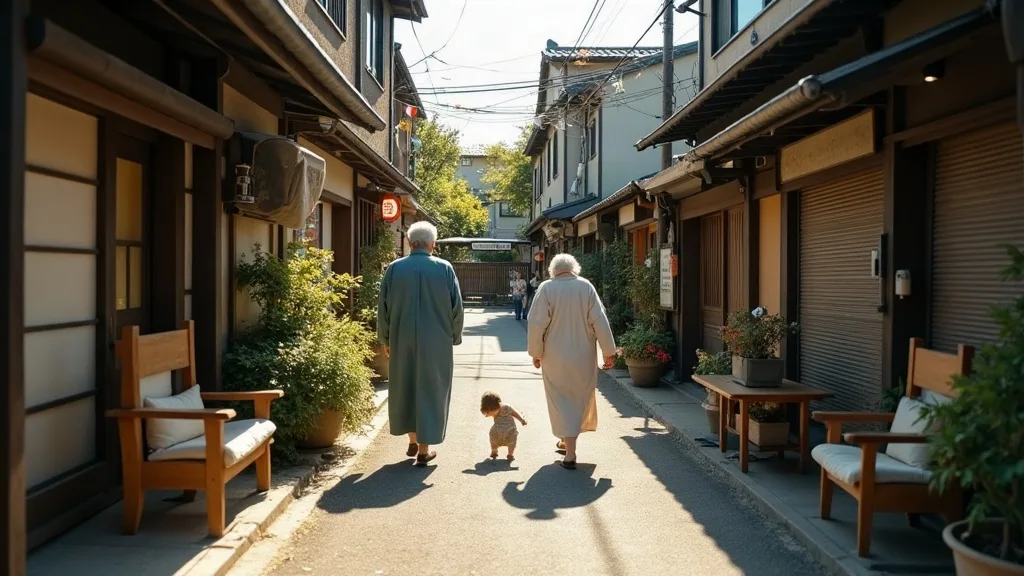
Keirō no Hi honours older people and celebrates longevity. It used to fall on 15 September; the Happy Monday System moved it to the third Monday of the month in 2003. The day is mostly local: town halls hold small ceremonies, community centres organise lunches and performances, families visit their grandparents. Nothing closes down, but trains and highways get busier from the Friday evening before.
Autumn Equinox Day (Shūbun no Hi) in the calendar
Shūbun no Hi marks the day when daylight and darkness are close to equal. Under the holiday law its stated purpose is to honour ancestors and remember those who have died, which is why it sits inside a religious observance rather than beside one.
Shrines stay open on the day, and many hold a seasonal rite. Temple grounds are the busier of the two, because that is where family graves usually are.
When Silver Week stretches into a five-day break
Japanese law says that a working day caught between two national holidays becomes a citizens' holiday. When Respect for the Aged Day lands on 21 September and the equinox falls on the 23rd, the Tuesday in between becomes a holiday too, and the weekend before joins on. That alignment happened in 2009 and 2015, and it returns in 2026 with a run from 19 to 23 September. In other years you get a three-day weekend, then a normal Monday and Tuesday, then a single holiday.
| Golden Week (spring) | Silver Week (September) | |
|---|---|---|
| Length | Four holidays clustered, often 7 to 10 days off | Two holidays, 3 to 5 days off |
| Crowds | Peak domestic travel, famous sites saturated | Busy but breathable, strong regional variation |
| Weather | Mild and dry, 18 to 24°C | Warm and humid, typhoon risk, cool mornings |
| Prices | Highest of the year for flights and hotels | Raised, but usually easier to book late |
Pack for two climates in one day. In Tokyo and Osaka, late September afternoons still reach 26 to 28°C, while mornings and evenings drop to around 20°C. Kyoto's basin and any mountain shrine feel several degrees colder at dawn. Rain arrives fast in typhoon season. That is why I travel with a packable layer: the Haori Techwear jacket is the one I fold into my daypack for shrine mornings, because it shrugs off drizzle and rolls down small once the sun is high.

Higan and the autumn equinox at Japanese shrines
Higan (彼岸) means "the other shore", the Buddhist image of enlightenment across the river from our own world. O-higan is the seven-day period centred on the equinox: three days before, the equinox itself, three days after. It happens twice a year, in spring and autumn, and it is one of the busiest family observances in the Japanese calendar.
O-higan customs: graves, ohagi and family visits
The main act is ohaka-mairi (お墓参り), the grave visit. Families clean the stone, pour water over it, set out flowers and incense, and stand quietly. Family graves are usually at Buddhist temples, so temple grounds carry most of the o-higan traffic. Shinto shrines keep a different role that week: seasonal prayers and thanks for the harvest.
Offerings of ohagi (おはぎ), sweet rice balls covered in red bean paste, are shared at home and left at the family altar. If you visit a temple during this week, keep your voice low, do not photograph families at graves, and give people space around the water taps and incense stands. The mood is closer to a cemetery on a memorial day than to a tourist site.
Higanbana and the autumn colours around shrine paths
The red spider lily is called higanbana (彼岸花) because it blooms almost exactly during this week. You will see it along rice paddy edges, canal banks and the approach paths of country shrines. Maple colour comes much later, from mid-November in Kyoto, so September and early October give you moss, cedar shade and lantern light rather than autumn foliage.
Shrine etiquette for an autumn torii and temizu walk
A shrine visit follows a short, learnable sequence. Bow once before passing under the torii (鳥居), the gate that marks the boundary of sacred ground. Walk on the side of the path rather than down the middle, which is reserved for the kami. Remove your hat inside the grounds, and keep your shoulders covered. That last rule is the one travellers ask me about most, and the answer is not a suit. Clean and modest is enough. When my shirt is sleeveless I slip on a light Japanese haori before the gate, which solves the shoulder question in three seconds and packs flat the rest of the day.

Temizuya: how to rinse hands and mouth before praying
The water pavilion near the entrance is for temizuya purification (手水舎). Take the ladle in your right hand, rinse your left hand, swap and rinse your right. Pour water into your left palm, rinse your mouth from the palm rather than the ladle, and spit discreetly beside the basin, never into it. Rinse the left hand again, then tilt the ladle upright so the remaining water runs down the handle. Many shrines removed their ladles in recent years and now use running water; in that case just rinse your hands.
Bowing, coins and clapping at the offering hall
At the haiden, drop your coin into the box, ring the bell if there is one, then perform sanpai (参拝): two bows, two claps, one bow. Bring your hands together after the claps and hold your thought for a moment. A few shrines differ, most famously Izumo Taisha in Shimane, where the custom is four claps. Do not film during someone else's prayer.
Omamori, ema and goshuin to bring home
Omamori (お守り) are the small brocade amulets sold at the shrine office, each tied to a theme such as study, travel or family. Ema (絵馬) are the wooden plaques you write a wish on and hang on the rack. Goshuin (御朱印) are calligraphy and seal entries brushed into a dedicated book, the goshuinchō, for a small fee. The grounds may be open from dawn, but the office usually works from about 9:00 to 16:30, so plan your quiet early walk and come back later for the counter.
Japan autumn shrine visit outfit: a layering formula to copy
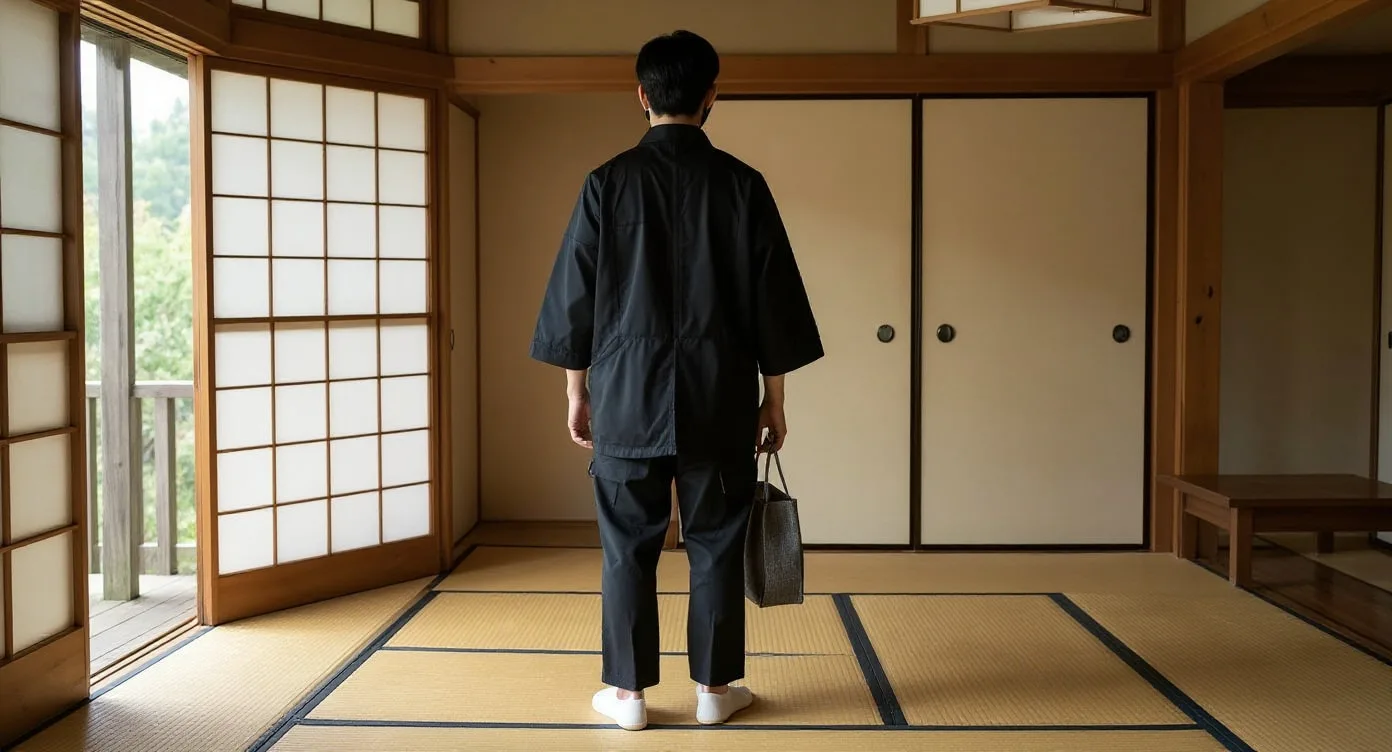
Three layers cover every September and October day. Base: a plain tee or a thin long-sleeve shirt in a calm colour. Mid: a haori or a light cardigan, on at dawn, folded away by eleven. Shell: a compact rain layer, because typhoon season overlaps with the holiday. Twenty thousand steps a day is normal on a shrine route, so weight matters more than warmth.
Layering a haori over jeans and a plain tee
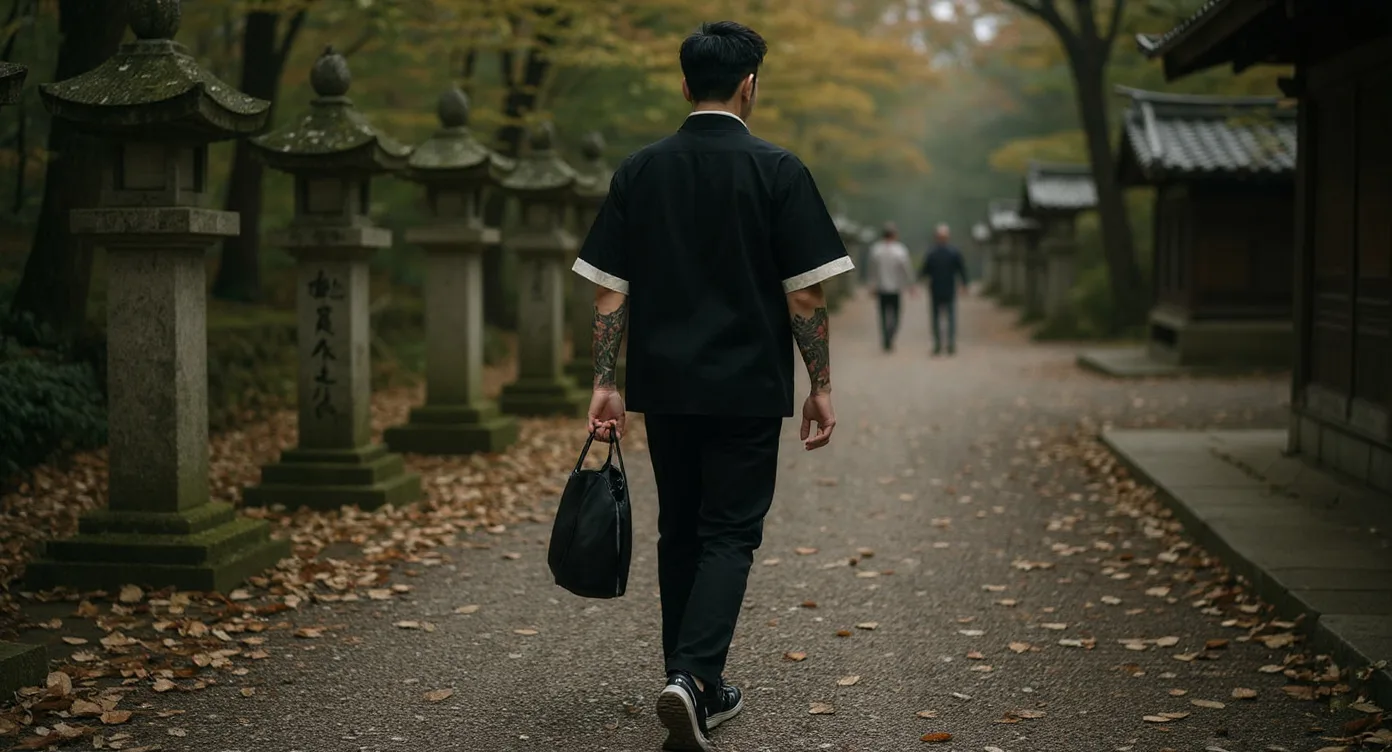
Black haori, black jeans, white tee, dark sneakers. It reads as respectful at a shrine, photographs well against vermilion gates, and still looks like your own wardrobe rather than a costume. The haori is open at the front by design, so it never fights the shirt underneath.
| Mid-layer | Warmth | Bag space | Fits the setting |
|---|---|---|---|
| Haori | Light, cuts the morning chill | Folds very flat | Yes, quiet and covered |
| Cardigan | Warmer, holds humidity | Bulky when rolled | Yes, but heavy for noon |
| Denim jacket | Windproof, slow to dry | Poor, stays on your arm | Neutral, stiff in photos |
One sizing note before you order: Japanese sizes run about one size smaller than US and EU equivalents. A Japanese L sits close to a US or EU M. If you are between sizes, or want room for a hoodie underneath, size up.
Shrine dress code: shoulders, necklines and shoes
There is no written dress code at most shrines and temples, including famous sites such as Kinkaku-ji. What is expected is common courtesy: covered shoulders, no deep necklines, nothing see-through, no swimwear, hat off inside the grounds. Choose shoes you can remove standing up, and carry a small bag in front of you in a festival crowd. Skip loud logos and bright neon if you plan to enter a hall where people are praying.
Tabi socks and geta for autumn shrine photos
Geta (下駄), the raised wooden sandals, look beautiful on stone steps and sound wonderful on a wooden veranda. They are also unforgiving over 20,000 steps of gravel. My honest advice is to plan one photo morning in geta with tabi socks, the split-toe socks that separate the big toe, then change into dark sneakers for the rest of the day. Tabi socks also work under regular sandals and keep your feet warm on a cold shrine floor.
Autumn matsuri: where kitsune and oni masks are really worn
Autumn is harvest festival season. From late September through November, towns and villages hold aki matsuri to thank the kami for the rice crop, with portable shrines, drums, food stalls and night performances. This is where masks belong: on performers, on stalls, on the side of a visitor's head. Not on your face while you pray.
Kagura and dance performances during autumn festivals
Kagura (神楽) is Shinto ritual dance, performed on shrine stages with masks, drums and flutes. Many pieces retell myths, and the demon roles use fierce carved faces close to what we call oni (鬼). Iwami Kagura in Shimane is one of the best-known regional traditions and is often staged at autumn festivals; countless village shrines run their own smaller programmes on harvest nights. Check the notice board at the entrance for the start time.
Buying and wearing a festival mask without a faux pas
Wear a mask at the stalls, in a parade, at a costume event or a convention. Take it off, or push it up, before you approach an offering hall. Our Oni and Kitsune masks are handcrafted by talented local artisans, and outside Japan most of my customers use them two ways: cosplay and photo shoots, or hung on a wall as a single strong piece above a plain shelf. What I would avoid is treating a mask as a joke prop inside a shrine where people are in prayer.
Autumn shrine visit outfit in Japan: common questions
Short answers to the questions readers send me every September, before they finish packing.
What should I wear in Japan during autumn?
Layers in calm colours. A tee or thin shirt as a base, a haori or cardigan for morning and evening, and a compact rain shell for typhoon season. September is still humid, so breathable cotton and linen work better than wool until mid-October.
How should a tourist dress in Japan in October?
October mornings run about 15 to 18°C in Tokyo and Kyoto, with afternoons around 22 to 24°C. A long-sleeve base plus one mid-layer covers the whole day. Add comfortable walking shoes you can slip off, since temple interiors, restaurants and traditional inns all ask for bare or socked feet.
Is there a dress code for shrines and temples like Kinkaku-ji?
No formal dress code is posted at most sites. Covered shoulders, modest necklines, no beachwear and no hats indoors are the practical expectations. Clean and quiet beats smart and expensive.
Are shrines crowded during Silver Week?
Busier than a normal week, calmer than Golden Week. Temples with family graves see the heaviest traffic during o-higan, and famous city shrines fill from mid-morning. Arriving before 9:00 usually gives you a near-empty approach path.
Can foreigners wear a kimono or haori to a shrine?
Yes. Wearing a kimono (着物) or haori at a shrine is welcomed, and rental shops around Kyoto and Asakusa exist for exactly that. Close the left side over the right, keep the fit tidy, and remember that respect shows in how you wear the piece, not in how expensive it is.
If you are building your own autumn layer before the September holidays, the pieces I reach for most sit in our Japanese kimono dress collection, from light haori jackets to full-length designs. Take your time choosing one, and check the size chart twice.
Explore the Japanese Kimono Dress collection
Browse our haori and kimono pieces to build your own autumn layer for shrine walks and festival evenings.
Browse the collection →