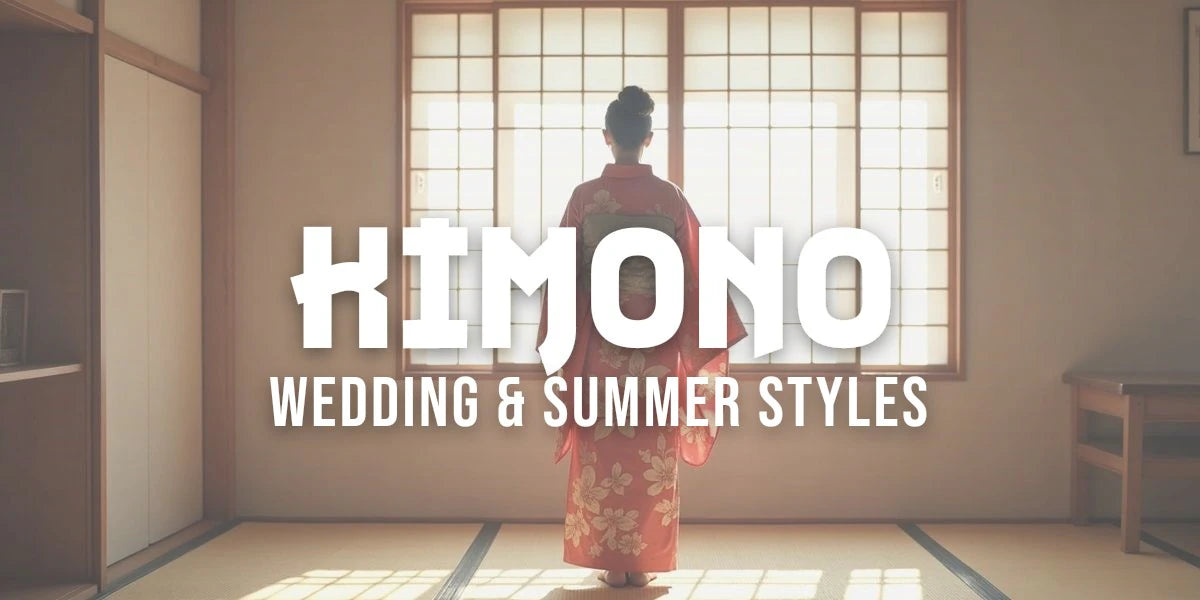
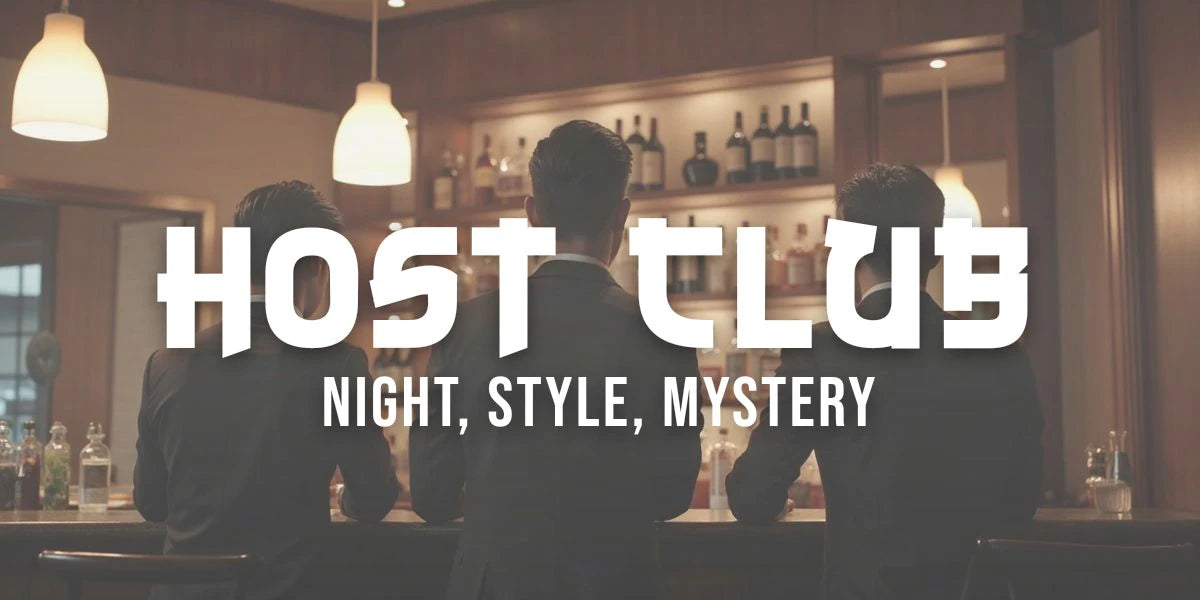
Walk through Kabukichō at eleven at night and you will see them on the billboards: rows of young men with sculpted hair, black shirts open at the collar, names printed in gold above a ranking number. I stood under one of those screens on my first trip to Shinjuku and realised I understood almost nothing about what was being sold inside. The mysterious Japanese host is, in plain terms, a professionally charming man who entertains female guests in a Japanese nightlife club: he pours drinks, keeps the conversation flowing and builds a regular clientele that requests him by name. Host clubs, concentrated in Tokyo's Kabukichō district, fascinate outsiders because they sell attention and atmosphere rather than romance, with their own hierarchy, rankings and bills. The mystery is mostly unfamiliarity. Once you understand the system and the look, it reads as a very codified service job with a very recognisable wardrobe.
Key points
- A Japanese host sells conversation, attention and a sense of occasion, not dating or sex.
- Host clubs run on a request system (shimei), bottle sales and visible internal rankings.
- The host look is deliberate: volume in the hair, a fitted dark silhouette, grooming treated as part of the job.
- That nocturnal elegance translates easily into a modern Japanese wardrobe: black kimono shirt, haori, sukajan.
What is a Japanese host, and what does the job involve?
The mechanics are more visible than the mystery suggests. What follows is a night in the work, how host clubs fit into the larger nightlife landscape, and how the pay structure actually functions.
A host's night, from opening the door to the last toast
A host (ホスト) works in a host club (ホストクラブ), a licensed bar where male staff sit with female customers and provide company for the length of the visit. The job belongs to what Japanese calls mizu shōbai, the "water trade", an old term for businesses whose income flows and evaporates with the mood of the customer. Nothing about the work is secret. It is paid conversation, in a room with low light, bottles on the table and a clock running.
The service is emotional and social. A host remembers that a guest changed jobs last month, asks about her sister, refills her glass before she notices it is empty, and makes the table feel like the best place in the building. Prostitution is not part of the job and is illegal in Japan under the Anti-Prostitution Law; clubs operate under nightlife entertainment licensing instead. What the business actually runs on is repeat visits from a small number of loyal customers.
Most clubs run two shifts. An evening shift opens in the early evening and closes before the legal cut-off for late-night service; an after-hours shift picks up once other bars close and runs toward dawn. The hours are brutal, and they are only part of the work.
- Before opening: hair appointment or self-styling, shirt pressed, shoes cleaned.
- Opening: newcomers get rotated between tables so the guest can choose who she likes.
- During service: pouring, lighting, ordering, conversation, karaoke, table games.
- Between tables: a host may move across several groups in one night, each expecting full attention.
- After closing: messaging regulars, arranging the next appointment, counting sales.
The after-hours messaging is the invisible half of the job. A host's income depends on who books him next week, so the phone work continues long after the lights come up.
Japanese host clubs vs hostess clubs and kyabakura
Japanese nightlife separates venues by who is working and who is being served, and the categories matter because the prices and the atmosphere differ sharply. A host club serves women and employs men. A hostess club serves men and employs women, usually in a quieter, more formal register. Kyabakura, a contraction of "cabaret club", is the more casual and more numerous version of the hostess club. Girls bars sit lower still: staff work behind a counter and do not join you at a table.
One detail surprises most visitors: a significant share of host club customers work in the night industry themselves, as hostesses or kyabakura staff. They finish their own shift and spend part of their earnings being served in turn. That circulation of money inside the same district explains a lot about how the business survives.
How a host actually earns: shimei, bottles and rankings
The core mechanism is shimei, the request. A guest asks for a specific host by name, and that request is logged against him. His sales figure is built from what his requesting customers spend, which is why hosts compete for regulars rather than for one-off visitors.
On top of shimei sits drink revenue. Bottles are the main margin, and the theatrical end of this is the champagne call: when a guest orders an expensive bottle, staff gather, chant, clap and make the purchase into a public event for the whole room. It is a performance of status, for the guest as much as for the host.
Clubs publish rankings. Monthly sales boards go up inside the club and onto the street billboards, and the top position, the No.1 host ranking, becomes a marketing asset for the venue. The system is transparent by design: everyone can see who is winning.
The pay structure is commission-heavy. A beginner earns close to an hourly minimum while he builds a customer base; a top earner takes a percentage of very large sales. Turnover is high, and the gap between the man on the billboard and the man rotating tables on his third week is enormous.
Host style codes: hair, black tailoring, studied allure
Every element of this look is functional. The silhouette solves problems of visibility, the proportions read across a dark room, and the grooming happens because guests sit close for hours. Here is where it starts: with the hair.
The host haircut and why volume does the work
The classic host haircut builds height and movement at the crown, keeps length through the front, and finishes with defined, separated pieces rather than a flat sweep. Lightened or ash-toned colour is common because it catches what little light exists in a club interior. Blow-dried volume plus firm hold wax is the whole technique.
The function is recognition. A silhouette with height and a distinct hairline shape photographs well on a backlit poster and remains identifiable across a dim room. Flat hair disappears in that setting; structured hair does not.
Why hosts live in dark fitted shirts and sharp suits
Under the hair comes the line: a tailored black suit or, more often now, a dark shirt worn without a jacket, cut close through the chest and nipped at the waist. The collar sits open, usually one or two buttons down. The palette stays black, charcoal, deep navy, with a shine from satin, silk-blend or high-twist fabric instead of from colour.
- Shoulder: clean and slightly structured, no drop.
- Waist: visibly narrower than the chest; this is the defining proportion.
- Collar: open, with enough stand to frame the jaw.
- Length: short enough to keep the leg line long, tucked or straight-hemmed.
- Finish: matte base with one reflective element, never two.
If you want this base without buying a suit, a black shirt is the single piece that does the job. The one I recommend most often to customers chasing this silhouette is the black Japanese shirt, because its wrapped front and clean shoulder give you the dark fitted line with a Japanese cut rather than a Western business one. I wear mine with black jeans when I want the outfit to read as deliberate without reading as office.

Grooming, scent and accessories as part of the uniform
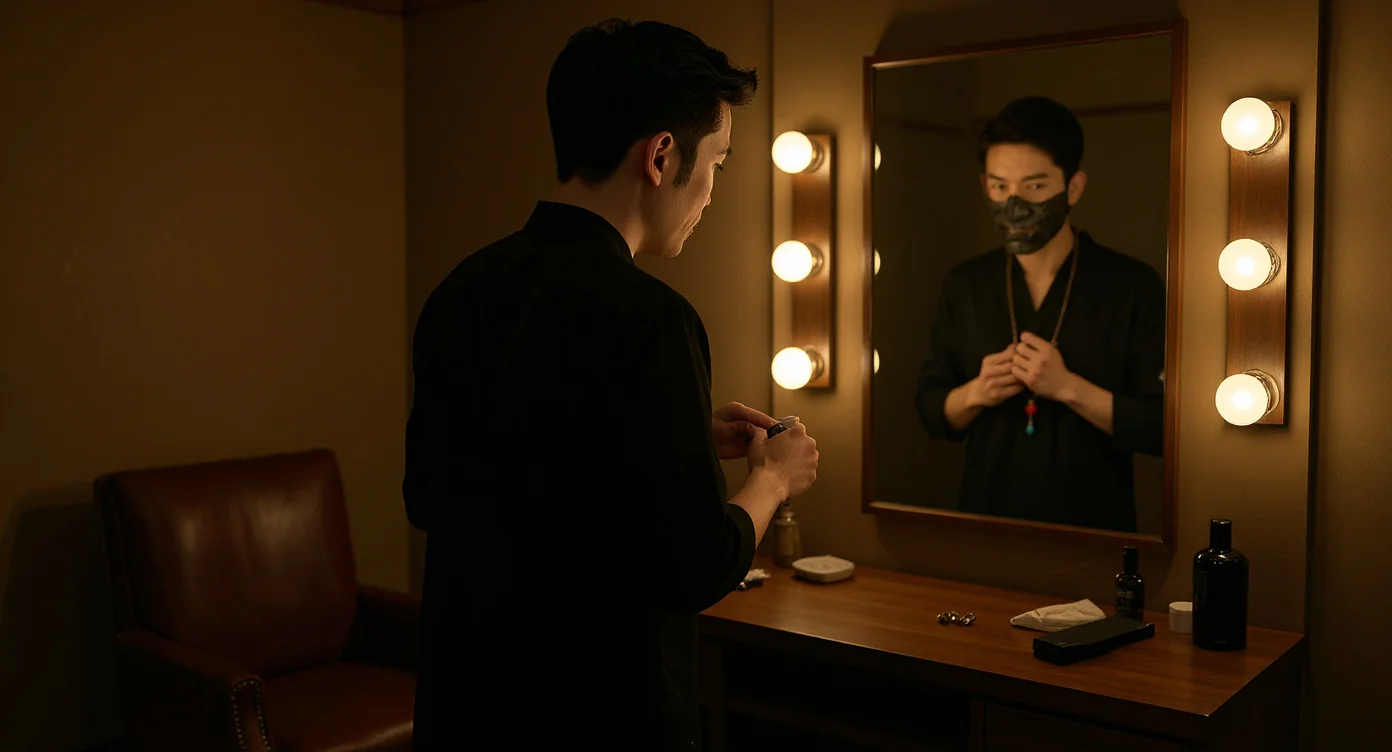
Grooming is treated as maintenance, not indulgence. Skincare, brows, nails and teeth all get attention, because a host sits close to a guest for hours under direct table light. Scent is applied lightly and consistently, so a regular associates one note with one person.
Accessories stay few and legible: a watch, a thin chain, a ring. Silver more often than gold at the lower ranks, because it sits quietly against black. The logic throughout is the same as Kaizen, the principle of steady small improvement that guides what we stock: nothing here is a dramatic gesture, everything is a refinement repeated nightly.
Kabukichō after dark: Tokyo's host club capital
The district's visual language is advertising at scale, and the history explains why the format took this shape. The practical question that follows is whether you can visit one, and the answer comes with conditions.
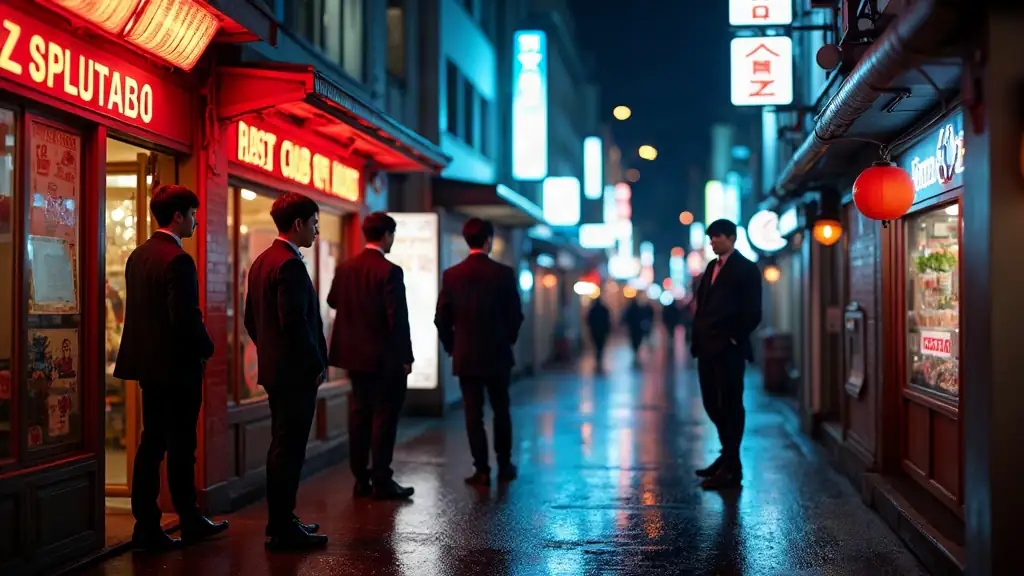
Host club billboards and the Kabukichō streetscape
Kabukichō occupies a few dense blocks northeast of Shinjuku Station, and it holds the highest concentration of host clubs in Japan. The district was rebuilt after the war with a plan to install a kabuki theatre, which never happened; the name stayed and the entertainment business filled the space instead. Today it packs thousands of bars, clubs, restaurants and venues into an area you can cross on foot in fifteen minutes.
The visual signature of the district is advertising. Buildings carry stacked signage from street level to roofline, and host clubs buy the largest formats: backlit panels and LED screens showing staff portraits with names, ranks and slogans. Hostess clubs advertise the same way on neighbouring walls.
Those boards are a live scoreboard. A host's photograph grows larger as his sales climb and vanishes when he leaves. Walking the same street twice a year, you can read the industry's turnover directly off the façades.
From the first post-war clubs to the celebrity-host era
The format is usually traced to the late 1960s in Tokyo, when clubs began offering male company to female customers, initially in a dance-partner register closer to a ballroom than a bar. Through the 1980s and 1990s the business professionalised, the look shifted toward the tanned, bleached, suited style associated with that era, and the request-and-ranking system hardened into the structure used now.
The 2000s brought media attention. Documentaries, television features and magazine coverage turned top hosts into public figures, and the most famous of them, Roland, built a career well beyond the club: books, business ventures, a television presence. He is the clearest proof that the job now has a public-facing, aspirational layer that did not exist in the 1970s.
Can visitors actually walk into a Kabukichō host club?
Yes, with caveats. Most clubs are open to anyone of legal drinking age who can handle the practicalities, but the practicalities are real.
- Language: the entire product is conversation, so limited Japanese limits the experience sharply.
- Touts: street scouting is restricted in Kabukichō and following someone who approaches you is how most billing disputes begin.
- Billing: ask for the table charge, the service percentage and the drink prices in writing before you sit down.
- First-visit rates: many clubs offer a low introductory price for a first visit; subsequent visits cost considerably more.
- Payment: confirm whether cards are accepted before ordering anything.
The honest summary: a first visit at an advertised introductory rate is manageable, and the gap between that figure and a regular's bill is where people get caught out.
What the host look borrows from Japanese dress
Traditional Japanese dress and modern host styling reach the same proportions through different means. The overlap is why a few key pieces translate so easily into a contemporary wardrobe.
A black haori as the nocturnal layer over jeans and a tee
A haori (羽織) is the short open jacket traditionally worn over a kimono (着物), the full-length wrapped robe. It has no closure, falls straight from the shoulder and ends around the hip or thigh. In black, it functions exactly like the jacket a host would wear: it frames the body, adds a dark outer plane and keeps the shoulder line clean.
Over black jeans and a white t-shirt, a black haori gives you the nocturnal register in three pieces. The white tee supplies the contrast that an open collar provides in a club; the haori supplies the movement. It is the easiest entry point into this aesthetic for anyone who does not want to look costumed.
Open collars, wrapped fronts and the kimono shirt line
A kimono shirt borrows the wrapped front and the low, open neckline from traditional construction and shortens everything to shirt length. The result sits very close to the host's unbuttoned collar: a V-shaped opening, skin visible at the throat, no tie, no stiff placket.
The contrast game matters here too. Matte cotton against a satin obi, or a smooth shirt under a textured jacket, gives the outfit depth in low light. One shine per outfit, as with the suits.
What a host silhouette teaches about proportion and fit
Three measurements carry the whole look, and they are worth knowing before you order anything.
A practical warning on sizing: Japanese sizes run about one size smaller than US and EU equivalents. A US medium generally corresponds to a Japanese large. If you want the fitted host line, order your true Japanese size; if you want the relaxed haori drape, size up one.
The mysterious Japanese host in anime, manga and drama
Fiction shaped the version of this world that most readers meet first, and it is a heavily edited version. Here is what anime and manga preserved from the real thing, and what they changed.
Ouran High School Host Club and the softened fantasy
Ouran High School Host Club, Bisco Hatori's manga adapted to anime in 2006, is the most influential example. It relocates the format to an elite high school, where a club of wealthy students entertains female classmates with tea, flattery and assigned personality types: the prince, the cool one, the twins, the quiet intellectual.
The parody is affectionate and the mechanics are pure comedy. No money changes hands, no shift ends at five in the morning, and no one is chasing a monthly sales target. It is a school club wearing the costume of a Kabukichō business.
Host characters in manga, games and Japanese TV dramas
Beyond Ouran, the setting recurs across media. The Yakuza series stages substantial sequences in a fictionalised Kabukichō called Kamurocho, complete with hostess clubs and nightlife districts rendered street by street. Japanese television drama and documentary have both used real host clubs as subject matter, and ranking-board rivalry makes for reliable narrative tension.
For cosplayers, this body of work is a useful reference library, as long as you know which details are observed and which are invented. The hair and the black palette are real. The permanent soft focus is not.
What fiction exaggerates about real host clubs
The gaps are consistent, and worth stating plainly.
- Attention: on screen, one host and one guest. In reality, several tables a night.
- Money: fiction rarely shows the bill. Sales quotas drive the real job.
- Stability: dramas show careers. The industry shows high turnover and short tenures.
- Debt: customer tabs and host-side pressure are largely absent from romantic treatments.
- Hours: the physical cost of finishing at dawn, nightly, almost never appears.
None of this makes the aesthetic less appealing. It just means the clothes are the part worth borrowing, which is where most readers wanted to end up anyway.
Host-inspired outfits for a night out or a convention
You can build this register without a full costume or a nightlife budget. Below are three approaches: how to layer pieces you may own, how to add one Japanese jacket, and what gets a convention reference right.
Cinching a kimono shirt with an obi for a sharper waist
A kimono shirt worn loose reads as relaxed; the same shirt with a marked waist reads as evening. An obi, the sash traditionally used to close a kimono, is what creates that break, and it changes the proportion more than any other single accessory. Wrapped once or twice at the natural waist, it pulls the fabric in and sets up the narrow-middle silhouette that defines host tailoring.
The piece I reach for when I want that effect is a black obi belt, because black on black keeps the waistline structural instead of decorative, and it stops a kimono shirt from drifting into bathrobe territory over dark denim. I made the mistake early on of tying it too high; at the navel it lengthens the leg, at the ribs it shortens everything.

- Outfit one: black kimono shirt, black obi belt, black jeans, leather boots.
- Outfit two: white t-shirt, black haori open over it, dark jeans, silver chain.
- Outfit three: dark shirt tucked, obi at the waist, straight trousers, polished shoes.
A sukajan over a dark shirt for Harajuku evenings
A sukajan (スカジャン) is the Japanese souvenir jacket, a satin bomber with embroidered motifs that originated with American servicemen in post-war Yokosuka. It brings exactly the shine-and-contrast quality the host wardrobe depends on, with more attitude than a blazer.
Worn over a plain dark shirt, a sukajan works because the embroidery carries all the visual interest while the base stays black. Keep the rest flat: no pattern on the shirt, no second metallic. This is the version I would choose for a night out in Harajuku rather than a formal evening, since the jacket's energy is streetwear rather than tailoring.
Host cosplay: what to get right, what to avoid
Convention host cosplay succeeds on grooming and fit, not on accessories. The three things to get right are hair with real height, a shoulder that actually fits, and a waist that is visibly narrower than the chest. Everything else is secondary.
- Do: style the hair properly with wax; flat hair kills the whole reference.
- Do: keep to one shine source, and iron the shirt.
- Avoid: a too-large jacket, which erases the silhouette entirely.
- Avoid: stacked jewellery, sunglasses indoors and three competing patterns.
- Avoid: playing the character as a caricature; the real register is attentive, not loud.
There is something of Wabi-Sabi in restraining this look rather than maximising it. A single well-cut black layer, worn often and worn in, carries more presence than a full costume assembled for one evening. Most of what you need for this silhouette sits in our pieces for men, and the shirt plus obi combination is where I would start.
FAQ
The clearest answers to practical questions about what happens inside a club, how much it costs, whether foreigners can visit, and how this differs from other nightlife venues.
What exactly is a Japanese host club?
It is a licensed nightlife venue where male staff sit with female guests, pour drinks and provide conversation for the duration of the visit. Guests pay a table charge plus drinks, and usually request a specific host by name. The product is company and atmosphere, not dating and not sexual service.
How much does a night at a Tokyo host club cost?
It varies enormously, which is the honest answer. Many clubs advertise a low introductory rate for a first visit, while a regular evening with bottle service costs several multiples of that, and prices change constantly by venue. Ask for the table charge, service percentage and drink prices before you sit down.
Can foreigners visit a host club in Kabukichō?
Generally yes, if you are of legal drinking age and the club accepts walk-ins. The real barrier is language, because the entire service is conversation. Avoid anyone who approaches you on the street, and confirm pricing and payment methods in advance.
Is a host club the same as a hostess club?
No. A host club employs men and serves mainly female guests; a hostess club employs women and serves mainly male guests, often for business entertaining. Kyabakura is the more casual version of the hostess club, and girls bars offer counter service without table company.
Do Japanese hosts date their customers?
Professionally, the relationship is a paid one, and many clubs discourage or forbid private relationships with guests because it disrupts the request system. Outside relationships certainly happen, but they are not what the business sells. The service is attentive company inside the club, for a fee.
If this nocturnal register appeals to you, the black shirts, haori and sukajan in our Japanese clothing for men are the pieces I would build it from. Start with one dark layer and an obi, and the rest of your wardrobe will adapt around them.
Is being a host a respected job in Japan?
How old are most hosts?
What is a champagne call?
Are host clubs only in Tokyo?
Explore the Japanese Clothing Mens collection
Japanese Clothing Mens brings together the kimono shirts, haori and sukajan jackets that carry this Tokyo night-time line into everyday outfits.
Browse the collection →