
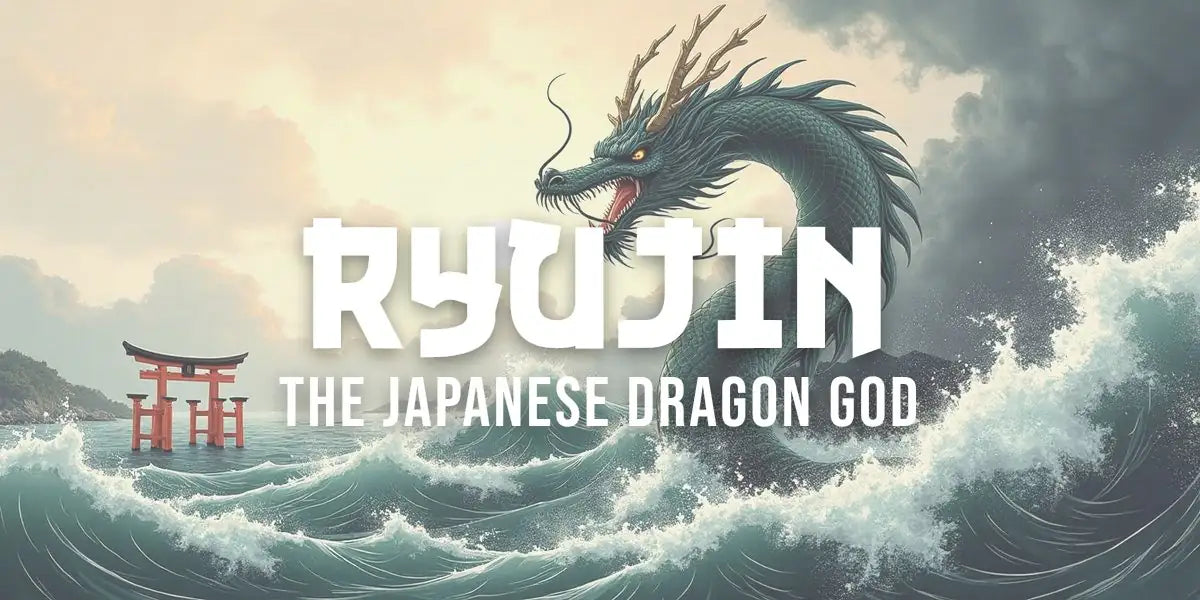
Within Japanese mythology, thousands of dragons exist. All of them share three common traits: three claws on each leg, a mustache, and a sacred pearl called the "dragon pearl". It is from this jewel that their magic comes. The most popular of these dragons is Ryujin (龍神, "dragon god"), the god of the seas. Ryujin is also described in some traditions as a demon or yokai.
Stand on a fishing pier in Japan at dawn and you will often see a small shrine facing the water. Offerings of rice and sake sit there, left for the dragon who rules the tides. That dragon is Ryujin: a sea deity, mostly benevolent, who controls the ocean with two magic tide jewels and lives in an underwater palace.
Key points
- Ryujin is the dragon god of the sea in Japanese mythology, worshipped as a water kami.
- He lives in Ryūgū-jō, a coral palace where time passes far slower than on land.
- His powers include shapeshifting, command of all sea creatures, and control of storms and tides.
- Fishermen and farmers pray to him for calm waters and good harvests.
- Three famous tales feature him: the empress and the tide jewels, the jellyfish, and Urashima Tarō.
First, we will look at the palace where Ryujin resides. It houses many secrets. Then we will see what this great god can achieve with his magic. We will explain why thousands of Shinto worshippers still honour him. We will finish with three legends featuring this deity.
He is not the only major deity who appears as a dragon. The eight-headed monster Yamata no Orochi is also counted among the demons of Japanese myth and god.
Ryūgū-jō, the Imperial Palace of the Sea Dragon King
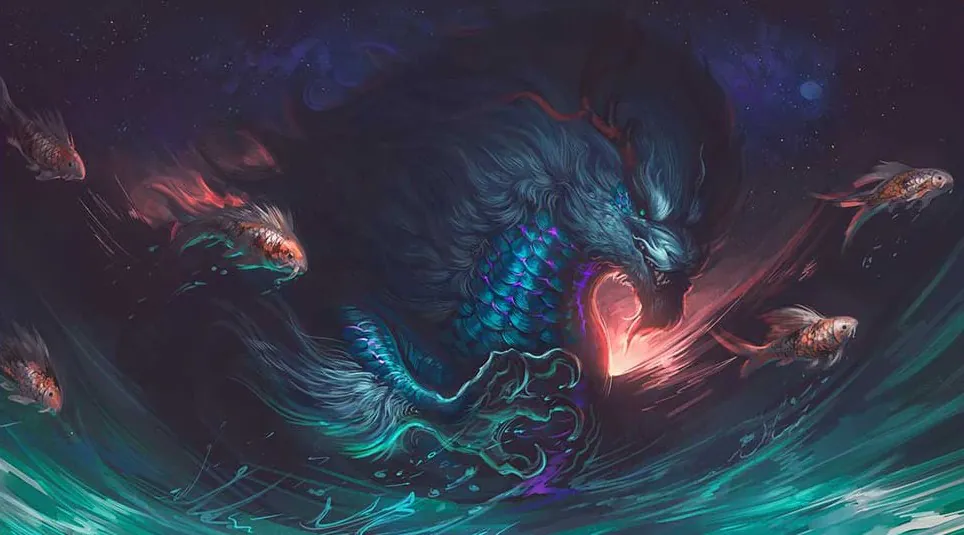
Ryujin lives in a palace submerged under the sea, called Ryūgū-jō. It is built of red and white coral and precious stone. The mansion has one very particular property: it changes the perception of time. A century on earth is worth a single day in the Dragon King's kingdom. The palace has four wings. Each one symbolises a season.
In Fujisawa, the Katase-Enoshima station is a direct reference to this famous palace. Its architecture follows what the legend describes.
Dragon imagery from these tales still travels well onto clothing. The motif is bold, but it stays wearable when the rest of the outfit is plain.

Ryujin's magical powers
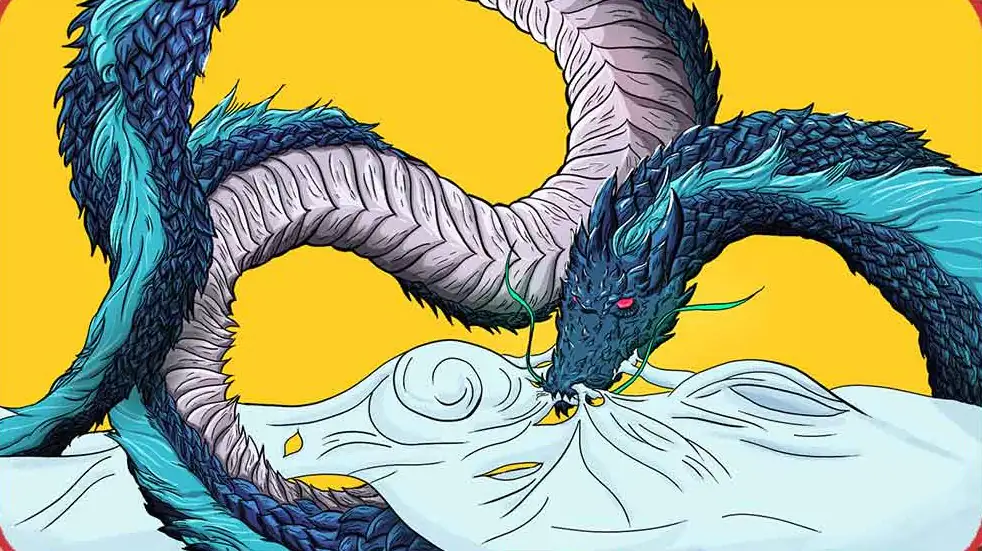
The magic pearl Ryujin holds gives him his powers. Like all dragons, he breathes fire. But his abilities go further. He can take any shape he wishes, including a human one. He also has total control of the ocean. He can unleash tsunamis or terrible storms.
His influence is immense. Every marine species answers to him. Sea turtles deliver his messages. Fish and jellyfish serve as his attendants. Fishermen regularly make offerings to gain his sympathy and hope for a calm sea.
The faith of the dragon god: a Shinto belief
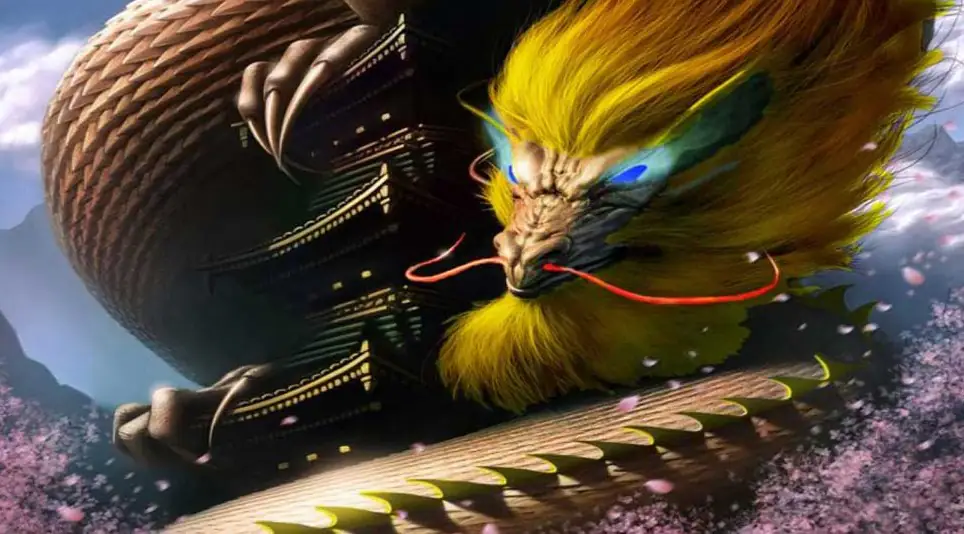
Within Shinto there is a practice called Ryūjin shinkō. Its believers venerate dragons. They call these creatures "water kami". They pray to the god for good harvests and for successful fishing. The attention paid to Ryujin is not an accident. The sea mattered enormously to the Japanese of antiquity and the medieval period. They lived on islands surrounded by water. Fishing fed the population. Seen that way, the king of the seas becomes a central deity.
Many Shinto shrines are dedicated specifically to the god of the sea. One of the best known is in Osaka and is called the Daikai Jinja. The same dragon face reappears in carved shrine beams and in the festival masks made by local artisans, a long tradition you can still follow in today's Japanese mask craft.

The empress Jinga and the jewels of Ryujin
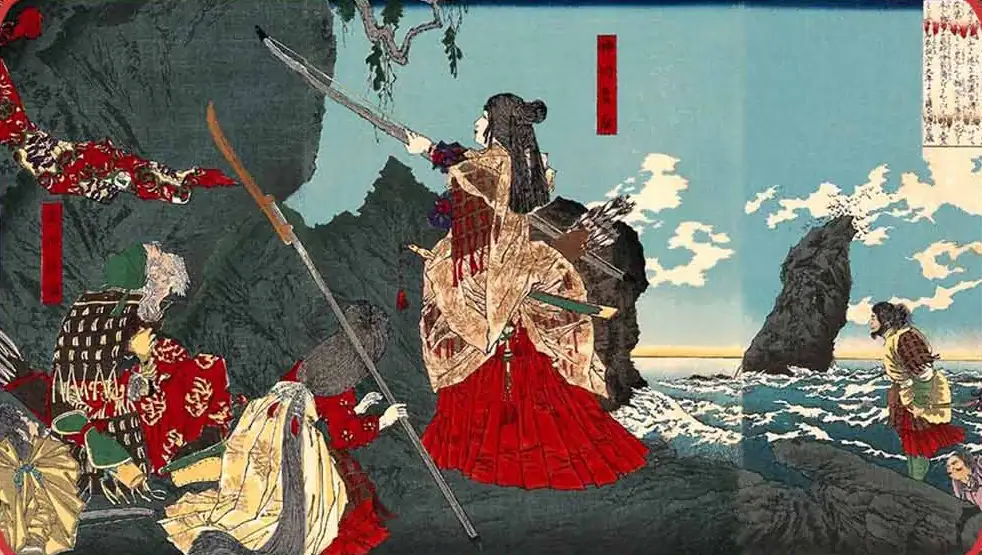
Ryujin's sacred mission is to protect Japan. He does not hesitate to use his powers to help the Japanese imperial family. During a great war, a Japanese empress had to face a fierce Korean fleet. The sea dragon offered her his magic.
As the battle began, she made the water disappear. The enemy boats ran aground. Her attackers decided to leave their ships and send in the infantry. At that moment she had the strategic genius to bring the water back. The idea killed all of her enemies, thanks to the Japanese imperial treasures.
The Japanese legend of Ryujin and the jellyfish
One day, Ryujin's wife needed to be cured of a serious illness. The only remedy was a monkey's liver. The sea dragon sent a jellyfish to bring a monkey to the divine realm. In those distant days, jellyfish still had feet, a tail and bones.
The messenger accomplished her mission quickly and convinced one of the creatures to follow her. Only on the way did the jellyfish explain why he was needed. The monkey did not look kindly on the idea of sacrificing his liver. So he looked for a way out.
Improvising completely, he invented a story. He told the jellyfish that his liver was far too heavy to carry. He claimed he stored it in a tree during the day. He led the jellyfish to the tree, but nothing was inside. When she turned to question him, the monkey had vanished. Defeated, she returned to Ryūgū-jō to announce her failure to the great dragon.
The god's wrath was more powerful than ever. He struck the jellyfish until she shrank to the boneless state we know today.
Urashima Tarō and the Magic Pearl of Immortality
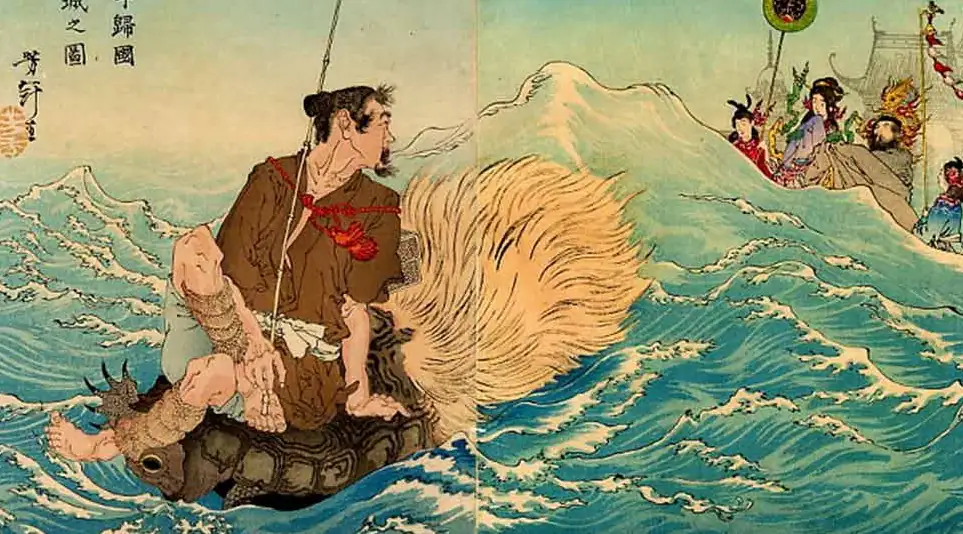
A fisherman named Urashima Tarō witnessed a sad sight. Children were tormenting a helpless fish. He pulled it away from them and released it into the ocean. He went on living quietly until a huge turtle asked him to climb on its back. This strange mount carried the fisherman to the great kingdom of the sea dragon. The god intended to reward his good deed.
The creature he had saved was no ordinary fish. It was Ryujin's daughter in another form. For seven days, Urashima Tarō was a guest in the palace.
When the time came to leave, the girl he had rescued gave him a generous gift: a small box holding a pearl of immortality. It could also grant all his wishes. For the artifact to work, the box must never be opened.
Seven days in Ryujin's world are worth seven hundred years on earth. When Urashima Tarō came home, seven centuries had passed. The news did not shake him much, and he used the jewel to live in comfort. His new power did not corrupt his generous nature. He shared his wealth with all the villagers.
The villagers were not satisfied with what he offered. They forced his door to seize the magic box. Once they had it, they rushed to open it. All its power escaped for good. Its owner aged and died. To punish this act, Ryujin deprived the villagers of water. The whole village perished from that punishment.
FAQ
Is Ryujin a good or an evil dragon?
Mostly good. He is a tutelary deity who protects fishermen, brings rain and guards Japan. He can also be dangerous when disrespected, sending storms and floods, which is why some traditions describe him as a yokai.
Who are the three main Japanese gods?
The three born from Izanagi's purification are usually named: Amaterasu, goddess of the sun, Tsukuyomi, god of the moon, and Susanoo, god of storms and the sea. Ryujin belongs to a different lineage of water kami, often identified with Watatsumi.
Which dragon is the most powerful in Japanese mythology?
Ryujin is the most widely worshipped, since he rules the tides with his two jewels. Yamata no Orochi, the eight-headed serpent slain by Susanoo, is the most feared, and Kuzuryū, the nine-headed dragon, is venerated around Lake Ashi.
Who are the eight dragon kings?
The hachidai ryūō are eight dragon kings from Buddhist scripture, including Shagara, often equated with Ryujin himself. They appear in the Lotus Sutra as protectors of the Buddhist law, and they entered Japanese folklore through temple worship.