The first randoseru I ever handled was in a shop in a quiet Tokyo side street, and what surprised me was not the shape but the sound: a firm, hollow knock when I tapped the lid, like a small suitcase. That structure is exactly why the bag still works for adults. The best japanese backpack for school or commuting is the one that matches three numbers: your laptop size (13 to 16 inches), the litres you actually need (18 to 25 L for a school day, 12 to 15 L for a light commute), and the shoulder-strap width your back can tolerate for an hour a day. Adult randoseru backpacks win on structure, water-resistant PU leather and posture. Kawaii and minimalist Japandi builds win on weight and price. Below, the picks are ranked by use case, with laptop fit, capacity and care notes for each.
In short
- Match litres to your day: 18 to 25 L for books and a 15-inch laptop, 12 to 15 L for a laptop-free commute.
- A structured randoseru-style backpack protects a laptop better than any soft nylon daypack of the same volume.
- Water-resistant PU leather and taped zips matter more than a waterproof rating for city rain.
- Straps 5 cm wide or more with a padded back panel are what stop shoulder pain, not extra padding in the base.
How to choose the best japanese backpack for school or commuting
Most buying mistakes happen before style is even discussed. People pick a volume that is too large, then fill it, then blame the straps. Start with what you carry on a normal Tuesday, not on your heaviest day of the year. Then check the internal sleeve against your laptop with a tape measure, because "fits 15 inch" means different things from one maker to another.
Litres, laptop sleeve and what a 13 to 16 inch fit really means
Laptop sizes are measured on the screen diagonal, so the useful figure is the body of the machine plus one to two centimetres of clearance.
| Laptop size | Typical body footprint | Minimum internal sleeve |
|---|---|---|
| 13 inch | Around 30 x 21 cm | 32 x 23 cm |
| 14 inch | Around 32 x 22 cm | 34 x 24 cm |
| 15 inch | Around 35 x 24 cm | 37 x 26 cm |
| 16 inch | Around 36 x 25 cm | 38 x 27 cm |
For volume, think in three bands. 12 to 15 L carries a tablet, a light jacket, a bottle and lunch. 18 to 25 L is the school and campus band: two or three books, a folder, a laptop sleeve 15 inch deep, a charger and a change of clothes. Above 30 L you are in weekend territory.
Water resistance, PU leather and city rain
Water resistant and waterproof are not the same thing. A water-resistant bag sheds a shower for the length of a walk to the station. A PU leather backpack sits in the first category: the coated surface repels drops, but water can creep through stitch holes and open zips. Look for a flap that overlaps the main opening, coated or taped zip tape, and a base that is a single moulded piece rather than four seamed panels.
Straps, back panel and carrying weight for an hour a day
Shoulder pain comes from pressure per square centimetre, not from total weight alone. Straps of 5 cm or more spread the load. A padded back panel with two vertical channels keeps the bag off your spine and lets air move. A structured randoseru style sits around 1 to 1.3 kg empty, while a soft nylon daypack of the same volume can be under 600 g. That difference is real after a 40-minute commute.
Your six-point checklist before ordering:
- Internal sleeve measured, not guessed, against your laptop.
- Volume in litres matched to a normal day, not your worst day.
- Empty weight under 1.3 kg for daily carry.
- Strap width 5 cm or more, with adjustable length for coats in winter.
- Overlapping flap or covered zips if you commute on foot.
- External dimensions under roughly 45 x 32 x 18 cm if you want it to stay carry-on friendly.
Adult randoseru backpacks: the structured commuter pick
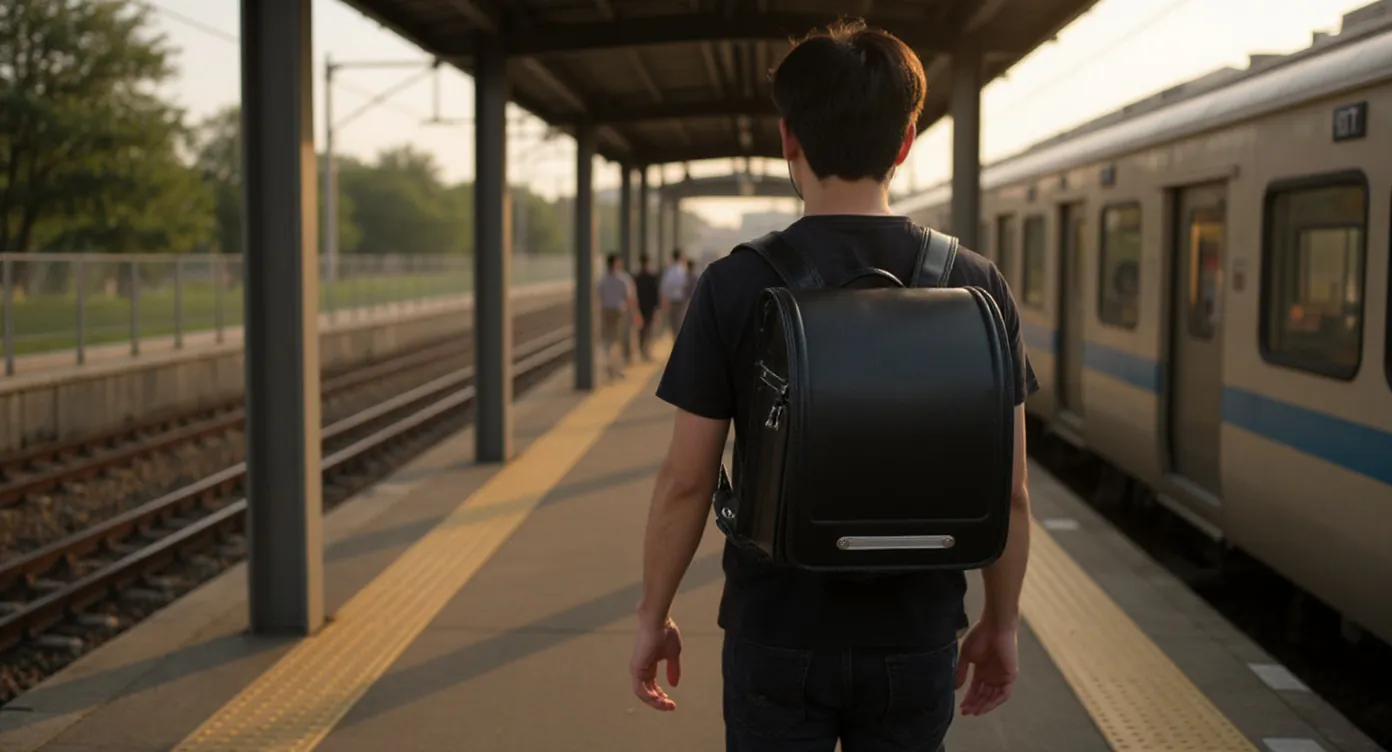
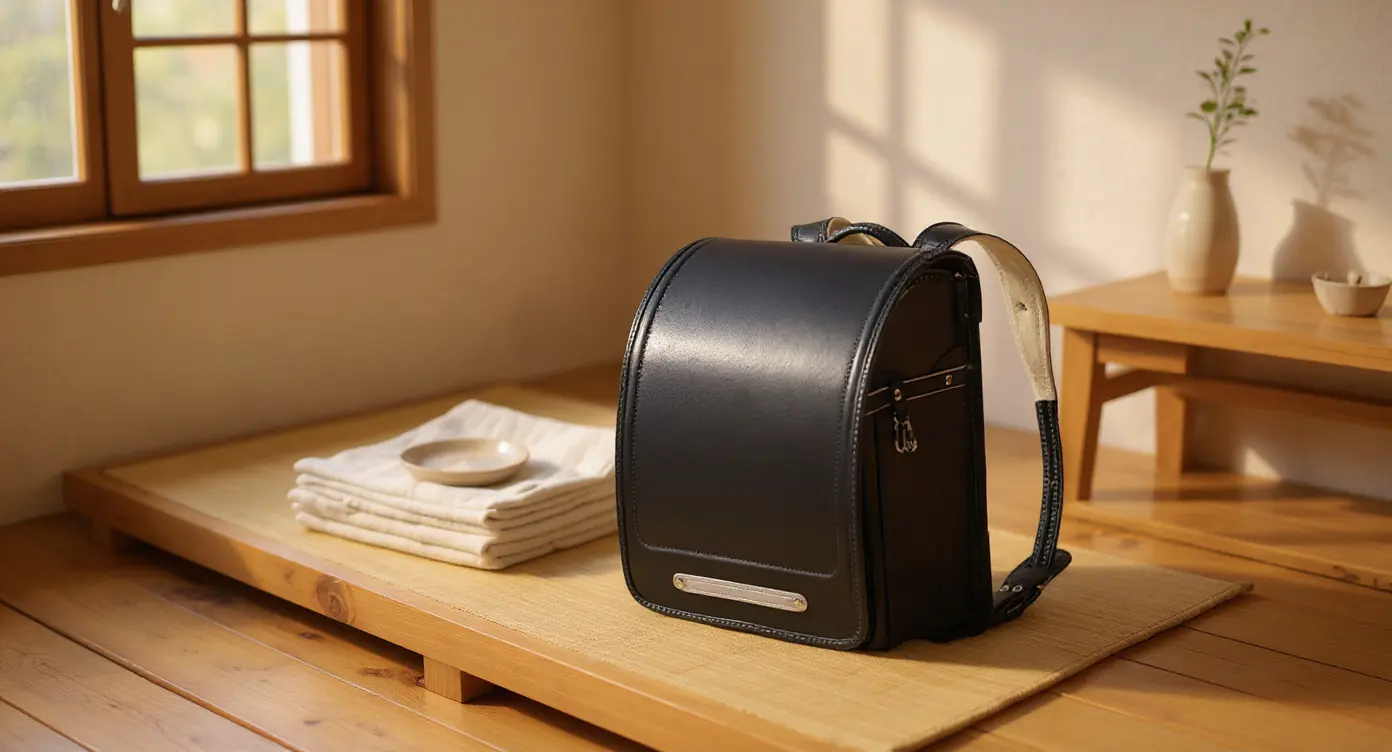
The randoseru is a Japanese school backpack built around a semi-rigid shell, a top flap and a fixed rectangular volume. That same construction is what makes the adult version so good with electronics: the bag holds its shape whether it is full or half empty, and it stands upright on the floor of a train instead of slumping.
Why the randoseru shape protects a laptop better
In a soft daypack, a laptop is protected by foam. In a randoseru, it is protected by the whole box. Pressure from a crowded carriage spreads across the shell rather than pressing into the screen. The flap opening is the second advantage: you lift one panel and see everything, instead of digging into a tube.
Randoseru backpack sizing and weight for adults
Adult versions are scaled up from the children's A4 format, with wider straps and a longer back panel. When a friend asked me for a bag that would survive a daily train commute with a 14-inch laptop and still look tidy in an office, I pointed her to the adult randoseru backpack we carry, because it is the one piece in the range that keeps its shape after a year of being put down on station floors.

- Material: water-resistant PU leather, smooth grain.
- Structure: semi-rigid shell with flap closure.
- Best for: 13 to 15 inch laptops, 18 to 22 L of daily load.
- Care: wipe with a damp cloth, dry away from radiators, never machine wash.
- Style note: reads formal, pairs well with dark denim and a plain coat.
Japanese school bags vs randoseru: which one for daily class?
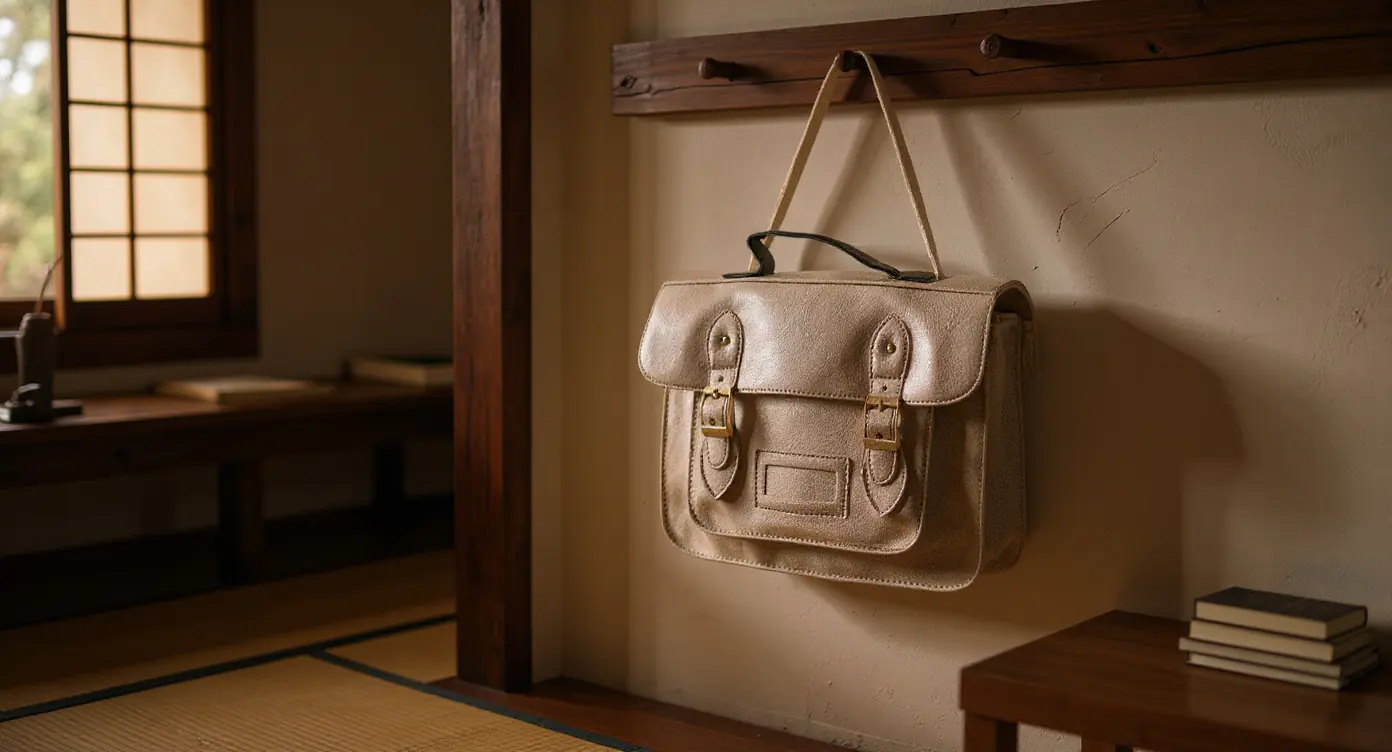
A soft Japanese school bag is the flexible, lighter option: fabric or thin synthetic leather, no shell, more give when you overpack. Students who move between classrooms all day often prefer it. Below is how the two compare on the points that change your day.
Soft Japanese school bag: lighter, more flexible
If your route is short and your load changes constantly, softness wins. I reach for a soft Japanese school bag on days when I carry notebooks and a tablet rather than a full laptop, simply because I do not feel it on my shoulders by the afternoon. Slide a padded sleeve inside if you take a computer, since these bags rarely have a rigid compartment.

Randoseru backpack: structure and posture
Structure keeps the load high and close to your spine, which is why a full randoseru often feels lighter than a soft bag of the same weight. It also means the bag never sags into your lower back when you lean forward on a bike.
Capacity, laptop fit and price side by side
| Criterion | Adult randoseru | Soft Japanese school bag |
|---|---|---|
| Volume | 18 to 22 L, fixed | 12 to 20 L, expands |
| Empty weight | Around 1 to 1.3 kg | Often under 800 g |
| Laptop | 13 to 15 inch, protected by the shell | 13 to 14 inch, sleeve recommended |
| Water resistance | Coated PU, overlapping flap | Depends on fabric, usually lower |
| Ideal use | Daily commute with electronics | Campus days, light loads, travel spare bag |
Kawaii backpacks and Japandi minimalism: style vs load
Three aesthetic families dominate Japanese bag design right now, and each one implies a different build. Choosing between them is less about taste than about what the shape allows you to carry.
The kawaii backpack for light days and campus carry
A kawaii backpack is usually smaller, rounder and lighter, with printed canvas or soft synthetic panels. Volume tends to sit between 10 and 16 L, which is honest campus carry rather than laptop hauling.
- Material: printed canvas or soft synthetic.
- Volume: roughly 10 to 16 L.
- Best for: tablet, 13 inch ultrabook at most, notebooks, lunch.
- Care: spot clean prints, avoid soaking, air dry flat.
Minimalist Japandi and techwear-inspired builds
Japandi minimalism means muted colour, clean panels and hidden zips. It disappears in an office and ages well, which is a very Wabi-Sabi quality: the surface softens instead of failing. Techwear-inspired builds go the other way, with external webbing and clip closures. They carry more gear but read as louder in a formal setting.
Pairing a Japanese backpack with a Japanese hoodie
The simplest combination is a dark minimalist backpack, black jeans, a white t-shirt and a Japanese hoodie with a discreet print. The bag stays quiet, the hoodie carries the graphic. Our Japanese Hoodie collection sits naturally with these bags since most pieces stay in a single dominant colour.
Second bags to carry with your Japanese backpack
One bag rarely covers a full week. The pairing most commuters end up with is a main backpack plus a small second bag, so the backpack stays at its comfortable weight instead of being stuffed to the seams.
A Japanese tote bag for overflow, gym kit and groceries
A folded tote weighs almost nothing and turns a full backpack into a manageable one. It also solves the airport problem: backpack on your back, tote as the personal item, both within most cabin allowances.
- Material: cotton canvas, usually unlined.
- Volume: 15 to 20 L when open, folds to pocket size.
- Care: machine wash cold, air dry, iron prints on the reverse.
A Japanese crossbody bag for phone, pass and keys
A small crossbody keeps your transport pass and phone reachable without opening the main bag on a crowded platform. Two to four litres is enough. Worn on the front, it also balances a loaded backpack.
- Material: coated nylon or PU.
- Volume: 2 to 4 L, one main zip and a flat pocket.
- Best for: phone, wallet, pass, keys, a compact umbrella.
Cleaning and storing a Japanese backpack so it lasts
PU leather asks for very little. Wipe it with a damp cloth and a drop of mild soap, then dry it with a second cloth. Never leave it on a radiator, because heat makes the coating crack. If the bag gets soaked, empty it, open the flap and let it dry at room temperature. For storage, stuff it with paper or a soft cloth so the shell keeps its shape, and keep it out of direct sunlight. That slow, patient maintenance is Kaizen applied to an object: small care, repeated, and the bag stays with you for years.
FAQ: Japanese backpacks for school and commuting
What is the most popular Japanese school backpack?
The randoseru is by far the most recognisable, worn by the majority of Japanese elementary school children. Adult versions borrow the same shell, flap and proportions in a larger size.
What kind of backpack do Japanese high schoolers use?
High schoolers do not use randoseru. Many schools issue or recommend a shoulder bag or a plain backpack in a set colour. Simple dark nylon daypacks in the 18 to 25 L range are the everyday norm.
Can an adult wear a randoseru backpack?
Yes, provided it is an adult-sized model. A children's randoseru has short straps and a back panel scaled for a small torso. Adult versions keep the shape and shell but lengthen the straps and widen the body for a 13 to 15 inch laptop.
Will a 16 inch laptop fit in a Japanese backpack?
Sometimes, but check the numbers first. A 16-inch machine needs an internal sleeve of about 38 x 27 cm, and many Japanese-format bags are built around A4, which is smaller. Measure the body and compare it with the listed internal dimensions before ordering.
How much should a good Japanese school bag cost?
Judge by what you get rather than by a figure. A structured PU shell with reinforced stitching and padded shoulder straps costs more than a printed canvas daypack, and it should. Free shipping applies from 115 dollars, and every order is covered by our 14-day guarantee.
If you want to compare shapes, volumes and materials side by side, take a look through our Japanese Backpacks collection and start from the laptop you carry. The right bag usually announces itself once the numbers line up.
Explore the Japanese Backpacks collection
Browse the Japanese Backpacks collection to compare capacities, laptop-friendly compartments and PU leather finishes side by side.
Browse the collection →