
The first time I held a bokken in a dojo, I expected it to feel like a prop. It felt like a club: dense, nose-heavy, and completely unforgiving if you let it swing past your line. That weight is the whole point. A shinai is the bamboo kendo sword used for full-contact sparring in armour, while a bokken (bokutō, 木刀) is a solid wooden sword used for paired katas, suburi and slow controlled drills. Beginners buy a shinai first, because that is what you strike with in class, and add a bokken within a few months for kata practice. The iaitō, an unsharpened metal sword, only comes later, with iaidō. All three are swung in the same outfit: keikogi, hakama (袴) and bare or tabi-covered feet.
Key points
- The shinai is bamboo and made for striking; the bokken is solid oak and never used for full-contact hits.
- Most beginners start with a 38-size shinai, then add a standard 102 cm red or white oak bokutō for katas.
- The iaitō is a blunt metal sword reserved for iaidō forms, not for kendo sparring.
- Your uniform matters as much as your sword: keikogi, hakama and Japanese sizing that runs smaller than US/EU.
Bokken vs shinai: which kendo sword should you start with?
Many pages online use the two words as synonyms. They are not. The shinai is a striking tool built to flex and absorb impact. The bokken is solid hardwood that transmits everything it receives, which is why it is used at controlled distance with a partner who knows the form.
| Sword | Material | Typical length | Main use | Buy it |
|---|---|---|---|---|
| Shinai (竹刀) | Four bamboo slats, leather fittings | 114-120 cm depending on size | Sparring and shiai in armour | First purchase |
| Bokken / bokutō | Solid red or white oak | About 102 cm | Kendo kata, suburi, kenjutsu | Within the first months |
| Iaitō (居合刀) | Unsharpened zinc-aluminium alloy blade | Blade around 68-75 cm | Iaidō drawing forms, solo | Only when you start iaidō |
The bamboo shinai for striking and sparring
A shinai is four shaped bamboo slats held together by a leather grip, a leather tip cap and a cord called the tsuru that runs along the back. The slats compress on impact, which is what makes full-speed strikes to the head, wrist, torso and throat possible once you wear bōgu armour. Competition rules set a maximum length and a minimum weight for each age group, so club shinai are standardised rather than personal.
The wooden bokken for katas and slow drills
The bokutō is used for the ten Nihon Kendo Kata, for solo swing practice and for the classical kenjutsu schools that predate modern kendo. Strikes are stopped short or received on the flat, never driven home. Most clubs ask for one around first kyu, because the kata are part of the grading from that level.
The iaitō, a blunt blade for iaidō forms
An iaitō looks like a katana but has an alloy blade with no edge and no hardened steel. It exists for iaidō, the art of drawing and cutting in a single movement, practised alone. A sharp sword is called a shinken, and it is reserved for advanced practitioners and test cutting.
What a kendo beginner buys: shinai, bokken and hakama
The order of purchase follows what you actually do in your first year: swings, footwork, then strikes on a partner in armour. Buying everything at once is the classic beginner mistake.
Your first shinai: size 37, 38 or 39
Shinai are numbered, and the number roughly corresponds to length.
| Size | Approx. length | Usual user |
|---|---|---|
| 37 | About 114 cm | Children and young teenagers |
| 38 | About 117 cm | High-school age, and many adult beginners who want a lighter swing |
| 39 | About 120 cm | Adults, and the regulation size for adult competition |
If you are an adult who will eventually grade and compete, a 39 is the size you will end up with. Starting on a 38 for a few months is common and makes the first suburi sessions cleaner. Ask your club before ordering.
When the bokutō becomes necessary
Usually between the third and sixth month, when kata enter the syllabus. One standard oak bokken covers everything at that stage.
Keikogi and hakama before bōgu
The uniform comes before the armour, and often within the first few weeks. A keikogi is the cotton jacket; the hakama is the wide pleated trouser worn over it. Clubs ask for both early because footwork is judged on how the hem moves. For students who want a pair that holds its pleats through a full class, I point them to the Aikido Hakama I recommend most often: wide legs, long himo ties, and enough fabric to move in suriashi without the front panel riding up.
Bokken buying guide: red oak, white oak and bokutō length
A cheap bokken is often made from unnamed tropical hardwood with grain running across the blade instead of along it. It looks fine on a wall and splits at the first hard contact. What you want is straight grain running the full length of the sword, in a known species.

Red oak vs white oak bokken: weight and feel
| Wood | Feel | Behaviour | Best for |
|---|---|---|---|
| Red oak (akagashi) | Slightly softer, a little more flex | Absorbs shock, marks more easily | Daily kata practice, beginners |
| White oak (shirogashi) | Harder, denser, heavier in hand | Very stiff, resists denting | Contact-heavy schools, long-term use |
White oak is the reference wood in Japan and costs more; red oak is the sensible first purchase. The difference in swing weight is small but noticeable after a hundred cuts.
Standard 102 cm bokutō and the shorter kodachi
The standard adult bokken is about 102 cm long and weighs roughly 500 to 600 g. The kodachi, or shōtō, is about 55 cm and used for the final three kendo kata. Iaidō practice bokken come fitted with a plastic saya for drawing.
Checking grain, warping and finish before use
A new bokken should be smooth, unvarnished or lightly oiled, and free of knots. Sand any raised fibre with fine paper and wipe it with a little camellia or mineral oil once a month. Retire it when a visible crack appears at the tip.
Wearing a bokken at the obi: saya, tsuba and iaitō katas
In kendo kata the bokutō is carried in the hand, not worn. In iaidō, kenjutsu or any drawing practice, the sword lives at your waist, threaded through the obi folds, edge up, on the left hip.
How the sword sits in the obi belt
The obi is wrapped several times around the waist below the navel, and the scabbard slides between the layers at a slight angle. Tension is everything. Too loose and the sword drops during the draw; too tight and you cannot rotate the saya. For kata practice at home and for anyone building a full samurai outfit, I use a wide black obi belt like this one, which holds a wooden saya without digging in.

Bokutō with tsuba and plastic saya
The tsuba is the guard. On a bokken it is a plastic disc held by a rubber stopper and protects the hands in schools where the swords meet. A plastic training saya lets you rehearse the draw and the noto, the return of the blade, without owning an iaitō.
Kata etiquette: drawing, bowing, resting the sword
You bow to the dojo, then to your partner, with the sword held in the left hand, edge toward you. The blade never points at anyone during a break. When you set it down, it lies at your left, edge facing you, tip away from the shomen. These rules are how a room full of hardwood stays safe.
Shinai care: bamboo slats, tsuru and when to retire yours
A shinai is a consumable. It splinters, dries out and eventually fails. Five minutes of maintenance after each session prevents the most common serious injury in kendo: a raw splinter driven through a partner's men grille.
Inspecting the four bamboo slats after practice
Untie nothing at first. Run your thumb along each slat, looking for raised fibre, hairline cracks and chips near the tip. Check that the leather tip cap is intact and that the nakayui, the leather strap about a quarter of the way down, has not slipped.
Oiling, sanding and re-tying the tsuru
Take the shinai apart every few weeks, sand the rough edges with fine paper, and wipe each slat with a thin film of oil to stop the bamboo drying. Re-tie the tsuru so it stays taut. Retire the shinai when a slat is cracked through its thickness.
Carbon fibre shinai: who they actually suit
A carbon shinai costs several times more than bamboo but lasts for years, with replaceable slats. Over twelve months of hard training it can work out cheaper than a pile of broken bamboo. Some clubs and competitions restrict them, so ask before ordering.
Dressing for bokken practice: hakama, keikogi and tabi
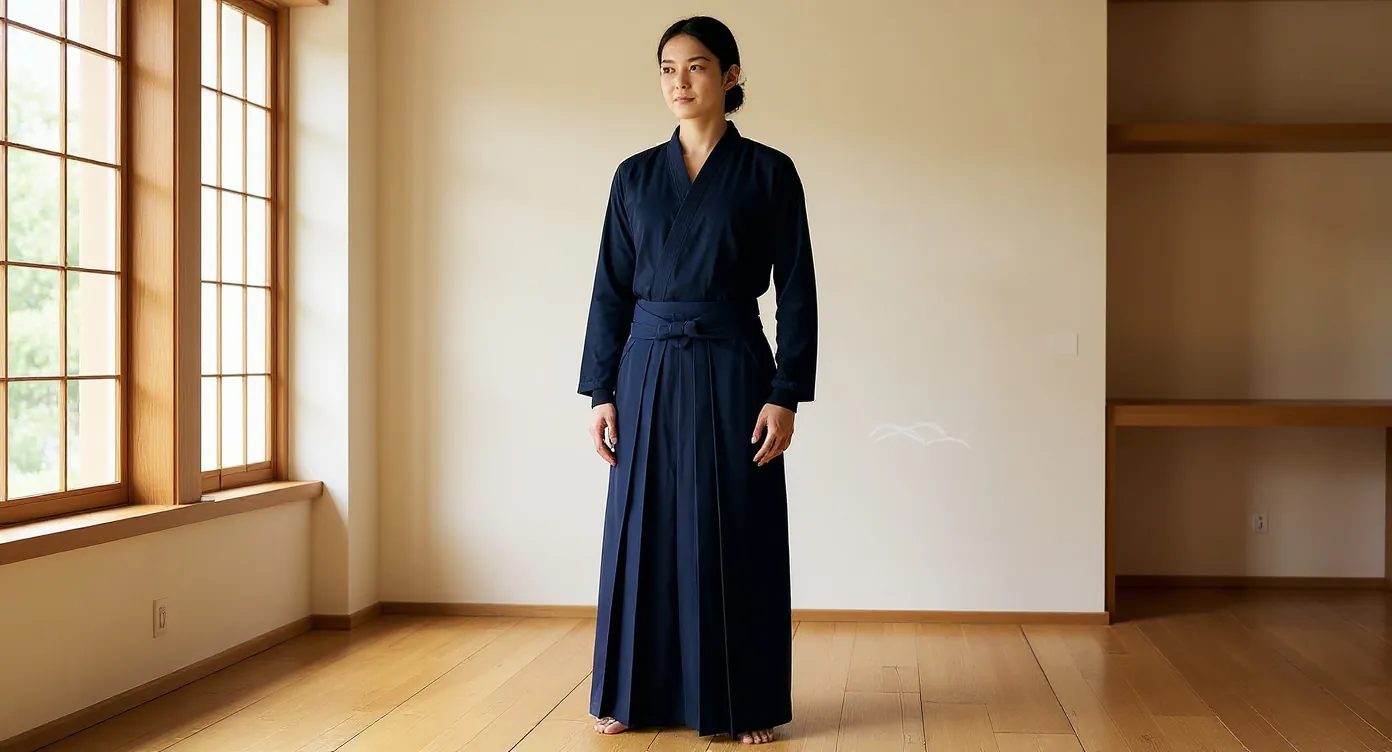
Kendo clothing is cut for a stance. The keikogi is short and stiff at the shoulders so the arms stay free overhead. The hakama hides the knees so an opponent reads your intention from your centre, not your legs. Indigo cotton fades, softens and records every session.
Japanese hakama sizing vs US and EU sizes
Japanese sizing runs about one size smaller than US and EU equivalents. For a hakama, length matters more than waist. Measure from your navel down to the ankle bone and compare that figure with the length given on the product page. The hem should sit just above the ankle.
Barefoot kendo, tabi for iaidō and cold floors
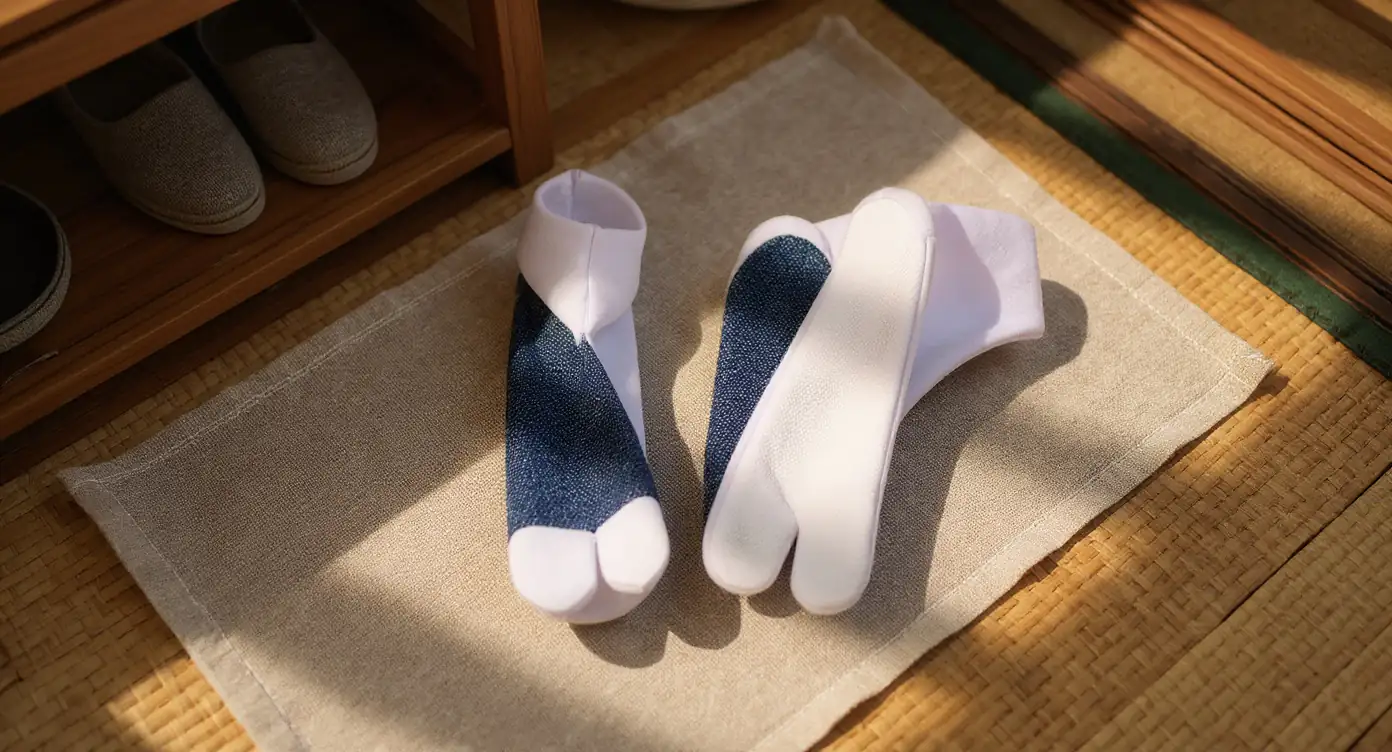
Kendo is practised barefoot on wood, because fumikomi, the stamping step, needs skin contact with the floor. Tabi are standard in iaidō and jōdō, and many dojos allow them on cold winter floors. When I train on an unheated parquet I wear split-toe tabi socks like these, which keep the big toe free and the grip honest.

Caring for indigo cotton after training
Air the uniform flat after every session. Wash indigo cotton cold, alone, without bleach or softener, and dry it in the shade. Hang the hakama by its himo with the pleats aligned, and they will re-set themselves as it dries.
Kendo sword FAQ: names, prices and real blades
Short answers to the questions that come up most often.
What is a kendo sword called?
The sword used in kendo practice and competition is a shinai, made of four bamboo slats. The wooden one used for kata is a bokken, also called bokutō. Bokutō is the term you will hear inside a Japanese dojo.
Is a kendo sword the same as a katana?
No. A katana is a curved, sharpened steel sword. A shinai and a bokken reproduce its length, grip and handling so the techniques transfer, but neither has an edge, and a shinai is deliberately straight.
Can you use a real sword in kendo?
Never. Kendo practice and gradings use the shinai and the bokken only. Sharp swords belong to advanced iaidō and tameshigiri, under supervision, and are subject to strict ownership laws in Japan and several Western countries.
How much does a shinai or bokken cost?
An entry-level keichiku shinai is one of the cheapest items in kendo. A red oak bokken sits in the same low range, with Japanese white oak noticeably above it. Full bōgu remains by far the largest expense.
What shinai length should a beginner use?
Size 38 suits most adult beginners and high-school students, while adults who intend to compete move to size 39. Children and young teenagers usually start at 37. Check with your club first.
If you want to complete the picture around your sword, our samurai clothing collection brings together the hakama, obi and layers that go with a serious practice, and with a wardrobe you can also wear outside the dojo.
Explore the Samurai Clothing collection
Find the hakama, keikogi and belts that go with your bokken, with Japanese-to-US/EU size charts for each cut.
Browse the collection →