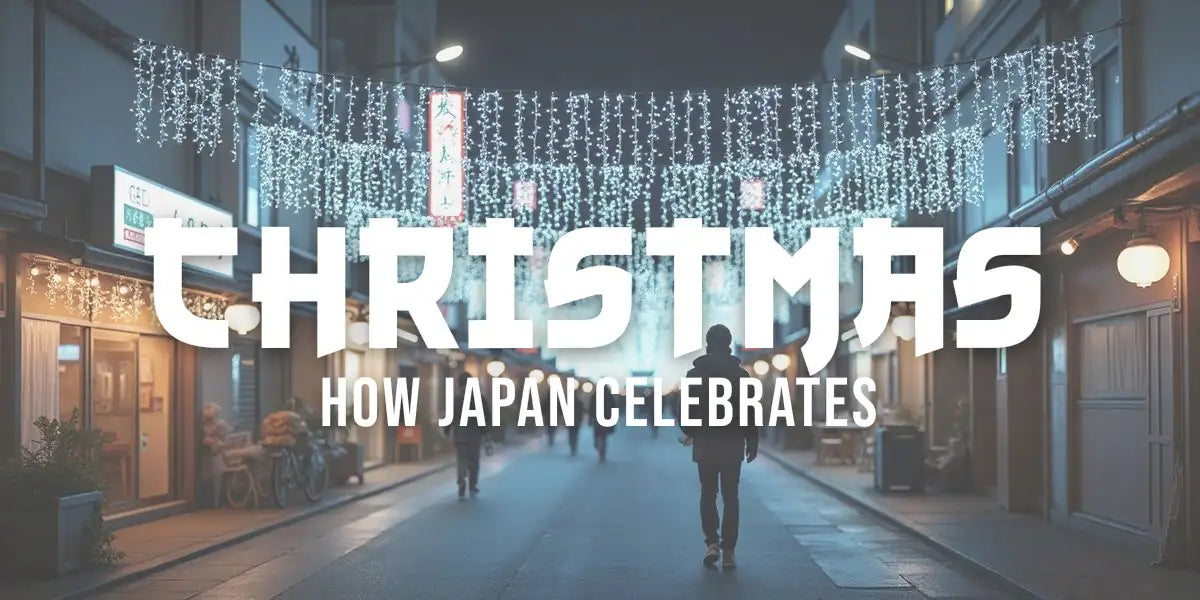
A friend in Nagoya once sent me a photo of her local KFC on December 24: a queue down the pavement, and two staff handing out pre-booked chicken barrels from a trestle table set up outside the door. Nobody looked surprised. That photo explains christmas in japan better than any guidebook: the holiday is enormously popular, but it is not a public holiday. December 25 is an ordinary working day. Offices open, schools run, trains fill as usual. The season is treated as a festive and romantic moment rather than a religious or family one. In practice that means fried chicken ordered weeks in advance, a strawberry shortcake "Christmas cake", city-wide winter illuminations, and Christmas Eve spent as a date night with a partner. The big family gathering happens a week later, at New Year.
Key points
- December 25 is not a national holiday in Japan: shops, offices and schools run as normal.
- Christmas Eve is the main event, and it belongs to couples rather than families.
- KFC and a strawberry shortcake Christmas cake are the two fixed points of the Japanese Christmas meal, both usually reserved in advance.
- Family and tradition are saved for oshogatsu, the New Year, which outranks Christmas by far.
Is Christmas in Japan a public holiday?
This absence from the official calendar changes everything about how the season unfolds. The holiday has practical consequences that run deeper than the name suggests, shaping where people are on December 24 and 25, and what happens in offices and shops. The details explain why December 25 feels like an ordinary day rather than a break in routine.
December 25 in Japan: an ordinary working day
On December 25 the trains run at normal capacity and the offices are full. Children go to school until the winter break starts, usually around the same date. Decorations come down fast: by the morning of December 26, department stores have swapped trees and wreaths for kadomatsu pine arrangements and shimekazari straw wreaths for the New Year. Many foreign visitors find this abrupt. It makes sense once you see the calendar from a Japanese point of view, where the serious holiday is still to come. There is one more detail most articles miss. Until 2018, December 23 was a national holiday, because it was Emperor Akihito's birthday. After his abdication in 2019, the Emperor's Birthday moved to February 23, the birthday of Emperor Naruhito. Japan quietly lost the long weekend that used to sit right beside Christmas.
How Japanese people say Christmas: kurisumasu
Christmas is written in katakana as クリスマス and pronounced kurisumasu, four clear syllables with no stress on any one of them. "Merry Christmas" becomes メリークリスマス, merii kurisumasu, and it is used freely between friends and colleagues. Christmas Eve has its own word, kurisumasu ibu (クリスマスイブ), and it is the one you will hear most in December. The vocabulary arrived with the commerce. Western-style Christmas selling began in Japan before the war, but it became a mass event during the economic recovery of the 1950s and 1960s, carried by department stores, confectioners and advertising rather than by churches. That origin is why the Japanese version feels closer to a shopping and decoration season than to a liturgical one.
Cold December evenings, the kotatsu and a hanten at home
A Japanese December is colder indoors than visitors expect. Most homes have no central heating. Rooms are warmed one at a time with an air conditioner or a kerosene heater, hallways stay freezing, and insulation in older buildings is thin. The classic solution is the kotatsu (炬燵), a low table with a heating element underneath and a thick quilt draped over the frame. You sit on the floor, slide your legs under the quilt, and the rest of you stays cold. That is exactly the gap a hanten (半纏) fills: a short padded indoor jacket, cotton-wadded, worn over whatever you already have on.
A hanten is the piece I reach for first on winter evenings, and the vintage-pattern hanten I keep by the sofa is the one I recommend most often to people who work from home in a cool flat. It is worth knowing the practical details before you order one.
- Material: cotton outer shell with cotton wadding
- Cut: short, straight, loose over the shoulders, sleeves wide at the wrist
- Care: cold hand wash or a gentle cycle, dry flat, never tumble dry
- Sizing: Japanese sizes run roughly one size smaller than US and EU equivalents, so size up if you plan to wear it over a jumper
This is also where the brand's Wabi-Sabi principle stops being abstract. A hanten softens with use. The cotton flattens where you lean, the colour fades unevenly, and after two winters it looks like yours and nobody else's. That is the point of the piece rather than a flaw in it.
KFC and Christmas cake: the Japanese Christmas meal
These two foods arrived as imported luxuries less than fifty years ago, yet they define Christmas for most Japanese people now. The story of how they became essential rather than optional reveals something important about the season: it was invented through advertising and commerce, not inherited through tradition. Both items share one practical detail: they must be ordered in advance, which turns them into rituals.

Why KFC became the Japanese Christmas dinner
KFC opened its first Japanese restaurant in 1970 and launched a national Christmas campaign, "Kentucky for Christmas", in 1974. The company's own telling credits an early store manager who heard foreign residents complain that no turkey was available in Japan and proposed chicken as the substitute. The campaign landed in a country with no existing Christmas dinner of its own, so it defined one. Today the KFC party barrel is sold as a set with sides and sometimes a cake, reservations open around the start of November, and the three days from December 23 to 25 are the chain's busiest of the year. Queues on Christmas Eve are real, and so are the dedicated pickup windows. If you are in Japan in December and want the full experience, book the slot rather than the day.
Japanese Christmas cake: strawberry shortcake, ordered weeks ahead
The kurisumasu keeki is almost always the same cake: a light vanilla sponge, whipped cream between the layers and over the top, and fresh strawberries. It is sold as a round whole cake in a square box, and it is ordered in advance at supermarkets, convenience stores, department stores and patisseries alike. The confectioner Fujiya promoted this style from the early twentieth century and made it the standard after the war, when white sugar, cream and strawberries all read as symbols of recovery and prosperity. The colours help too, since red and white are auspicious in Japan. Nobody in Japan expects a dense fruitcake, and most people would find one strange on December 24.
There is a historical footnote worth handling carefully. From roughly the 1960s to the 1980s, "Christmas cake" was used in Japan as a dismissive label for unmarried women over twenty-five, on the logic that nobody wants the cake after the twenty-fifth. The expression is dated and was always unkind, and it has largely dropped out of use as marriage ages have risen. It is included here because it shows how fast the imported holiday grew its own slang, not because it reflects how people speak now.
Cooking a Japanese-style Christmas dinner at home
Recreating this outside Japan is easy and genuinely good. Make karaage, the Japanese fried chicken: cut boneless thighs into large pieces, marinate thirty minutes in soy sauce, grated ginger, grated garlic and a splash of sake, coat in potato starch, then fry twice, once at a moderate temperature to cook through and once hot to crisp. Serve it with Japanese potato salad and a bowl of clear soup. For the cake, bake a plain sponge, split it in two, and fill it with lightly sweetened whipped cream and sliced strawberries. Keep the cream under-sweetened. The restraint is what makes it taste Japanese rather than simply like a European gateau.
Christmas Eve in Japan: a date night, not a family day
The reframing of December 24 as a romantic evening rather than a family one is the single largest shift from Western Christmas traditions. It happened through marketing and magazines in the 1980s, and it has held entirely. The practical effects are visible once you know where to look: the restaurant reservations, the gifts between two people only, and the absence of children from the main events.
Why Christmas Eve in Japan belongs to couples
Through the 1980s, magazines and advertising turned December 24 into the most romantic evening of the year, and the framing stuck. A Christmas Eve date night commonly means an illumination walk, a reserved dinner, and an exchange of gifts between the two people only. Confessions and proposals are often timed for it. Children do receive presents from Santa, usually one gift left by the bed, but there is no extended family meal and no gift pile under a shared tree. People without a partner are rarely at a loose end, because December is also the season of the bonenkai year-end party, the "forget the year" dinner held with colleagues and old classmates across the whole month.
Booking a Christmas Eve dinner in Tokyo or Kyoto
If you want a restaurant table in central Tokyo or Kyoto on December 24, treat it like a wedding booking. Hotel restaurants and well-reviewed places release Christmas menus in October and fill within days, and many switch to a fixed set menu for two with no à la carte option. Hotel rooms behave the same way, which is why some couples book a room months out purely for the night. Budget accordingly: Christmas Eve set menus sit well above the same restaurant's normal evening price. If you miss the window, the practical fallback is lunch on December 24 or dinner on December 25, when demand drops sharply and the city is quiet again.
A quiet Christmas Eve at home: sake, small dishes and lights
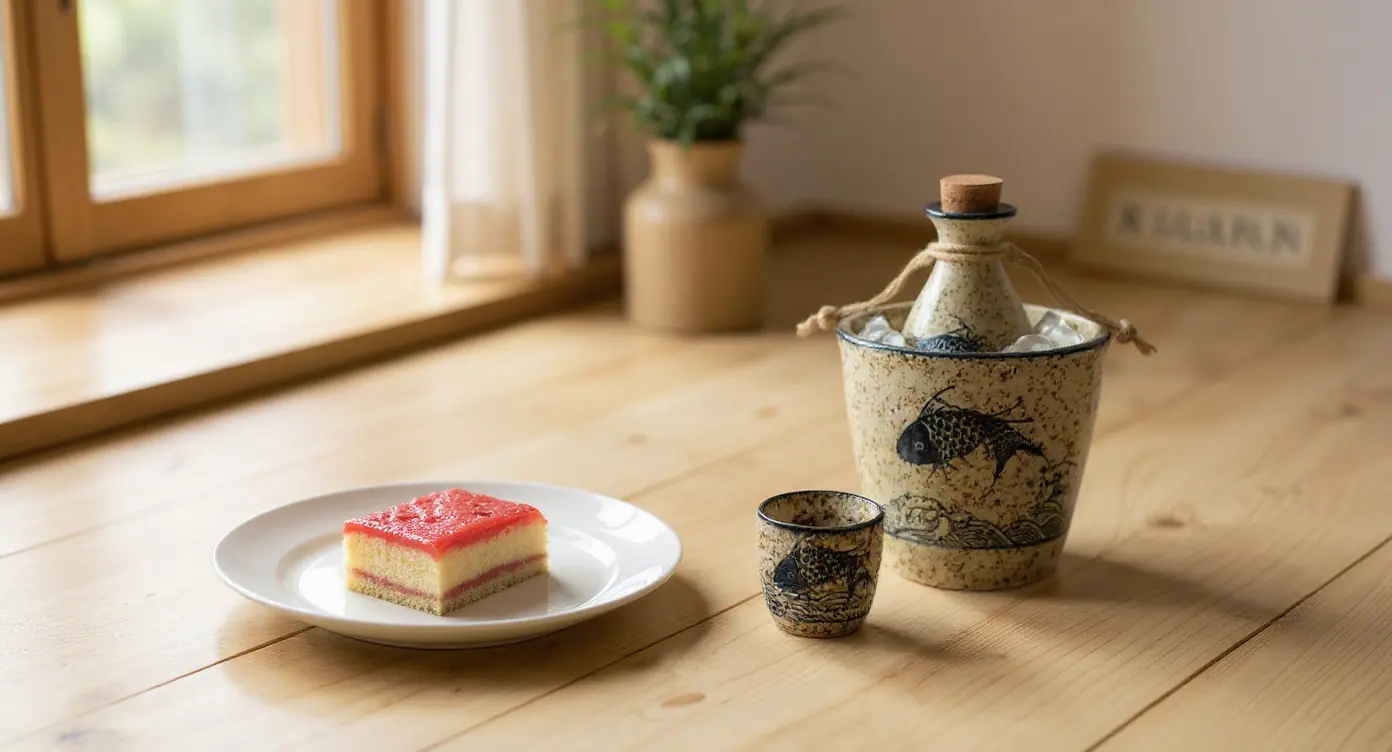
The version I actually prefer is the home one, and it suits two people better than a crowded restaurant does. Keep the food in small dishes rather than one large plate: karaage, a simmered vegetable, something pickled, a slice of cake at the end. Turn the overhead light off and use a single lamp, because Japanese interiors are built around low pooled light in winter. Then pour sake. A proper service is a tokkuri flask with two small ochoko cups, and the same set covers both styles of serving: stand the filled flask in hot water for a few minutes for atsukan, or chill it for reishu. The sake set I keep for two is the one I pull out for exactly this evening, because the small pours slow the whole meal down. One honest note on taste: a dry junmai served warm is far more forgiving than a delicate ginjo, which loses its aroma with heat.
Japanese Christmas illuminations and winter markets
The visual part of Christmas in Japan matters as much as the food or the gifts to the actual experience. Cities across the country install light installations that draw crowds for evening walks, and the season is built around seeing them as much as around anything else. These displays belong to a different logic than their European counterparts, one that extends far beyond December.

Where to see Japan's best Christmas illuminations
Tokyo's Marunouchi illumination lines the streets between Tokyo Station and the Imperial Palace with champagne-gold trees, and it typically runs from mid-November to mid-February. Nearby Shiodome and Roppongi add their own installations, and Osaka's Midosuji avenue lights its roadside trees from November through the end of December. The largest single destination is Nabana no Sato in Mie Prefecture, a flower park that builds tunnels of light and vast ground-level light "paintings" over a season that stretches far past Christmas and into spring. Theme parks join in heavily too. The key difference from Europe or the United States is that nothing switches off on December 26. Illuminations are a winter attraction in Japan, not a Christmas decoration, so late January is often the calmest and best time to see them.
Japanese Christmas markets: Yokohama, Roppongi, Sapporo
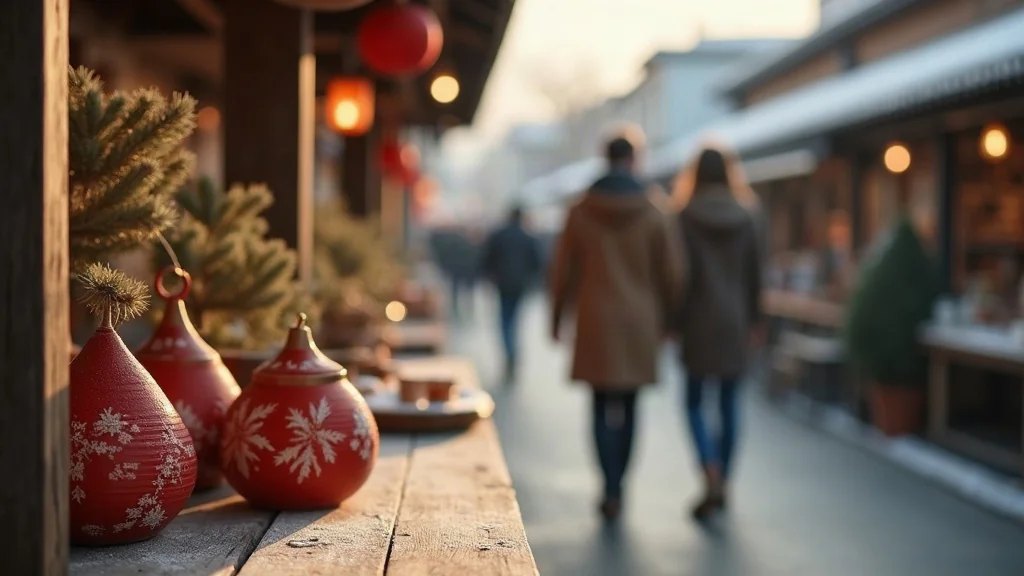
Japan has also adopted the German Christmas market, usually complete with wooden huts, mulled wine and a tall pyramid carousel. These are seasonal and dates shift year to year, so check before travelling, but the main ones recur reliably.
The Sapporo one is the closest Japan gets to a Central European market, mainly because the cold is real and the snow is genuine. Hokkaido is the only part of the country where a reliably white Christmas is normal. Tokyo and Kyoto almost never have snow on the ground in late December, which is worth knowing before you plan photographs around it.
Visiting Japan at Christmas: weather, crowds and prices
Late December is a good time to visit Japan, with one large caveat. The weather on the Pacific side is cold, dry and often brilliantly clear, which makes it the best season for distant views of Mount Fuji. December 25 and 26 are unusually calm, because the festive pressure ends on the 24th and the New Year rush has not begun. The caveat is the window from roughly December 29 to January 3. Many restaurants, small shops, museums and family businesses close completely, intercity trains and flights sell out as the entire country travels home, and accommodation prices rise. If your trip spans both, do your city sightseeing before December 28, and plan the New Year days around shrines and temples, which are the one thing busier and more alive than ever.
Japanese Christmas gift ideas beyond the souvenir shop
The best gifts are the ones that earn their place in someone's life long after December, not the ones that sit unused in a cupboard. Japan's own gift-giving customs offer a guide: choose something practical and durable, the kind of object that gets better with time and use. The pieces below follow that logic.
Japanese gift ideas for a matcha or tea lover
A matcha set is the gift I recommend most often, because it turns a drink into a ten-minute ritual someone can repeat daily. A complete set means a chawan bowl wide enough to whisk in, a chasen bamboo whisk, and a chashaku bamboo scoop. The matcha set I give most often goes to friends who already drink tea seriously and have been curious about whisking their own. Buy the matcha separately and buy it small, since the powder loses its colour and aroma within weeks of opening. One piece of honesty the packaging will not give you: matcha is a pleasure and a craft, not a health treatment, and it should be offered as such.

Wrapping a Japanese Christmas gift with furoshiki
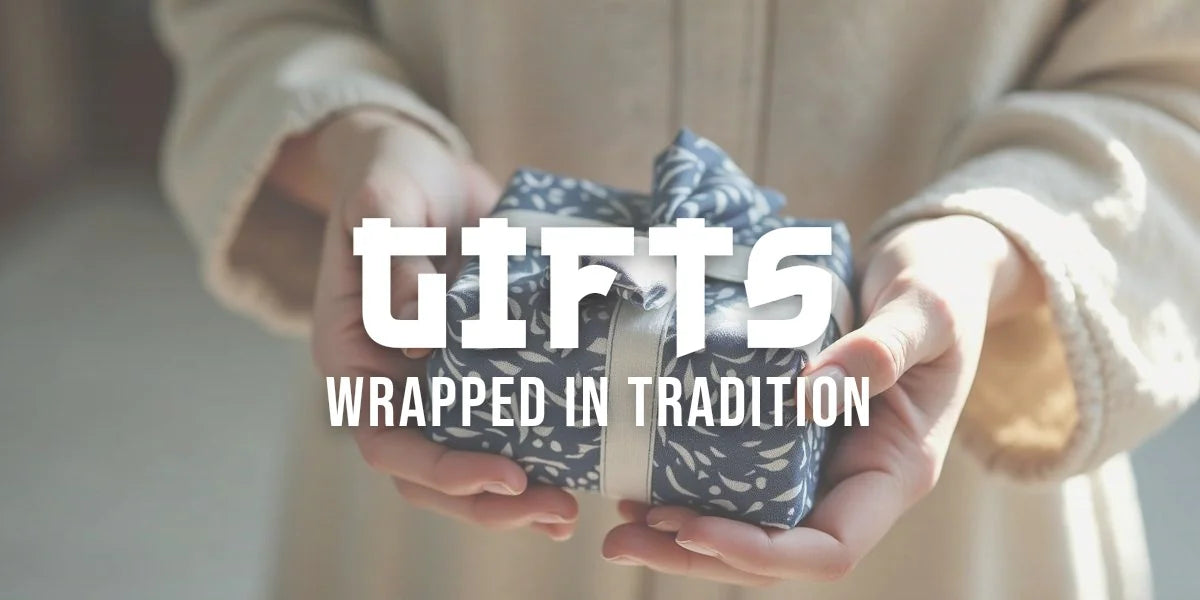
A furoshiki is a square cloth used to wrap and carry things, and it doubles as part of the present because the recipient keeps the fabric. Furoshiki gift wrapping replaces paper and tape entirely, which fits the Kaizen habit of improving the small details rather than the grand gesture. The basic carry wrap takes three steps. Lay the cloth as a diamond and set the box in the centre, rotated so its sides face the flat edges. Fold the near corner over the box, then the far corner over that, tucking any excess underneath. Finally, bring the two side corners up and tie them in a flat square knot on top. Choose a cloth roughly three times the width of the box, and iron it first, since creases show badly in the knot.
Japanese gift etiquette: numbers and items to avoid
A few conventions are worth respecting, especially if the recipient is Japanese or the gift is going to a colleague. Avoid sets of four and nine, because shi and ku sound like the words for death and suffering, so four cups or nine of anything reads badly. Avoid handkerchiefs, since the word tegire carries the sense of cutting ties and they are associated with funerals. The same caution applies to knives and scissors. Clocks and watches are a poor choice for a senior person, because they can be read as a hint about punctuality or diligence. Combs are avoided too, since kushi contains both unlucky sounds. Present the gift with both hands, keep it modestly presented rather than announced, and expect it to be set aside and opened later rather than torn open in front of you.
One more thing to know before you build expectations. Japanese Christmas gifts stay small and targeted: a partner gives a partner something, a parent gives a child something. There is no reciprocal exchange across an entire family. The money and the ceremony go to the New Year instead, where children receive otoshidama, cash in a decorated envelope, from every adult relative they visit.
Christmas in Japan: your questions answered
The questions that arrive most often trace the same curiosities: what is Christmas in Japan, really, and how is it so different from home? The answers cluster around the same few themes: the food, the romance, the absence of family gatherings and religious ceremony. Here are the most common questions, with answers drawn from actually living through the season in Japan.
How do they celebrate Christmas in Japan?
Mostly with food, lights and romance. Couples reserve a dinner for December 24, families order fried chicken and a strawberry shortcake, and everyone walks the city illuminations. There is no religious observance for the large majority, and no extended family gathering.
Why does Japan celebrate Christmas with KFC?
Because a 1974 marketing campaign called "Kentucky for Christmas" filled a genuine gap. Japan had no established Christmas dinner and no tradition of roasting turkey at home, so the advertised chicken barrel became the default. Fifty years of repetition turned an advertisement into a custom.
How do you say Christmas in Japanese?
Christmas is kurisumasu, written クリスマス. "Merry Christmas" is merii kurisumasu, メリークリスマス. Christmas Eve, the more important date locally, is kurisumasu ibu.
Is Christmas a good time to visit Japan?
Yes, if you travel before December 28. The weather is cold and clear, the illuminations are at their peak, and December 25 itself is quiet. From December 29 to January 3 many businesses close and transport is heavily booked, so plan that stretch around shrine visits instead of shopping and museums.
Do Japanese families exchange Christmas gifts?
Rarely in the Western sense. Children get one present, and couples exchange gifts with each other, but adults generally do not buy for the whole family. Formal year-end giving happens through oseibo in early December, and children receive otoshidama money at oshogatsu, while New Year's Eve is marked by the joya no kane temple bells rather than by presents.
If you are choosing a gift that will still be in daily use long after the lights come down, the bowls, cups and small plates in our Japanese tableware collection are the quietest place to start. Handcrafted pieces earn their place at the table every evening, not only in December.
Explore the Japanese Tableware collection
Browse our Japanese tableware for sake cups, tea bowls and serving pieces that still get used long after the lights come down.
Browse the collection →