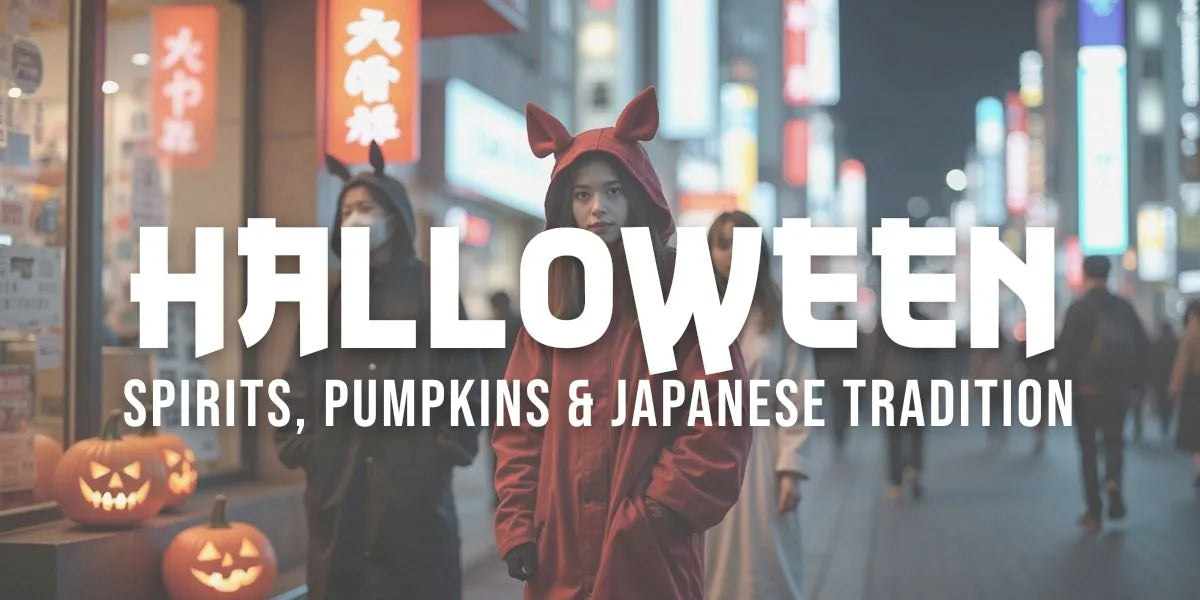
Shibuya Crossing on the last weekend of October: a Pikachu waits for the light next to a zombie salaryman, and nobody knocks on a single door. That is Halloween in Japan in one image. It is a street and theme park costume event, not a candy hunt, and its roots in death worship belong to other Japanese festivals entirely.
Every region of the world has beliefs about death, spirits, demons and their own creatures. In Japan, Halloween sits alongside a much older culture of honouring the dead.
The October 31 holiday in Japan is both different and similar to Halloween in the United States or Europe. Death worship and tributes to ancestors matter a great deal in Japanese culture. Historically death is associated with the goddess Izanami and the Shinigami (Japanese specter). Below, the influence of this macabre 31st in the land of the rising sun, how the night was absorbed into the Japanese calendar, and every difference with the Western holiday.
Key points
- Halloween in Japan is mainly about costumes, photos and crowds, not trick-or-treating.
- It arrived in the 1980s through stores and theme parks, and stayed a commercial season.
- Cosplay of manga, anime and game characters is the dominant costume choice.
- Traditional masks of Oni, Kitsune, Tengu and Hannya come from festivals, not from Halloween.
- The real Japanese festival of the dead is Obon, in mid-August.
What is Halloween?
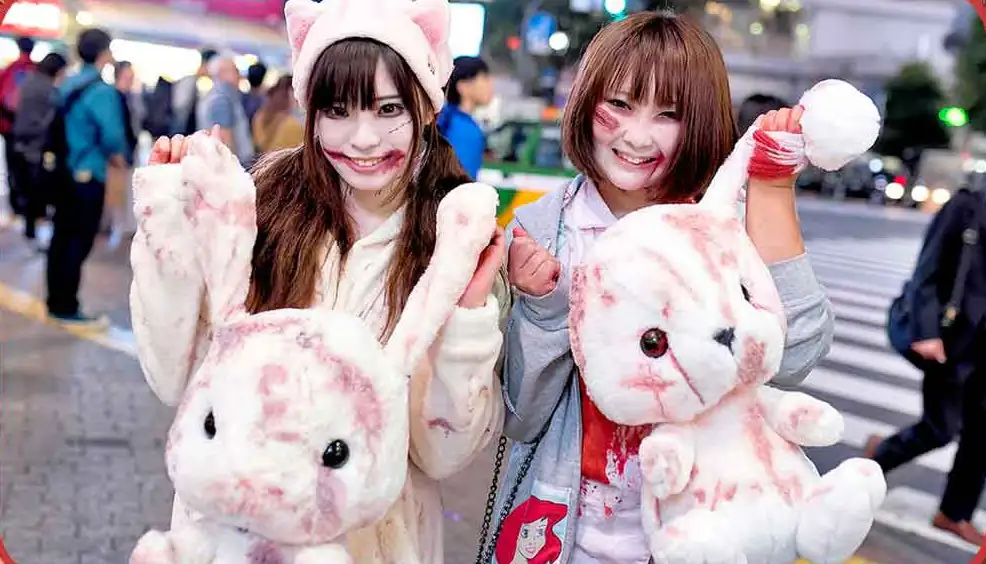
Halloween is a holiday with Celtic origins in which children take to the streets dressed as mythical and evil creatures. They go trick-or-treating from house to house, under the motto "trick or treat".
The night falls on October 31, and the usual cast is witches, vampires, zombies, mummies, Frankenstein, pumpkins, ghosts and monsters. Halloween night in Japan follows none of that script. The country has its own terrifying creatures, its own costumes and its own traditions around death.
How does Halloween work in Japan?
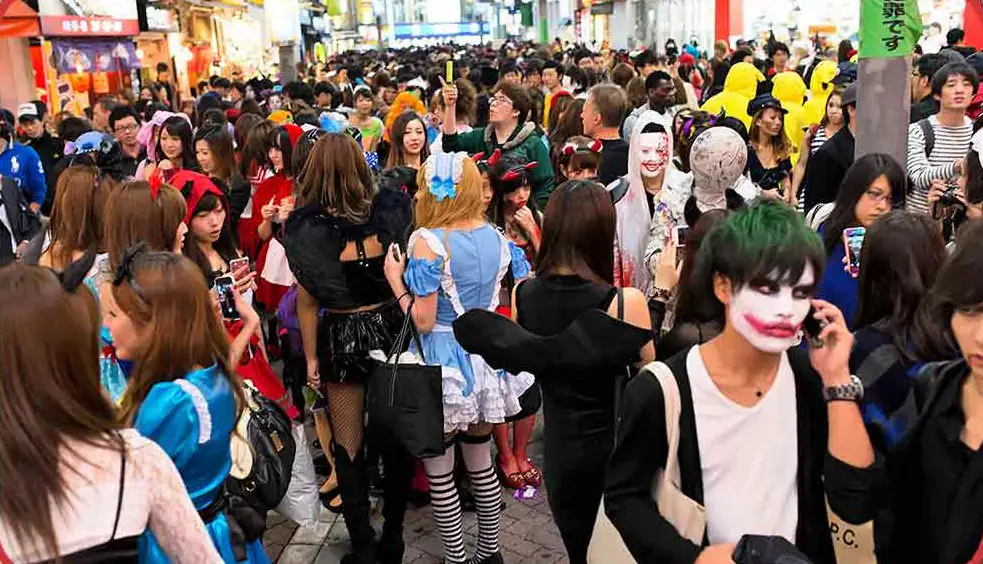
Halloween is a Western tradition that became Japanese in the late 20th century. The first Halloween costume parade in Japan was organised in 1983 by the Kiddy Land store. Since then, thousands of children from Japan and abroad join the Halloween Pumpkin parade in the Harajuku district. The children wear cute Kawaii costumes. It is a family afternoon, friendly and bright. A scarier gathering happens on the streets of Shibuya, in Tokyo.
The date of October 31 is seen in Japan more as a commercial opportunity than a true tradition. Supermarkets, stores and malls decorate their storefronts with pumpkins, skeletons, witches, broomsticks, vampire teeth, werewolf ears and spider webs.
Bars host themed nights through October. Restaurants and bakeries serve pumpkin desserts. Fast food chains have released black burgers, and coffee chains sell bloody-looking frappuccinos for the occasion.
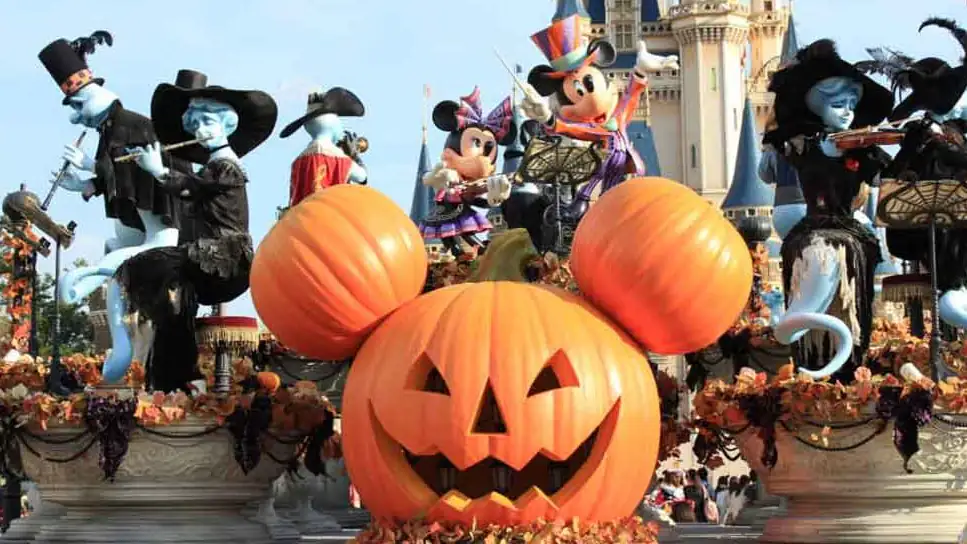
Amusement parks such as Tokyo Disneyland and Universal Studios Japan in Osaka are packed during the Halloween season. They run late-night parties, haunted houses and horror-movie streets. Young adults arrive as cosplayers and manga characters.
The similarity stops there. Kids do not ring doorbells for candy. Knocking on a neighbour's door to ask for sweets is felt as an intrusion, and privacy between households is taken seriously. Handing out candy in the street has been tried here and there, without much success.
So the inhabitants of the rising sun shiver in their own way, with their own creature costumes and their own beliefs about death. Not only on October 31, but across the whole year. If you want one piece that works for a Tokyo-style costume night and still looks good on a wall afterwards, a carved demon mask is the safest starting point.


Credit images blog and banner image Tokyofashion

As we already mentioned, Halloween in Japan is mostly a commercial season. The Japanese costumes that feel truly local draw on Shinto and Buddhist legends, on Yokai and on oni demons. Let us look at those beliefs and their connection to Halloween.
Yokai: Japanese demon
A yokai (妖怪) is a creature, a Japanese spirit, a supernatural or paranormal phenomenon in Japanese folklore. There is no single day set aside to dress as these beings. Most of them have their own festival, and the costume worn depends on the place and the season.
Among the most famous are:
- The long-nosed Tengu demon who is a samurai master
- The Kitsune fox demon and its polymorphic power
- The Japanese demon Kappa who is a wrestler
- The monstrous demon Oni with his sharp teeth and horns
- The ghostly Yurei
- The vengeful demon Hannya who torments the minds of men
Since the year 2000, the town of Yamashiro has held a carnival built around these creatures.
This festival is the closest thing Japan has to Halloween. The date is near (first or second weekend of November), and people wear costumes themed on the world of the dead. Legend says that on this night Yokai walk among humans.
Japanese Halloween costume
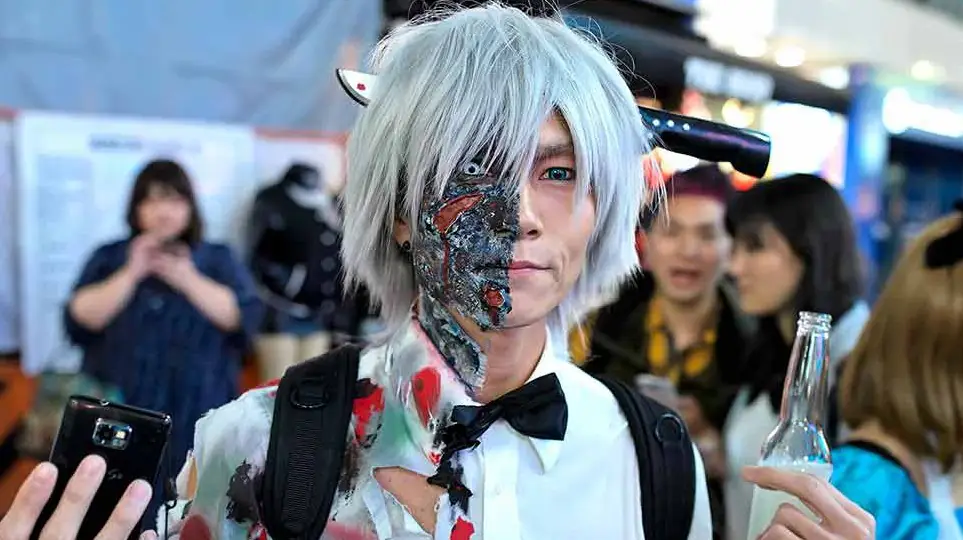
Even if the framing differs, people in Japan do dress as demons, spirits, creatures and legends, in most places that celebrate this holiday or one close to it.
The most common Halloween costume in Japan is cosplay, short for costume play: an outfit that reproduces a character from manga, anime, games or film. Adults and teenagers both go this route.
The most popular are:
- Manga costumes: One Piece (Luffy, Zoro), ninja characters (Naruto, Sasuke, Pain)
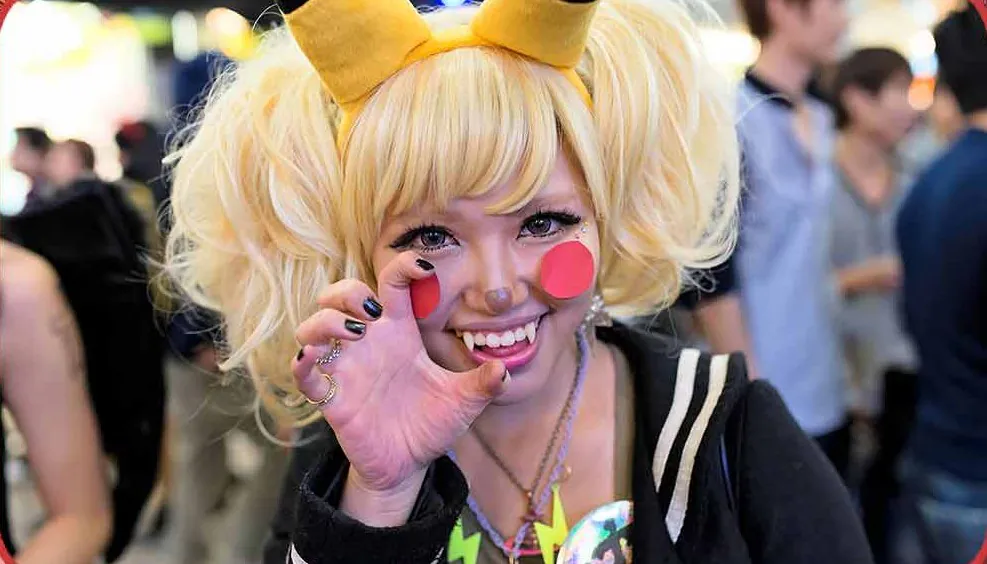
- Pokemon costumes: cute characters like Pikachu or Squirtle
- Walt Disney costumes: Elsa, Cinderella, Snow White
- Studio Ghibli costumes: Princess Mononoke, Kiki the little witch, characters from My Neighbor Totoro
- Video game costumes: Noctis from Final Fantasy, Mario, Link from Zelda
- Film costumes: Marvel heroes such as Deadpool, Iron Man or Thor
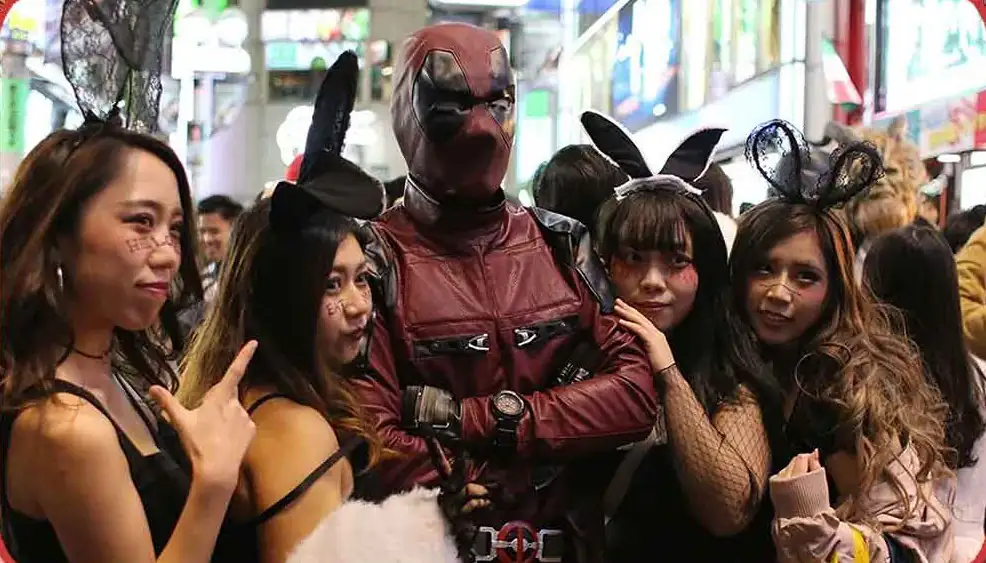
Alongside cosplay there are the traditional costumes used to honour or imitate the demons and creatures of the kami world. These are more elaborate, often handcrafted, and worn by adults rather than children.
The key accessory stays the traditional Japanese mask. Demon masks like these appear at many festivals and events. Oni, Tengu and Kitsune each have their own design, and there are masks for other unsettling figures such as Hannya or the Kappa. A Kitsune fox mask is the version I suggest to anyone who wants presence without full makeup.

If you prefer a ready-made look, our Japanese Halloween costume pieces mix masks and wearable garments, so the outfit still works with jeans once the night is over. One practical point: Japanese sizes run about one size smaller than US or EU sizes, so size up if you are between two options.
The Obon festival, the reunion after death
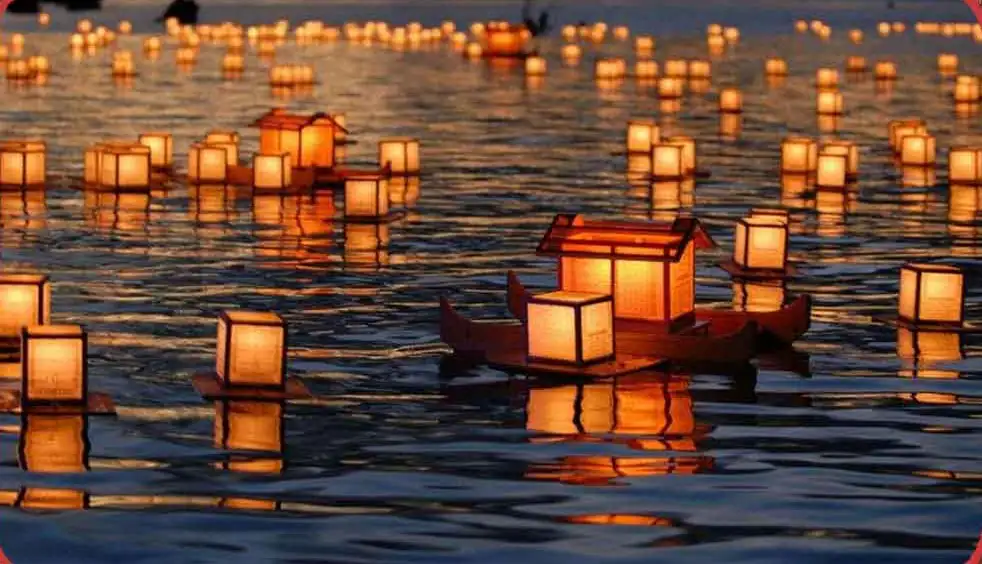
The Obon festival (お盆), the festival of ancestors, takes place in mid-August. It is a Buddhist observance where the souls of ancestors are honoured. In Japanese mythology, the deceased return to earth for those days.
Families across the archipelago gather for the ritual. They visit the family grave and pray at the temple. Offerings of rice, fruit, vegetables and cakes are placed on the altars for the tormented spirits. Lanterns are floated on rivers and on the sea on the first and last day.
Each region holds its Bon Odori, traditional dances in honour of the elders. People wear yukata (浴衣), the light unlined cotton summer kimono, for these evenings.
Halloween and Obon meet on one point only: both turn toward the dead. Both mark a moment when spirits are said to walk again among the living.
Mythology, beliefs and traditions of death in Japan
Halloween revolves around death and magical creatures. In Japan, the gods of death are the Shinigami (死神). They carry human souls away at the moment of death, in the role the grim reaper holds elsewhere.
Buddhism counts a very large number of followers in the land of the rising sun, alongside Shinto practice. Buddhist belief holds that a life lived well leads toward Nirvana, a state of supreme peace, after death.
Halloween in Japan, then, is a layered thing: an imported party sitting on top of a much older set of myths, beliefs and rituals. The country does celebrate it. On other days too, with other creatures, and with a different way of looking at the dead.

FAQ
Is Halloween a good time to go to Japan?
Yes, if you enjoy costumes and crowds. October brings mild weather, theme park programmes that start in September, and a city energy you will not see in other months. Book accommodation early, because the last weekend of October fills up in Tokyo and Osaka.
Does Japan go trick-or-treating?
Not in the door-to-door sense. Knocking on a stranger's home is felt as an intrusion. Candy collecting happens instead inside organised settings: international schools, shopping malls, parades and neighbourhood events for children.
What is the Japanese version of Halloween?
Obon, in mid-August, is the true Japanese festival of the dead: grave visits, offerings, lanterns on the water and Bon Odori dances. For costumes and creatures, the Yokai carnival held in Yamashiro in early November comes closest to the Halloween spirit.
Where should I go for Halloween in Japan?
Shibuya for the street gathering, Harajuku for the family pumpkin parade, Ikebukuro for cosplay culture, and Tokyo Disneyland or Universal Studios Japan in Osaka for organised events. Kawasaki has also been known for its large costume parade.
Explore the Japanese Halloween Costume collection
Take a look at our Japanese Halloween Costume collection if you would like a mask or an outfit that keeps its place in your wardrobe long after October.
Browse the collection →