The first time I walked from Harajuku station down to Shibuya, it took me about twelve minutes on foot, and the crowd changed completely on the way. Platform boots and hand-painted denim gave way to beige trench coats and blow-dried hair. That short walk is the clearest lesson on harajuku vs shibuya style anyone can get. Harajuku and Shibuya are neighbouring stops on the Yamanote line, but they dress in opposite directions. Harajuku is subculture-driven, layered, colourful and deliberately strange, built around Takeshita Street's indie and secondhand shops. Shibuya is the polished, trend-following side of Tokyo youth fashion, shaped by gyaru history, Shibuya 109 and big-brand retail. Harajuku is about inventing a look. Shibuya is about wearing the current one well.
In short
- Harajuku street style grew from subcultures such as Lolita, decora, goth and fairy kei, and it thrives on secondhand layering and personal invention.
- Shibuya street style traces back to 1990s gyaru culture and Shibuya 109, and today it leans trend-led, groomed and brand-aware.
- Harajuku outfits mix silhouettes and colours freely, while Shibuya outfits keep a tighter palette with one or two statement items.
- You can borrow from both outside Japan: Harajuku for layering and Japanese-cut trousers, Shibuya for a clean monochrome base.
Harajuku vs Shibuya style: what really separates them
Most travel forums treat these two names as interchangeable shopping areas. They are two different fashion logics that happen to sit side by side, and understanding that difference makes shopping and dressing in both districts far easier.
Two Tokyo districts, two fashion logics
Harajuku sits one stop north of Shibuya station. Its fashion identity was built from the bottom up, by small shops, secondhand racks and teenagers who dressed for each other rather than for the mainstream. Shibuya works the other way around. Its identity was built by retail: department stores, brand floors and magazines that told a large audience what to wear this season.
So a Harajuku outfit reads as a personal statement and a Shibuya outfit reads as a well-executed trend. One rewards invention. The other rewards precision. Omotesando, the tree-lined avenue that starts a minute from Harajuku station, adds a third layer with its luxury flagships, which is why the area can look expensive and scrappy within the same block.
Harajuku vs Shibuya style at a glance
| Criteria | Harajuku | Shibuya |
|---|---|---|
| Origins | 1980s and 1990s street subcultures, Sunday gatherings near Yoyogi Park | 1990s gyaru culture, magazine trends, department store retail |
| Palette | Pastels, saturated brights, or full black for the gothic branch | Black, beige, white, grey, one accent colour |
| Silhouette | Mixed volumes, layering, visible customisation | Clean lines, fitted or intentionally oversized, never accidental |
| Typical shops | Indie labels, secondhand and vintage shops, accessory stalls | Shibuya 109, brand flagships, chain fast fashion |
| Budget | Low to medium, built piece by piece | Medium to high, built around key branded items |
| Occasions | Weekends, meetups, photo sessions, self-expression | Nightlife, dates, campus, everyday city wear |
Where Harajuku style comes from: Takeshita Street to today
Harajuku fashion started in the street, literally. In the 1970s and 1980s, roads near Yoyogi Park were closed to cars on Sundays, and young people used that space to dance, meet and dress up. The takenoko-zoku dancers of the early 1980s were the first famous example. The pedestrian zone was discontinued in the late 1990s, but the habit of dressing for the street stayed.
The subcultures that built Harajuku fashion: Lolita, decora, goth
Harajuku is not one style. It is a container for several. Lolita fashion borrows Victorian and Rococo silhouettes: bell skirts, petticoats, blouses with high collars, and it splits into sweet, classic and gothic branches. Decora piles on plastic clips, badges and bracelets until the accessories become the outfit. Fairy kei works in faded pastels and 1980s toy references. Alongside all of that runs a heavily black branch, close to goth and visual kei, which used to gather near the Jingu bridge.
The cliché that Harajuku equals rainbow colours only describes half of the district. Plenty of regulars wear head-to-toe black with hard boots and silver hardware, and that version travels better outside Japan.
Why secondhand shops shape the Harajuku look
Invention needs cheap material. Harajuku and the nearby streets of Ura-Hara are dense with secondhand and vintage shops, from American workwear to 1990s Japanese labels sold by the kilo. Buying used means you rarely see the same jacket twice, and it makes customisation logical: if a piece costs little, you cut it, patch it or pin it. That habit is closer to the brand principle of Kaizen than it looks, small continuous improvements to a wardrobe you already own.

Harajuku style today: quieter, but still experimental
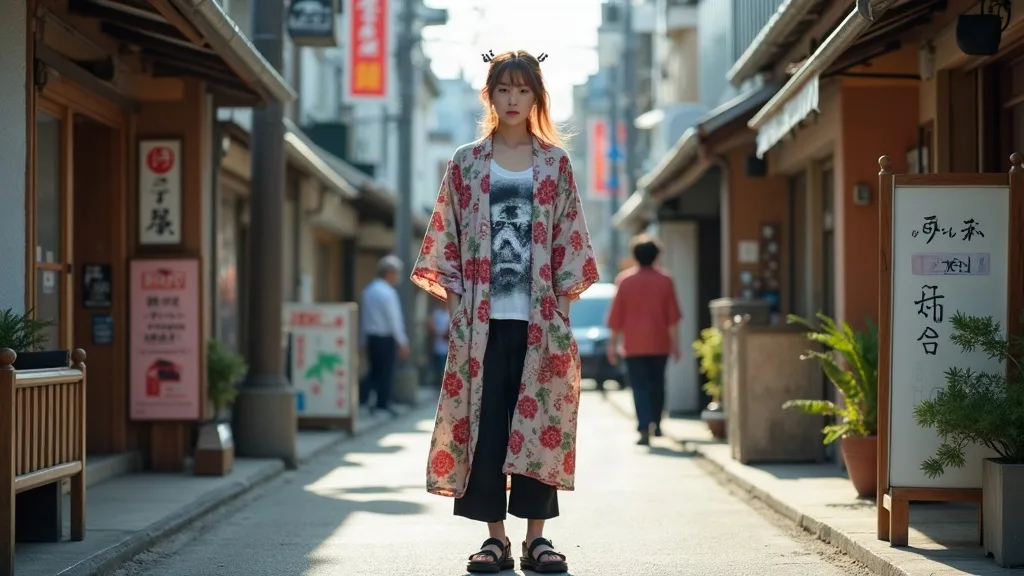
Today's Harajuku is calmer than its 2005 photographs. Rents rose, chain stores moved in, and social media replaced the street as the main stage. The experimentation moved rather than disappeared. You now see it in oversized proportions, in gender-fluid layering, in workwear mixed with kawaii accessories, and in secondhand kimono worn open like a jacket.
Shibuya street style: gyaru roots, 109 and the modern polish
Shibuya's fashion identity is younger than Harajuku's but far more commercial. It grew around one building and one subculture, and both left visible traces.
How gyaru culture set the Shibuya template
Gyaru appeared in the early 1990s, with the kogal high-school variant, shortened skirts, loose socks and dyed hair, followed by the deeply tanned ganguro look in the late 1990s. The details dated fast. The underlying rules did not: visible grooming, strong hair, coordinated accessories and an outfit built to be seen at night, under artificial light.
Shibuya 109 and the rise of trend-led shopping
Shibuya 109, open since 1979, turned that subculture into a retail machine. Floors of small brands, charismatic shop staff who became style references themselves, and a fast turnover of trends. Shopping there is a different exercise from digging through Harajuku racks. You are buying the current silhouette, not building an unrepeatable one. If you are planning a Tokyo trip, our free e-book on Japan is a useful starting point for mapping districts like these before you land.
What a Shibuya outfit looks like today
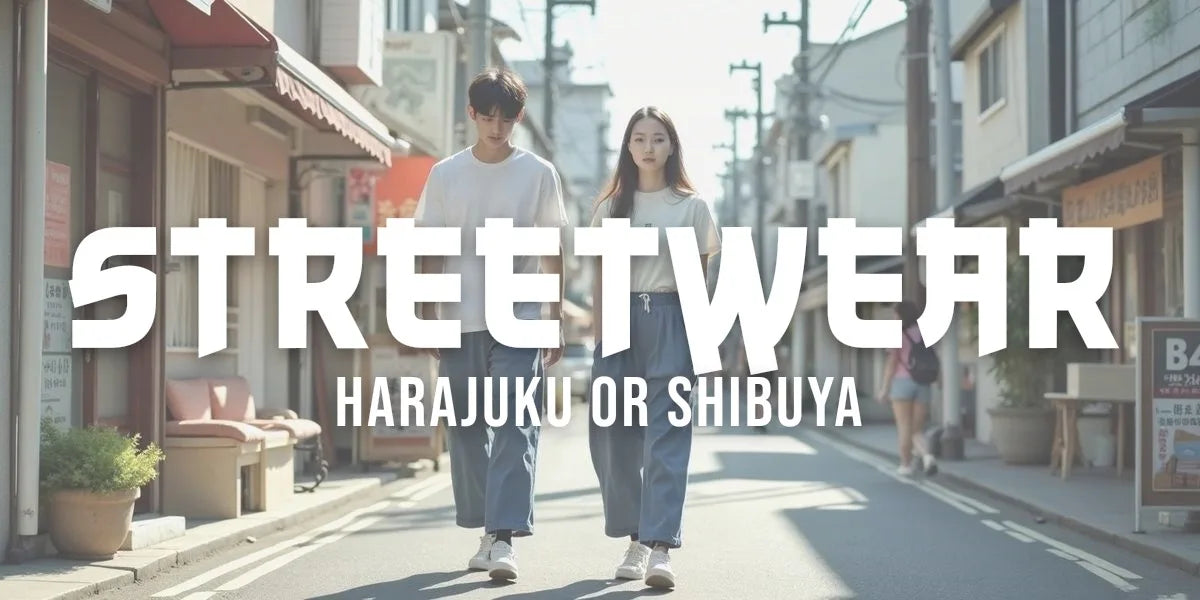
The modern Shibuya look is restrained. Three colours maximum, usually black, white and one neutral. Straight or wide trousers with a clean hem. A fitted top or a deliberately oversized knit, rarely both. Chunky sneakers or leather boots. One recognisable bag or a visible piece of jewellery. Hair and nails are treated as part of the outfit. Near the Scramble Crossing at rush hour, you can spot the pattern in seconds.

Key Harajuku pieces you can actually wear every day
You do not need a full subculture wardrobe to borrow from Harajuku. The district's real lesson is about proportion and layering, and it works with clothes you already own.
Layering the Harajuku way with a white tee and jeans
Start with a plain white t-shirt and dark jeans, then add one long layer on top: an open shirt, a long cardigan, or a haori (羽織), the short traditional jacket worn over a kimono. The haori is the piece I recommend most often to beginners, because it adds the Japanese line without asking anything of the rest of the outfit. Keep the base tight and the top layer long. Two strong colours are enough at the start.
Japanese streetwear pants as the Harajuku base layer
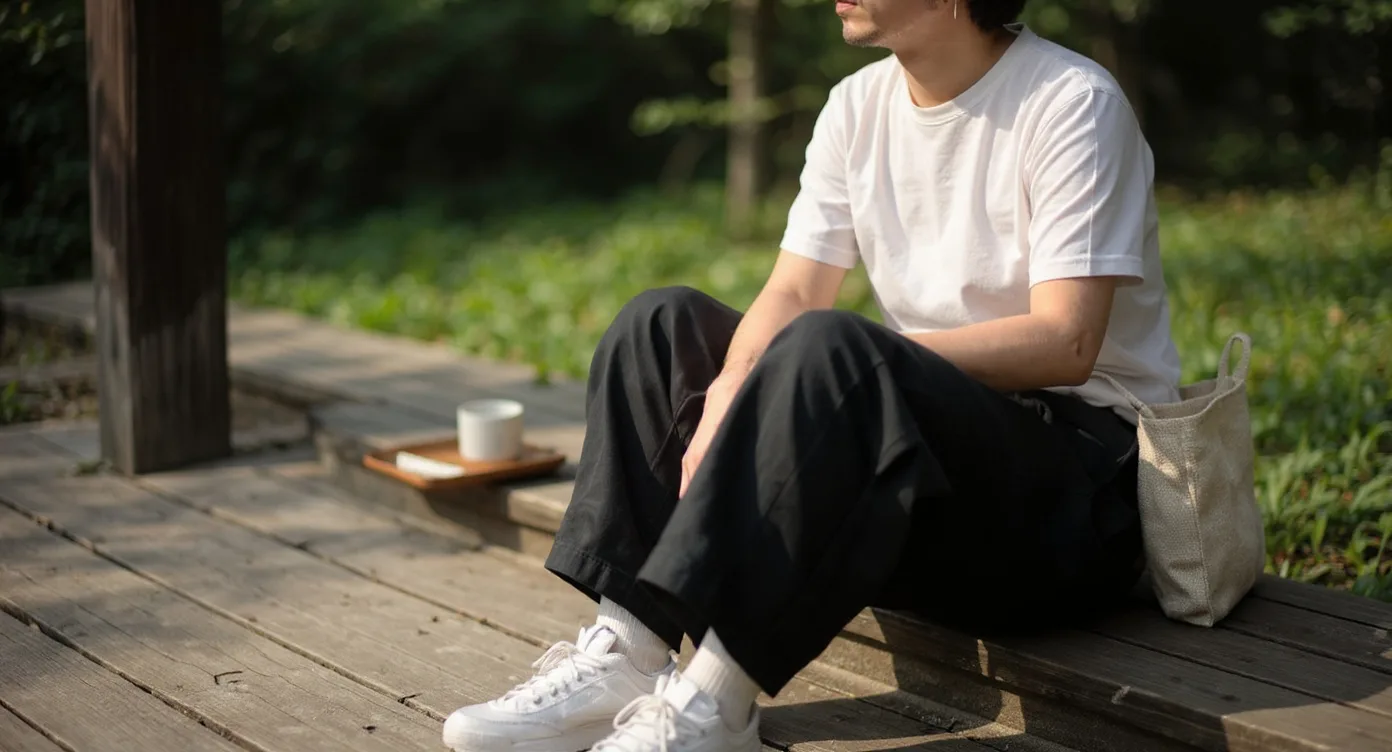
If I had to choose a single piece to build a Harajuku-leaning wardrobe, it would be the trousers. Wide-leg streetwear pants give you the silhouette immediately, and they carry a plain tee better than any jacket. These Japanese streetwear pants are the pair I reach for when I want the shape without the costume effect, and they work with sneakers, tabi (足袋), the split-toe Japanese socks, or plain boots.

- Cut: wide leg, high rise, gathered or straight hem depending on the model
- Styling: fitted top, tucked or half-tucked, one accessory maximum
- Sizing: Japanese sizes run about one size smaller than US and EU sizes, so size up if you are between two
- Care: check the label, most cotton blends prefer a cold wash and air drying
Harajuku accessories: pins, socks, hair pieces
Accessories are where the district's spirit lives. Enamel pins on a jacket lapel, printed socks worn high with loafers, a single hair clip in a contrasting colour, a small bag worn across the chest. Add them one at a time. Decora piles on dozens because that is the point of decora, but for daily wear, three well-chosen pieces read as style rather than as a theme.

Borrowing from both: Harajuku and Shibuya looks outside Japan
Outside Tokyo, the risk is not looking boring. It is tipping into costume. The safest method is to keep the structure of your usual clothes and change one element at a time.
A Shibuya-leaning capsule: three colours, clean lines
Choose black, white and one neutral such as beige or grey. Add straight or wide trousers, a plain crew-neck top, a long coat or a boxy jacket, and one pair of clean shoes. Everything matches by default, and the outfit lives on cut rather than on print. This is the version I suggest to anyone who wants a Japanese influence at the office.
A Harajuku-leaning look for conventions and photo shoots
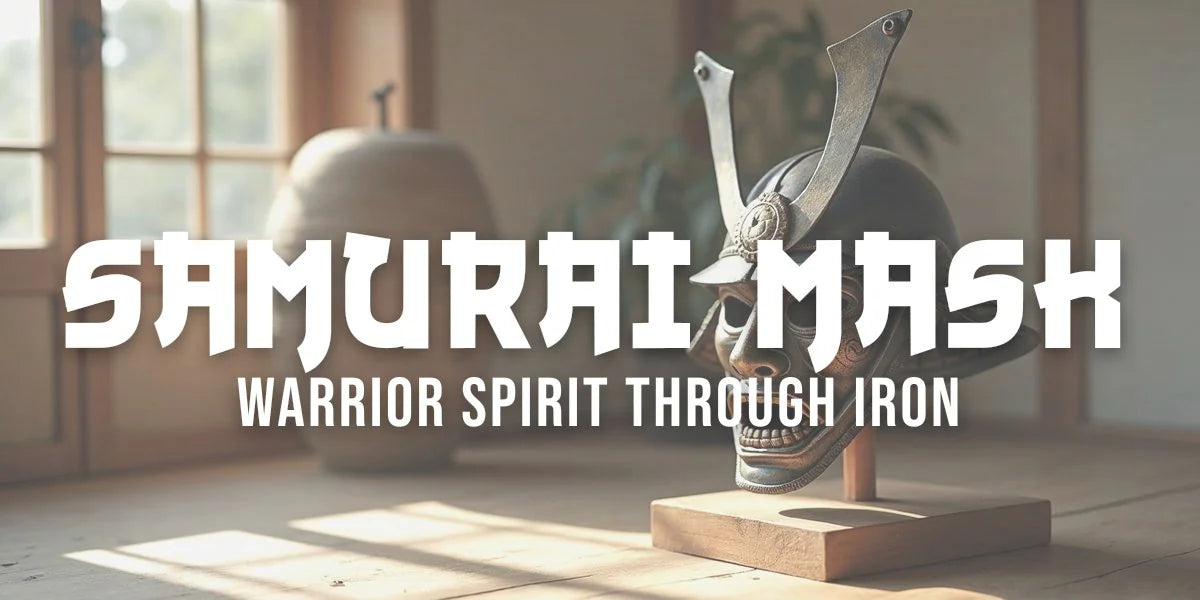
For a convention or a shoot, you can push much further: layered lengths, contrasting patterns, a statement accessory. An oni (鬼) mask, the horned demon of Japanese folklore, is the classic finishing piece. The Oni demon mask I keep recommending is handcrafted by local artisans, and I wear it pushed to the side of the head or tied at the hip rather than over the face, so the outfit stays wearable between photos. It also earns its place on a shelf at home the rest of the year, which is very much the Wabi-Sabi logic of keeping objects that age with you.

Masks and statement pieces without tipping into costume
| Piece | Everyday street | Better for events |
|---|---|---|
| Haori (羽織) | Yes, over jeans and a plain tee | Also fine, in bolder prints |
| Hakama (袴), the pleated wide trousers | Possible in a modern short cut | Yes, for full traditional or cosplay looks |
| Jinbei (甚平), the two-piece summer set | At home and in hot weather | Festivals and summer events |
| Oni or kitsune mask | As an accessory, not worn on the face | Conventions, photo shoots, wall display |
Harajuku vs Shibuya style: your questions answered
These are the four questions I get most often from customers preparing a first trip to Tokyo or a first Japanese-influenced outfit.
Is Harajuku or Shibuya better for shopping?
Harajuku is better for secondhand, indie labels, accessories and small budgets, especially around Takeshita Street and the back streets of Ura-Hara. Shibuya is better for current trends, mainstream brands and one-stop shopping in large buildings such as 109. Many people do both in an afternoon, since the two stations are one stop apart.
What is Harajuku style in Tokyo?
It is an umbrella term for the street fashion subcultures that developed around Harajuku station from the 1980s onward, including Lolita, decora, fairy kei and gothic looks. It is defined by layering, customisation and personal invention rather than by one uniform. Colour is common but not compulsory.
What does Harajuku style mean today?
It is quieter and more mixed than its early 2000s image. The experimental instinct moved into oversized proportions, gender-fluid layering, vintage sportswear and secondhand kimono worn as outerwear. You will still see full Lolita or decora coordinates on weekends, just in smaller numbers.
Can you visit Harajuku and Shibuya on the same day?
Easily. It is one stop on the Yamanote line and roughly a fifteen-minute walk between the two stations, often through Omotesando or Cat Street. Starting in Harajuku in the morning and finishing in Shibuya in the evening also matches how each district looks at its best.
If you want one piece that bridges both sides, a printed hoodie sits comfortably in a Harajuku layer stack and in a Shibuya three-colour capsule. Have a look at our Japanese hoodie collection when you are ready to build your own version.
Explore the Japanese Hoodie collection
Browse the Japanese hoodies for the layering piece that works with both a Harajuku mix and a cleaner Shibuya outfit.
Browse the collection →