Last October I carried a small momiji out of its spot on the north side of the balcony and set it on the table. Three days earlier the leaves were green at the edges. That morning they were scarlet, lit from behind, and the whole tree looked like it was holding its breath. A japanese maple bonsai (Acer palmatum) stays vigorous and colorful when you treat it as the outdoor, deciduous tree it is: morning sun with shade in summer heat, water every day in the growing season, a free-draining akadama-based mix, pinching and structural pruning in the right months, repotting in early spring, and a cold but sheltered winter rest. The vivid autumn red you are after comes from that rhythm, not from a trick: strong light, low nitrogen late in the season, and cool nights. Kept indoors the tree misses its dormancy and declines within a year or two, so the only "indoor" moment is a few days of display at a time.
Key points
- Japanese maple bonsai is an outdoor tree: it needs real seasons and a cold winter rest to color well.
- Water daily in summer, sometimes twice, and never let the root ball dry out or the leaves scorch.
- Prune and pinch in the growing season, wire with care, and repot in early spring as the buds swell.
- Autumn color deepens with strong light, cool nights and little nitrogen after midsummer.
Can a Japanese maple be grown as a bonsai?
Yes, and it is one of the finest subjects there is. Acer palmatum has small leaves, short internodes and a natural habit of dividing into fine twigs, which is exactly what makes a miniature tree read as a full-size one. The bark matures from smooth green to grey and slightly fissured over the years. The tree also backbuds readily, so a mistake you make this season can be corrected two seasons later. That is the quiet pleasure of a momiji (紅葉, "crimson leaves", the word used for the Japanese maple and for its autumn turn).
Acer palmatum cultivars that work best as bonsai
Not every garden cultivar suits a pot. A few are long-standing favorites among bonsai growers.
| Cultivar | Why growers choose it |
|---|---|
| Deshojo | Brilliant red new growth in spring, then colors again in autumn. |
| Kiyohime | Dwarf, very short internodes, naturally broad and low. |
| Arakawa | Develops rough bark young, so a slim trunk looks mature quickly. |
| Sango-kaku | Coral-red twigs that glow through winter with yellow autumn foliage. |
Plain seed-grown Acer palmatum is still an excellent starting point. It is vigorous, cheap to find, and tolerant of the work a young tree needs.
Why momiji leaves turn such vivid red in autumn
The red is not revealed, it is made. As days shorten, the leaf stops producing chlorophyll, uncovering the yellow carotenoids already present. At the same time, many maples synthesise anthocyanins, the red pigments. That synthesis needs sugar in the leaf, bright light, and cool nights while days stay sunny. A warm, overcast autumn gives muddy color. A bright one with cold nights gives the koyo autumn color that fills Kyoto's temple gardens in November.
Japanese maple bonsai vs garden maple: what changes
In the ground, a maple finds its own water and builds a wide root system. In a shallow pot it cannot. Everything you do is compensation: more frequent watering, a soil that drains fast, periodic root pruning, and shade in heat. The silhouette is yours to build, one small correction a year. That is Kaizen in a very literal form.
Where to place a Japanese maple bonsai outdoors
Placement decides more than any other single factor. Maples want light for color and ramification, but their thin leaves lose water fast and burn in hot, dry air. The sweet spot is bright morning sun with protection from afternoon heat and wind.
Sun and shade balance for a Japanese maple bonsai
Give the tree direct sun from sunrise until roughly midday, then filtered light. Once air temperatures pass about 30 °C (86 °F), move it into shade cloth for the hottest hours. Dry wind does as much damage as sun: it pulls water from the leaf faster than fine roots can replace it. Red-leaved cultivars burn first, so give them more shelter than a plain green tree. Raise the pot on a slatted bench so air moves under it and the sun-heated concrete does not roast the roots. Avoid dark pots in full sun; pale or unglazed pots run cooler. Watch for reflected heat from glass and white walls, which can double the effective exposure.
Watering, soil and repotting a momiji bonsai
Maples are thirsty and intolerant of a dry root ball. A single lapse in July can cost you the whole autumn display, because scorched leaves do not recover. The goal is a substrate that lets you water hard and often without ever becoming soggy.
How often to water a Japanese maple bonsai
In the growing season, check twice a day and water once or twice as needed. Lift the pot and feel its weight, or push a finger into the surface up to the first knuckle. Water from above with a fine rose until it runs freely from the drainage holes. In winter, dormant trees still need slightly moist soil, so check weekly. If your tap water is very hard, use collected rainwater; maples prefer it.
Akadama, pumice and lava mix for maple roots
Akadama soil is a baked granular clay from Japan. It holds water and nutrients and softens predictably over time, telling you when the mix needs renewing.
| Component | Water retention | Drainage | Lifespan | Share |
|---|---|---|---|---|
| Akadama | High | Good when fresh | 2 to 3 years | 50 % |
| Pumice | Medium | Very good | Many years | 25 % |
| Lava rock | Low | Excellent | Many years | 25 % |
Sift out dust before mixing. Fine particles clog the pores and undo the drainage you paid for.
Repotting a maple bonsai as the buds swell
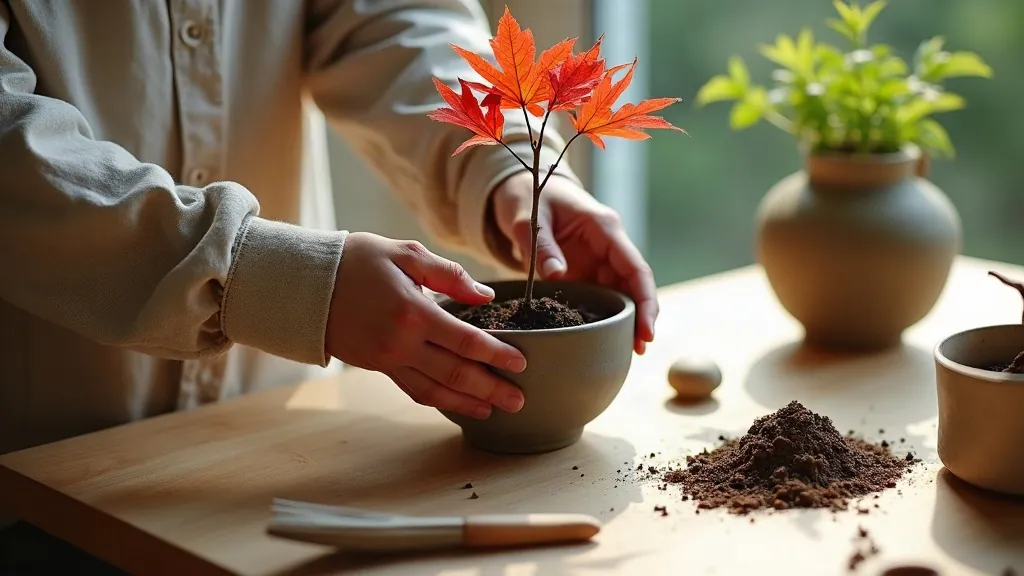
The window is early spring, when buds have swollen but leaves have not opened. Young trees in development need it every two years, mature trees every three to five. Comb out the root mass, remove no more than a third of it, and cut thick roots back in favour of the fine feeders. Arrange the nebari surface roots, spreading them radially so the trunk looks anchored. Choose a pot that is shallow but proportionate; too small a volume dries out hourly in summer.
Pruning and wiring a momiji bonsai for fine twigs
Fine twigging separates a convincing maple from a shrub in a pot, and it comes from repeated small cuts. Timing matters because maples bleed from wounds made at the wrong moment.
Pinching new shoots on an Acer palmatum bonsai
During active growth, let a new shoot extend two or three pairs of leaves, then pinch back to the first pair with tweezers. Each pinch forces two new shoots from that node, so density doubles. Pinch the strong upper shoots harder and leave weak interior ones alone, which evens out the tree's vigor. For structural cuts on thicker branches, work after leaf fall in late autumn or in early summer. Avoid cutting in late winter as sap rises, because the branch can die back.
The rule of three in bonsai, applied to maples
Branches are arranged in repeating groups of three: left, right and back for depth. No two branches start at the same height, and none sit directly opposite each other. Spacing widens toward the base and tightens toward the apex, producing a triangular silhouette. About bonsai wiring: maple bark marks within four to six weeks in the growing season. Check wire often and prefer directional pruning where you can, as letting a branch grow toward the light you want leaves no scars.
Autumn color and winter protection for a maple bonsai
Color and dormancy are the same subject. What you feed in August decides what you see in October, and how you shelter the pot in January decides whether there is anything to see at all.
Feeding schedule that keeps momiji color strong
Start a balanced organic or slow-release fertiliser once the leaves have hardened in spring, and feed regularly through early summer. After midsummer, drop the nitrogen and switch to a low-nitrogen feed, or stop entirely. Late nitrogen produces soft green growth that does not harden before frost. Give the tree the brightest position you have through September and October, keep watering steady, and let the nights get cold. Bright days plus cool nights are the trigger.
Protecting a maple bonsai from frost and wet roots
Acer palmatum is hardy in the ground, but a shallow pot gives roots almost no insulation. Plan to protect the root ball below roughly -5 °C. Useful options: sink the pot to its rim in a garden bed and mulch over it; bank it with bark against a sheltered wall; move it into an unheated garage; or use cold frame overwintering, which keeps the tree cold while shielding it from wind and freeze-thaw swings. Keep the soil just moist. Repeated freezing and thawing damages fine roots more than one steady cold spell.
Reading the tree: leaf scorch, mildew, weak growth
Brown, crisp leaf margins mean leaf scorch, almost always from a dry root ball, hot afternoon sun, dry wind, or salt build-up. A white dusty film is powdery mildew, which follows stagnant air; thin the canopy and improve airflow. Short, pale shoots usually point to exhausted soil, wet roots, or too much shade.
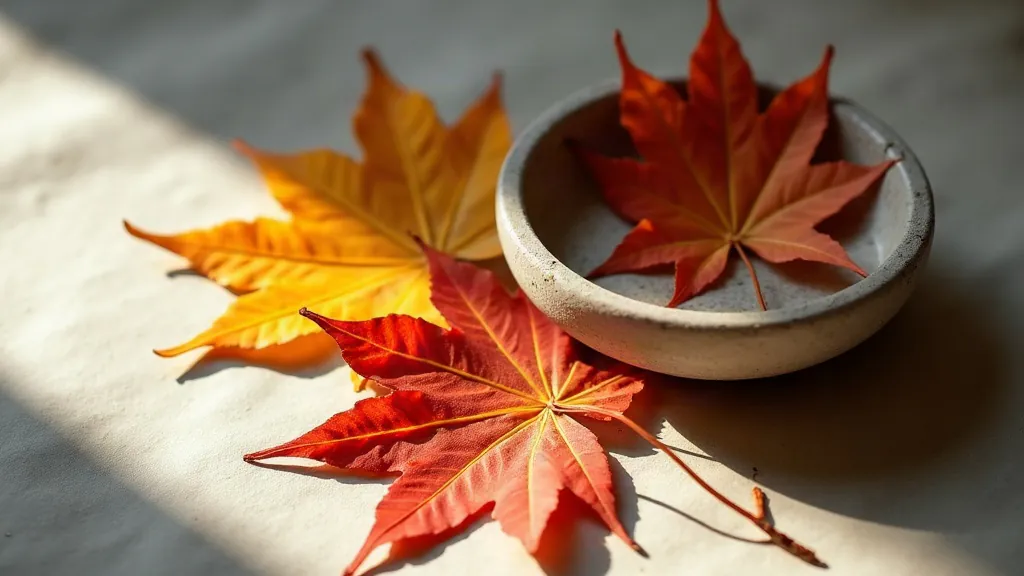
Displaying a Japanese maple bonsai in a wabi-sabi room
A maple shown well needs less around it than most people expect. One tree, one low stand, a quiet background, and generous empty space. Wabi-sabi (侘寂), the appreciation of the imperfect and the weathered, is served by restraint.
Choosing a stand and pot for a momiji bonsai
Unglazed brown, grey or earth-toned pots suit maples all year and let autumn color do the talking. If you want a glaze, cool tones like pale celadon sit well against red foliage. Keep the pot shallow and the stand low and dark, so the eye goes to the trunk line. A thin skin of moss over the surface finishes the planting and shows the nebari, but keep it clear of the trunk base where it holds damp.
Acer palmatum bonsai care: your questions
Can you keep a Japanese maple bonsai indoors?
Not permanently. It needs a cold dormant period, high light and outdoor humidity, and indoor conditions supply none of the three. Expect decline within one to two years. Bring it in for display for a few days at a time instead.
How often should I water my Japanese maple bonsai?
Once or twice a day through summer, checked by pot weight or finger test rather than by schedule. Water until it drains freely, then water again a minute later. In winter dormancy, check weekly and keep the soil barely moist.
What is the rule of three in bonsai?
Branches are arranged in repeating groups of three, left, right and back, with no two at the same height and none directly opposite. The spacing widens at the base and tightens toward the apex, producing a triangular silhouette. It is a guideline for believable depth, not an obligation.
How long does a Japanese maple bonsai take to develop?
A nursery sapling can look like a credible small bonsai in three to five years of consistent pinching. Trunk thickness, bark character and fine ramification take ten to twenty. Most of that time is spent waiting while the tree grows freely between refinement phases.
How much is a 20-year-old bonsai tree worth?
Age alone sets very little. Value follows trunk taper, nebari, density of twigging, absence of scars and the quality of the pot. A twenty-year-old field-grown maple with a thick, tapering trunk is in a different category from a twenty-year-old pot-grown one with a straight stem. Judge the structure in front of you, not the number of years.
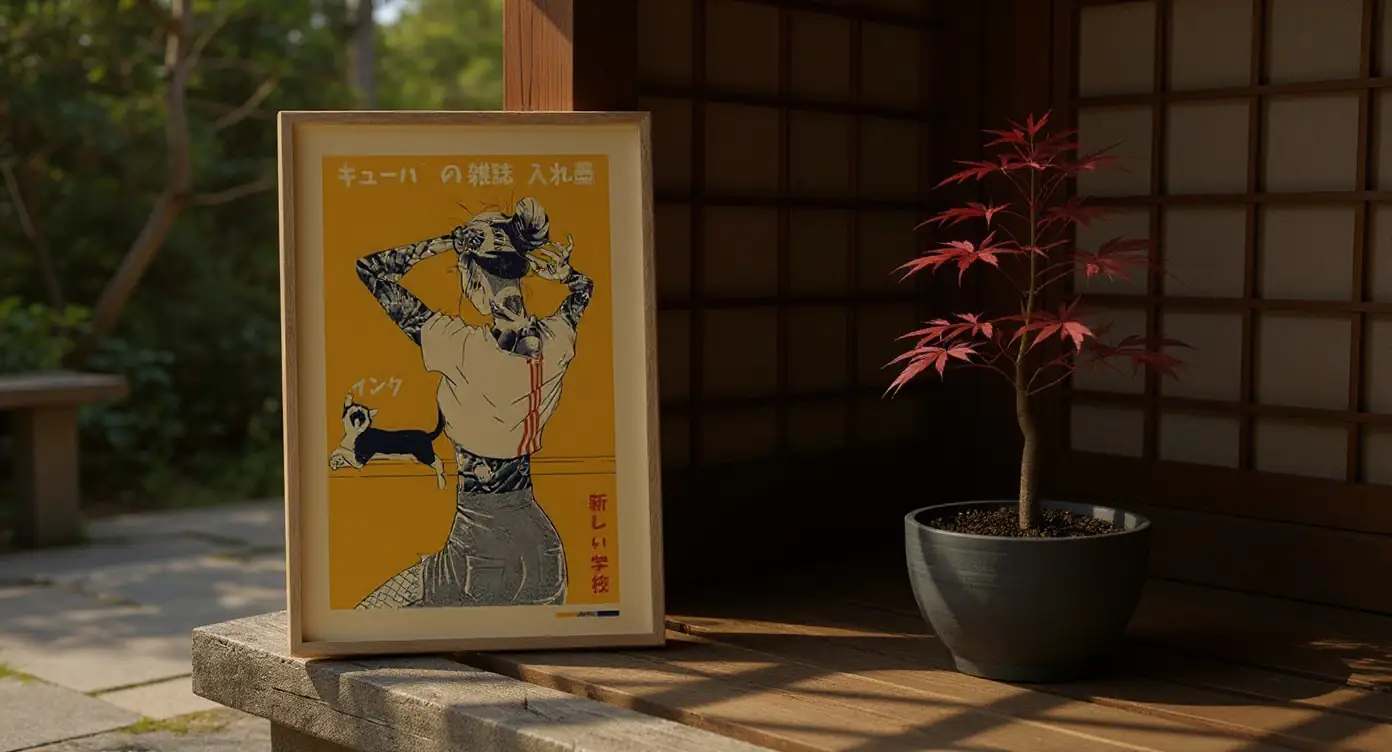
If you are setting up a quiet corner for your maple, the wall pieces and tabletop objects I keep coming back to for that kind of display are in our Japanese Decor collection. I would start with a single ink-style print as a backdrop and leave the rest of the surface empty.
Explore the Japanese Decor collection
In our Japanese Decor collection you will find the wall pieces, lanterns and small objects that frame a bonsai corner at home.
Browse the collection →