
The first thing that arrives is not food. It is a hot rolled towel, the oshibori, and a glance from the chef who is already deciding what your third piece will be. Omakase (お任せ) means "I leave it up to you": you sit at the counter, order nothing, and the chef serves a sequence of seasonal courses decided that morning at the market. In practice it lasts one to two hours, arrives one piece at a time, and asks only that you show up on time, eat each bite within seconds, and say what you cannot eat before it starts. Unlike kaiseki, which follows a codified order of courses, omakase is a live conversation between the chef's hands and your appetite.
In short
- Omakase literally means "I entrust it to you": no menu, no ordering, the chef decides.
- A typical counter meal runs 10 to 20 small courses over 60 to 120 minutes, served one at a time.
- Kaiseki follows a fixed ceremonial structure; omakase is improvised around the day's catch and the season.
- Counter etiquette is simple: declare allergies upfront, eat each piece immediately, no strong perfume, and no tipping in Japan.
What does omakase (お任せ) really mean?
The word is not a culinary term. It is an everyday expression of trust that found its most famous stage behind a sushi counter. You are not buying a tasting menu, you are handing over a decision.
From makaseru to omakase: the language of entrusting
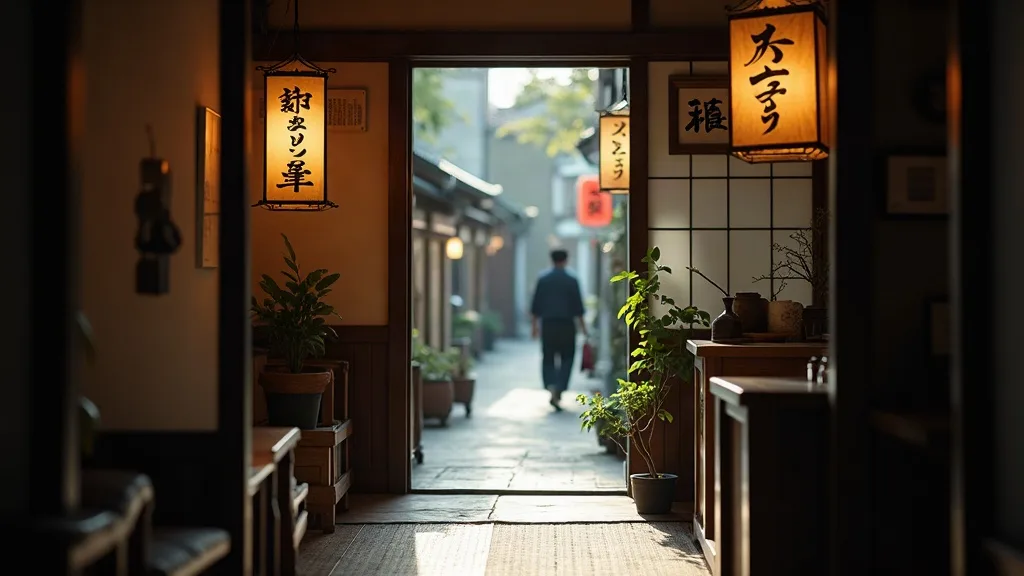
Omakase comes from the verb 任せる (makaseru), to entrust, to leave something in someone's care. Add the polite prefix お and you get お任せします, "I leave it to you." Japanese people use it far outside restaurants. At the hairdresser, "omakase de" means the stylist chooses the cut. At a fish shop, it means the vendor picks the best of the morning. The phrase carries a small compliment inside it: I trust your judgement more than my own.
Why an omakase menu has no menu
A counter chef, the itamae (板前, literally "in front of the board"), buys what is good that day, not what a printed list requires. Japanese cooking organises itself around shun (旬), the short window when an ingredient is at its peak. Sardines in early summer, sanma in autumn, fatty tuna in the cold months. A fixed menu would force the kitchen to serve an ingredient out of its window. Omakase promises a level of care rather than a list of dishes.
Omakase in Japan vs omakase abroad
In Japan, you can say omakase at a small izakaya, a tempura counter or a soba shop. Outside Japan, the word has narrowed almost entirely to high-end sushi served piece by piece at a counter, often with a fixed length and a booking deposit. Neither use is wrong. Just know that in Tokyo, asking for omakase at a modest neighbourhood place is a normal, unpretentious thing to do.
What happens during an omakase, course by course
The rhythm is the point. Nothing sits waiting, nothing is plated for a photograph, and the pace follows how fast you eat.

How long an omakase meal lasts and how many courses
Count on 60 to 120 minutes for 10 to 20 items. Many counters seat two services a night, so arriving fifteen minutes late can cost you the first courses. In Tokyo, dinner commonly falls between ¥10,000 and ¥30,000 per person, with lunch counters far more accessible. In the United States or Europe, high-end sushi omakase often sits in the 150 to 400 dollar range. Ask when you book, because the figure is usually fixed in advance.
Warm dishes, nigiri and the closing tamago
Most meals open with otsumami, small cooked or marinated bites meant to be eaten slowly with a drink: simmered octopus, grilled fish collar, a spoonful of monkfish liver, a seasonal vegetable. Then the counter shifts gear and the nigiri begin. The chef usually moves from lean white fish toward richer things: sea bream, then squid, then tuna in ascending fattiness, sea urchin, salmon roe, warm simmered eel. A bowl of miso soup often signals the turn, and the meal traditionally closes with tamago, the sweet layered omelette that old-school regulars treat as a test of the kitchen.
Is omakase all raw fish? What else lands on the counter
No. Even at a sushi counter, a large share of what you eat is cooked, cured or marinated: simmered clam, vinegar-cured mackerel, seared bonito, grilled anago brushed with sweet sauce. Beyond sushi there are tempura, yakitori and kaiseki-style omakase where fish is only one thread. Vegan and vegetarian omakase exist too, built on seasonal vegetables, tofu skin, pickles and mushrooms, though they need to be booked as such well in advance.
Omakase vs kaiseki: two different kinds of trust
Both ask you to stop choosing. The difference is what replaces your choice: a centuries-old grammar in one case, a chef's morning improvisation in the other.
Kaiseki's fixed course order vs the omakase improvisation
Kaiseki ryori (懐石料理) follows a recognised sequence, with courses that each have a name and a function: an opening bite, sashimi, a simmered dish, a grilled dish, rice and pickles, a light dessert. The hassun course exists specifically to state the season on a single tray. Omakase borrows the same seasonal sensibility but throws away the grammar.
| Criterion | Omakase counter | Kaiseki |
|---|---|---|
| Structure | Improvised around the day's market | Fixed order of named courses |
| Setting | Counter, facing the chef | Table or private tatami room |
| Rhythm | One piece at a time, fast | Slow, plated trays |
| Your role | Eat immediately, talk with the chef | Observe, take your time |
Counter intimacy vs the private tatami room
At a counter you are inside the work. You watch the knife, the pressing of the rice, the brush of soy. Kaiseki hides the kitchen and gives you a room, a scroll, a flower chosen for the month. One is a dialogue, the other is a composed setting you enter as a guest.
Which one to book for a first trip to Japan
For a first visit, I usually suggest one counter omakase early in the trip and one kaiseki dinner later. The counter teaches you the vocabulary of fish and season quickly. Kaiseki makes more sense once you can recognise what the tray is announcing.
Omakase counter etiquette: what not to do
Nothing here is difficult, and no chef expects a foreign guest to be perfect. The rules exist because the food is timed to the second and the seat behind you is booked.
Speak up before the first piece: allergies and dislikes
Tell them when you reserve, and repeat it when you sit down. Allergies, shellfish, raw items during pregnancy, alcohol in the pairing. A chef can rebuild a sequence at 6pm; he cannot rescue a piece already resting on the wood in front of you. Refusing food mid-meal is far more awkward than asking early.
Eating each nigiri within seconds (and with fingers)
The neta (the topping) is at its intended temperature and the shari (the vinegared rice) is pressed loosely so it collapses in the mouth. Wait two minutes and both are gone. Fingers are perfectly acceptable, often easier than chopsticks. Most counters brush the piece with nikiri sauce already, so no dipping is needed; if a dish is served for dipping, touch the fish side to the soy, never soak the rice. Pickled ginger, gari, is a palate cleanser between pieces, not a topping.
Tipping, photos and perfume at the omakase counter
In Japan, do not tip. It is not expected and can create confusion at the register; good service is included in the price. In the United States, the opposite is true and around 20 percent is standard unless service is already charged. Ask before photographing, keep the phone off the counter, and avoid flash. When you leave, "gochisousama deshita" (ごちそうさまでした), thank you for the meal, is the single phrase worth learning.

Bringing the omakase spirit home: Japanese tableware
You cannot recreate a market run at home, but you can copy the logic: serve small, serve warm, serve one thing at a time. Japanese tableware does the work, because portions here are shaped by the vessel rather than by the plate size.
Yunomi tea cups and the temperature of hospitality
A yunomi is the everyday tea cup: taller than a tea-ceremony bowl, no handle, usually stoneware or porcelain. You hold it with both hands, which tells you the tea is at the right temperature. It is filled around two thirds, never to the brim, so it can be refilled while your guest is still talking. Mismatched cups are not a mistake in a Japanese home; that quiet acceptance of irregularity is the wabi-sabi side of the table.
Tokkuri and ochoko: serving sake the way a counter does
Sake arrives in a tokkuri, the small flask, and is drunk from an ochoko, a cup that holds barely two mouthfuls. The size is deliberate: you pour for the person next to you, they pour for you, and the bottle keeps circulating. Filling your own cup is fine among friends, but the shared gesture is half the pleasure.
| Piece | What it holds | Common material |
|---|---|---|
| Yunomi | Everyday green tea | Stoneware, porcelain |
| Tokkuri | Sake, served cool or warmed | Porcelain, glazed ceramic |
| Ochoko | One or two sips of sake | Porcelain, glass |
| Hashioki | Rests the chopstick tips | Ceramic, wood, lacquer |
Choosing chopsticks and rests for small-course meals
For a meal built of many small dishes, shorter, finely tapered hashi handle delicate food better than long cooking chopsticks. Lacquered wood is light and warm to the touch; keep it away from the dishwasher and dry it flat. A hashioki, the little rest, is not decoration: it keeps the tips clean between courses and stops the two universal taboos, chopsticks planted upright in rice or passed food to food.
Omakase FAQ: quick answers before you book
The questions I get most often from customers planning a trip or a dinner at home.
What does omakase mean in English?
It translates as "I leave it up to you" or "I entrust it to you", from the verb makaseru. In a restaurant, it means the chef chooses every course. Outside food, Japanese speakers use it whenever they hand a decision to someone whose judgement they trust.
Do you tip at an omakase restaurant?
Not in Japan, where tipping is not part of the culture and the price already covers service. In the United States, tipping around 20 percent is expected unless a service charge appears on the bill. In much of Europe, rounding up is enough.
What should you not do during an omakase?
Do not let a piece sit while you take photographs, do not drown the rice in soy sauce, and do not arrive late. Strong perfume, loud phone use and asking for substitutions mid-service are the other three things chefs mention most.
Is omakase always raw fish?
No. Cooked, cured, grilled and simmered items appear throughout a sushi omakase, and entire counters are built on tempura, yakitori or vegetables. Vegan omakase exists, but book it explicitly since it changes the whole sequence.
How much does an omakase dinner usually cost?
In Tokyo, dinner commonly runs from around ¥10,000 to ¥30,000 per person, with lunch counters noticeably cheaper. Abroad, high-end sushi omakase often falls between 150 and 400 dollars. The price is normally fixed and announced at booking, with drinks charged separately.
If you want to bring that one-dish-at-a-time rhythm to your own table, the pieces I reach for most are a pair of stoneware yunomi and a simple tokkuri set, both easy to mix with plates you already own. You will find them in our Japanese Tableware collection, chosen for daily use rather than display.
Explore the Japanese Tableware collection
Tea cups, sake sets and chopsticks to serve small courses at home, one plate at a time.
Browse the collection →