

My first bowl at home was grey, flat and hid a lump of powder at the bottom. The problem was not the matcha. It was a whisk with too few tines and a bowl too narrow to move it in. A good best matcha set for beginners needs only four things: a wide ceramic bowl (chawan, 茶碗), a bamboo whisk (chasen, 茶筅) with 80 to 100 tines, a bamboo scoop (chashaku, 茶杓) and a whisk holder to keep the tines in shape. A small sifter is a useful fifth piece, because it kills clumps before you whisk. Everything else, tins, trays, extra cups, is nice to have, and boxed sets are mostly about presentation, not performance.
In short
- A complete matcha set means chawan, chasen, chashaku, whisk holder and ideally a sifter.
- An 80 to 100 tine bamboo whisk is the easiest starting point for thick, stable foam.
- Pick a bowl around 350 to 500 ml with low, straight-ish walls so the whisk can move freely.
- Rinse the chasen in warm water, never soap, and dry it upright on its holder.
What's inside a complete matcha set, piece by piece
Matcha preparation comes from chado (茶道), the way of tea, where each tool has one job and one place on the tray. You do not need the full ceremonial kit at home. You need the pieces that touch the powder, the water and the foam.
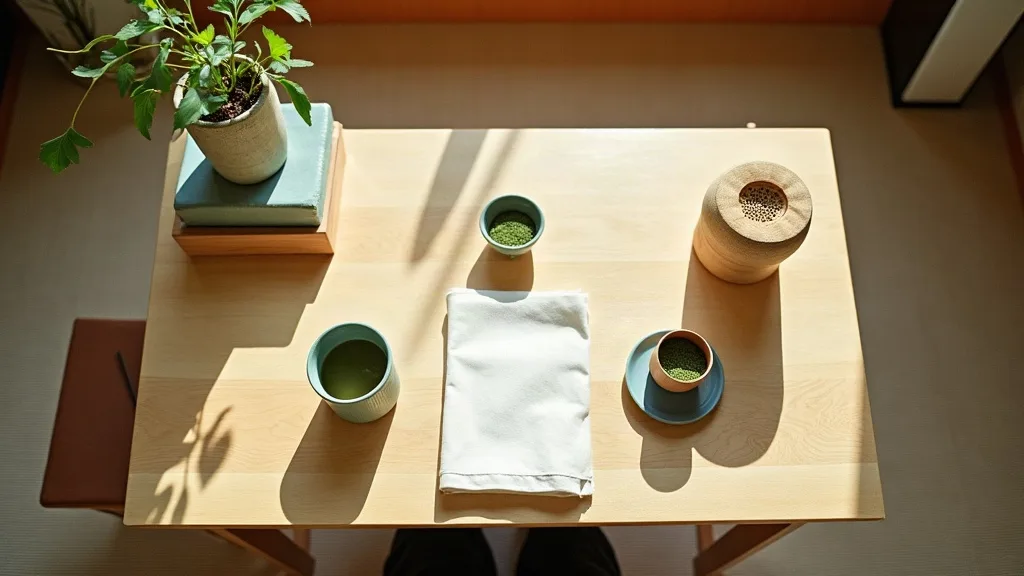
The chawan, chasen and chashaku a matcha set can't skip
The chawan is the bowl you whisk in and drink from. It is wide on purpose: the whisk needs room to travel. The chasen is a bamboo whisk carved with dozens of thin tines that break the powder into water. The chashaku is a curved bamboo scoop holding roughly 1 gram of matcha per level scoop, which is why recipes are often written in scoops rather than grams.
These three are non-negotiable. A soup bowl and a fork will make a drink, not a foam. If you want the four core pieces together, the Matcha Tea Set I keep on my kitchen shelf is the format I recommend most often to someone starting from zero, because nothing essential is missing on day one.

Sifter and whisk holder: the two pieces beginners underestimate
Matcha powder is extremely fine and compacts in its tin. Pressed against the bowl by hot water, it forms lumps the whisk cannot fully break. A matcha sifter, a small mesh strainer you push the powder through with the back of the chashaku, solves that in ten seconds. It is the cheapest upgrade to your foam.
The second one is the kusenaoshi whisk holder, a ceramic dome you slide the wet chasen onto after rinsing. Bamboo tines curl inward as they dry. On the holder, they dry open and keep their shape, which extends the life of the whisk by months.
Matcha set extras you can honestly leave out at first
Trays, tea caddies, cloths and decorative spoons change nothing in the bowl. Buy them later, when you know whether you drink matcha every morning or twice a month. A kettle with a thermometer is more useful than any of them.
Chasen tine count: 80, 100 or 120 for a first whisk?
The whisk tine count is printed on almost every matcha set listing, and it confuses more people than it helps. More tines means finer, denser foam and a more fragile whisk.
Why an 80 to 100 tine bamboo whisk suits a beginner's wrist
An 80 tine chasen is sturdy and forgiving. It tolerates a heavy hand, a bowl that is slightly too small and a beginner who scrapes the bottom. A 100 tine gives a smoother, creamier surface with the same effort. A 120 tine whisk is built for thin, delicate usucha in a formal setting, and its tines snap faster if you press them into the ceramic.
| Tine count | Foam | Durability | Best for |
|---|---|---|---|
| 80 | Good, slightly larger bubbles | High | First whisk, daily use, matcha lattes |
| 100 | Fine and dense | Good | Beginners who want a creamy surface |
| 120 | Very fine, silky | Lower, tines break more easily | Experienced hands, thin ceremonial bowls |
Madake bamboo vs cheap split bamboo in a matcha whisk
Traditional chasen are made from madake, a hard bamboo that keeps its spring when wet. Lower quality whisks use softer, thicker-cut bamboo: the tines feel stiff, splay outward after two or three uses and leave splinters in the bowl. Look at the tips before buying. They should curl inward in a tight, even ring, each one thin enough to bend under a fingertip.
Signs a chasen in a set is worth keeping
Check three things when the set arrives. The inner ring of tines should be intact, not crushed by packaging. The tips should be pale and unsplit. And the whisk should stand on its own on its holder without leaning. If a set ships a whisk with no holder, add one. I often point people toward the Matcha Whisk Set with its own holder when they already own a wide bowl and only need the bamboo tools.
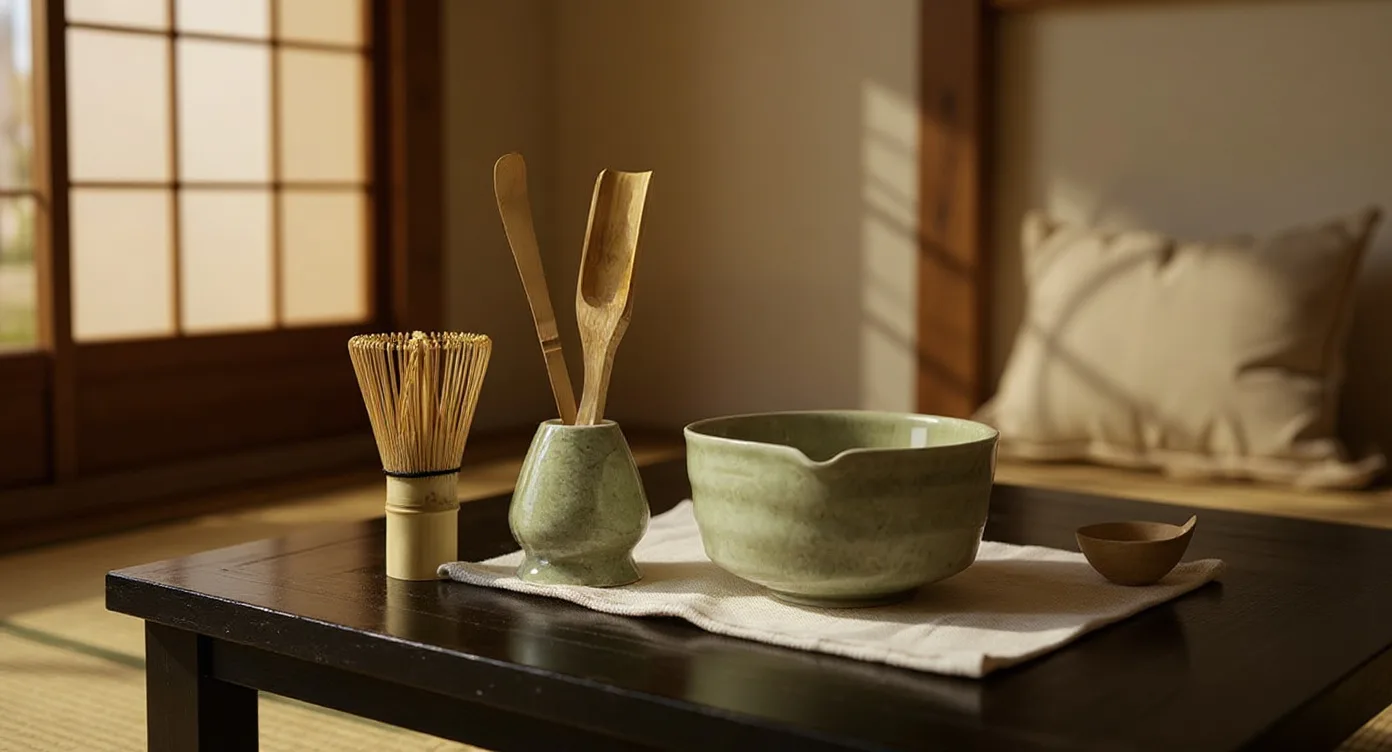
Chawan size, shape and glaze: choosing a matcha bowl
The bowl does more work than people expect. It sets how much water you can whisk without splashing, how long the drink stays hot, and how comfortable the motion feels in your wrist. Ceramic weight matters as much as decoration.

Bowl diameter and volume: why 350 to 500 ml works best
A chawan of 350 to 500 ml, roughly 11 to 13 cm across, holds a standard 70 ml bowl of matcha at about one fifth of its capacity. That empty space is the point: it is the room the whisk needs. Below 300 ml, water climbs the walls. Above 550 ml, the liquid spreads too thin and cools fast.
Straight walls vs rounded chawan for whisking room
A bowl with low, fairly straight walls and a flat inner base lets the tines pass edge to edge in a clean W. Deeply rounded bowls push the whisk back toward the centre and trap powder in the curve. Rounded shapes are traditional for winter, when a deeper bowl keeps the tea warm, but they are harder for a first month of practice.
Matte, crackle or glossy ceramic finish: what changes in use
Thick-walled glazed stoneware, used in most complete ceramic sets, holds heat longer than thin porcelain and feels stable in the hand. A glossy interior glaze is the easiest to clean and shows the green colour clearly. Matte and crackle finishes belong to the wabi-sabi idea of accepting irregularity, but crackle glaze can pick up faint green staining inside the crazing lines. That patina bothers some people and delights others.
Boxed matcha gift sets vs building your own kit
A boxed set solves one problem well: giving matcha to someone who owns nothing. Buying piece by piece solves a different one: getting exactly the bowl and whisk you want. Decide which problem you have before comparing listings.
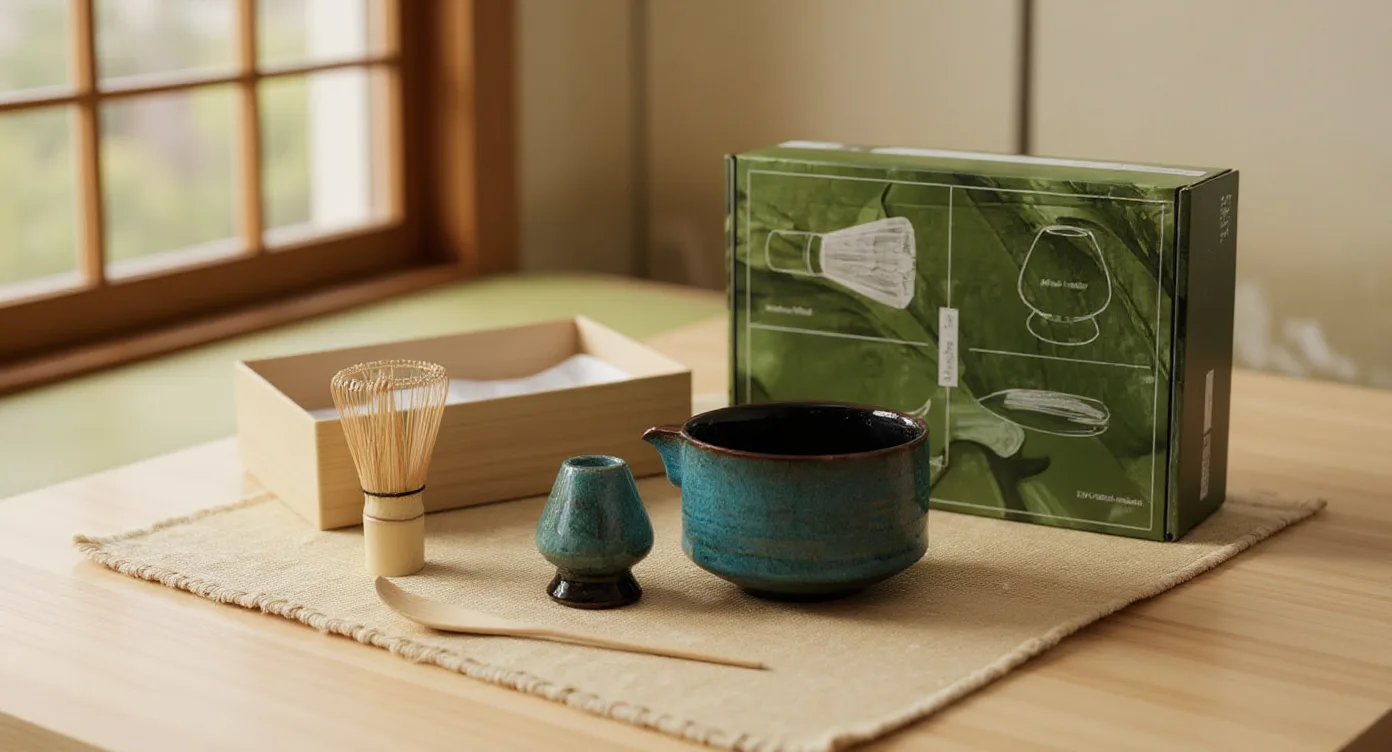
What a gift-ready matcha set box should actually contain
At minimum, a bowl, a chasen, a chashaku and a holder, packed so the whisk tines are not compressed. A sifter or a small ceramic spoon rest is a good sign. A box cannot guarantee the recipient likes the bowl's colour, so neutral glazes travel better as gifts than bold patterns.
Budget, mid-range and complete matcha set: three tiers compared
| Tier | Pieces | Bowl | Whisk | Best for |
|---|---|---|---|---|
| Entry | Whisk, scoop, holder | Not included, use a wide bowl you own | 80 tines | Testing matcha before committing |
| Mid-range | Bowl, whisk, scoop, holder | Glazed stoneware, 350 to 500 ml | 80 to 100 tines | Daily home use, the tier I recommend most |
| Complete, gift-ready | Bowl, whisk, scoop, holder, sifter, presentation box | Thick-walled ceramic | 100 tines | Presents and anyone who wants everything at once |
Buying a matcha set as a present: sizes, colours and packaging
Bowls have no sizing chart, which makes them an easier gift than a kimono. Two practical points: check the box protects the whisk in its own compartment, and prefer a set whose parts can be replaced individually, since the chasen wears out long before the bowl does. Pair the set with a tin of ceremonial grade matcha if you buy the powder separately.
Your first bowl with a matcha set, and how to care for it
Thin matcha, called usucha, is the everyday preparation and the one to learn first. Koicha, the thick version, uses roughly double the powder and half the water, and it is not whisked into foam.
Sift, scoop, whisk: a first usucha bowl in five steps
- Soak the whisk tips in warm water for one minute to soften the bamboo, then warm the bowl with hot water and dry it.
- Sift 1.5 to 2 g of matcha, about two chashaku scoops, into the bowl.
- Pour 70 ml of water at 70 to 80 °C (158 to 176 °F).
- Whisk 15 to 20 seconds in a rapid W motion, wrist only, keeping the tines just off the base.
- Slow down, draw one circle at the surface and lift the whisk out from the centre.
Water temperature and the W motion that builds foam
Boiling water scorches matcha and turns it bitter. Without a thermometer, boil, then let the water stand three to four minutes in a jug. The W motion beats air in; a circular stir only pushes powder around. Keep the whisk almost vertical and move from your wrist, not your shoulder.
Cleaning and storing a chasen so it lasts a year or more
Rinse the whisk in warm water immediately after use, swirling it in the bowl to release powder from between the tines. No soap, no dishwasher, no boiling water. Shake off the excess and set it on its holder, tines up, where air circulates. The three mistakes I see most often: whisking with boiling water, skipping the sift, and leaving the wet chasen flat in a drawer.
Matcha set questions beginners ask before buying
Short answers to what people write to me before their first order.
Can I use a milk frother instead of a bamboo whisk?
An electric frother makes bubbles, but they are large and collapse quickly, and it will not break powder clumps the way sifting plus a chasen does. It works acceptably for iced matcha or lattes shaken with milk. For a traditional bowl, the bamboo whisk gives a finer, longer-lasting crema.
What size chawan should a beginner buy?
Between 350 and 500 ml, around 11 to 13 cm in diameter, with low walls and a flat inner base. That is enough space to whisk 70 ml of water without splashing. Thicker ceramic walls hold heat better, which matters if you drink slowly.
How much matcha powder per bowl?
1.5 to 2 g for a standard usucha bowl, which is two level chashaku scoops or about half a teaspoon. Use 70 ml of water for a classic thin bowl, 100 ml if you prefer it lighter. For thick koicha, roughly 4 g with 30 to 40 ml.
Do matcha sets include the matcha powder?
Usually not. Most sets sold outside Japan contain the tools only, because tea powder has a short shelf life once opened and shipping conditions vary. Buy the powder separately, choose ceremonial grade for whisked bowls, and keep the tin sealed in the fridge.
How long does a bamboo chasen last?
With daily use and correct drying on its holder, several months to about a year. Tines break gradually, and a whisk that has lost part of its inner ring still works until the outer tines start splaying. Replace it when you see splinters in your bowl.
If you want to see how these pieces sit together, from bowls and whisks to cups and sake ware, take your time with our Japanese tableware collection. Start with one bowl you genuinely like holding, and build from there.
Explore the Japanese Tableware collection
Browse our matcha sets, chawan bowls and Japanese tea cups to put together the kit that matches your first bowl.
Browse the collection →