
The first time I brewed gyokuro I poured water straight from the kettle, waited three minutes like a black tea, and drank something closer to boiled spinach. The leaf was excellent. My method was not. If you want a soft, sweet cup, start with gyokuro or a good sencha brewed at 60 to 70°C (140 to 158°F). If you want something roasted and easy to drink all day, go for hojicha or genmaicha with near-boiling water. If you want the ceremonial gesture, whisk matcha at around 80°C (176°F). Bitterness in green japanese tea almost never comes from the leaf itself. It comes from water that is too hot, a steep that runs too long, or too much leaf for too little water. Fix those three things and every tea on this page turns gentle, grassy and sweet.
In short:
- Japanese green tea is steamed rather than pan-fired, which gives it a marine, grassy taste instead of a toasted one.
- Cooler water and shorter steeps are the single best cure for bitterness: 60°C for gyokuro, 70°C for sencha, 95°C for hojicha and genmaicha.
- Matcha is not steeped but whisked, so it needs a bowl, a bamboo whisk and sifted powder to avoid lumps.
- The teaware changes the cup: thin-walled cups, a wide bowl and a small teapot each affect temperature and taste.
What is green Japanese tea, from chanoyu to your cup
All tea, green or black, comes from the same plant: Camellia sinensis. What separates a Japanese green tea from an English breakfast is oxidation. Green tea leaves are heat-treated within hours of picking to stop oxidation, so they keep their colour and their vegetal flavour. Japan does this with steam. That single choice explains almost everything you taste in the cup.
Why Japanese green tea is steamed, not pan-fired
Chinese green teas are usually pan-fired in a hot wok, which adds a nutty, toasted note. Japanese leaves are steamed for seconds instead, a process called mushi. The result is greener, more marine, closer to fresh grass and seaweed.
Steaming time creates two styles. Asamushi (light steaming, around 30 seconds) keeps the leaf needle-shaped and the liquor clear and delicate. Fukamushi (deep steaming, 60 to 120 seconds) breaks the leaf into smaller fragments, giving a cloudy, deep green cup with a rounder, less astringent taste. If you are new to loose leaf tea and worried about bitterness, a fukamushi sencha is the safer first purchase.
Chanoyu: the tea ceremony that shaped Japanese tea culture
Tea arrived in Japan with Buddhist monks returning from China, and powdered tea took root from the Kamakura period through the monk Eisai. Over the following centuries it grew into chanoyu, the tea ceremony, codified in the sixteenth century by Sen no Rikyū around the ideas of simplicity, attention and respect for humble objects.
That aesthetic is the wabi-sabi we talk about often at KimuraKami: an irregular glaze, a slightly uneven rim, a bowl that shows the potter's hand. The gesture is small and repeated: heating the bowl, measuring the powder, whisking for twenty seconds. That is kaizen in a teacup.
Reading a Japanese green tea label: grade, harvest, region
Three words on a package tell you most of what you need. The first flush shincha is the very first spring harvest, sold fresh in late spring, sweeter and more fragrant than later pickings. The region gives a rough flavour map: Uji in Kyoto for refined gyokuro and matcha, Shizuoka for classic balanced sencha, Kagoshima in the south for early, full-bodied deep-steamed leaves.
Judge by origin, harvest date and colour instead of marketing terms like "ceremonial" or "premium".
Sencha vs gyokuro: how to brew each Japanese green tea
These two are the heart of steeped Japanese tea. Sencha is grown in full sun and accounts for the majority of tea drunk in Japan. Gyokuro is grown in the shade and treated as a delicacy. Both are ruined by the same mistake: water that is too hot.
Brewing sencha: 70°C, 60 seconds, three infusions
Use 4 to 5 g of leaf for 200 ml of water at 70°C (158°F) and steep for 60 seconds. Pour out every last drop, alternating between cups so the strength is even. The first cup is grassy and slightly sweet with a clean astringency at the end.
Second infusion: water around 80°C for 15 seconds only, since the leaves are already open. Third infusion: 85°C, 30 seconds, lighter and more mineral. A small kyusu teapot with a side handle and a built-in mesh makes these quick pours easy.
Brewing gyokuro: 60°C, two minutes, tiny cups
Gyokuro is shaded with reed screens or cloth for roughly three weeks before picking. The shade slows photosynthesis, the leaf keeps more amino acids and produces fewer bitter compounds. That is where its thick, broth-like sweetness comes from.
Brew it small and slow: 4 g of leaf for only 60 ml of water at 60°C (140°F), steeped for 2 minutes. The result is a few sips of concentrated umami, closer to a savoury infusion than to what most people picture as green tea.
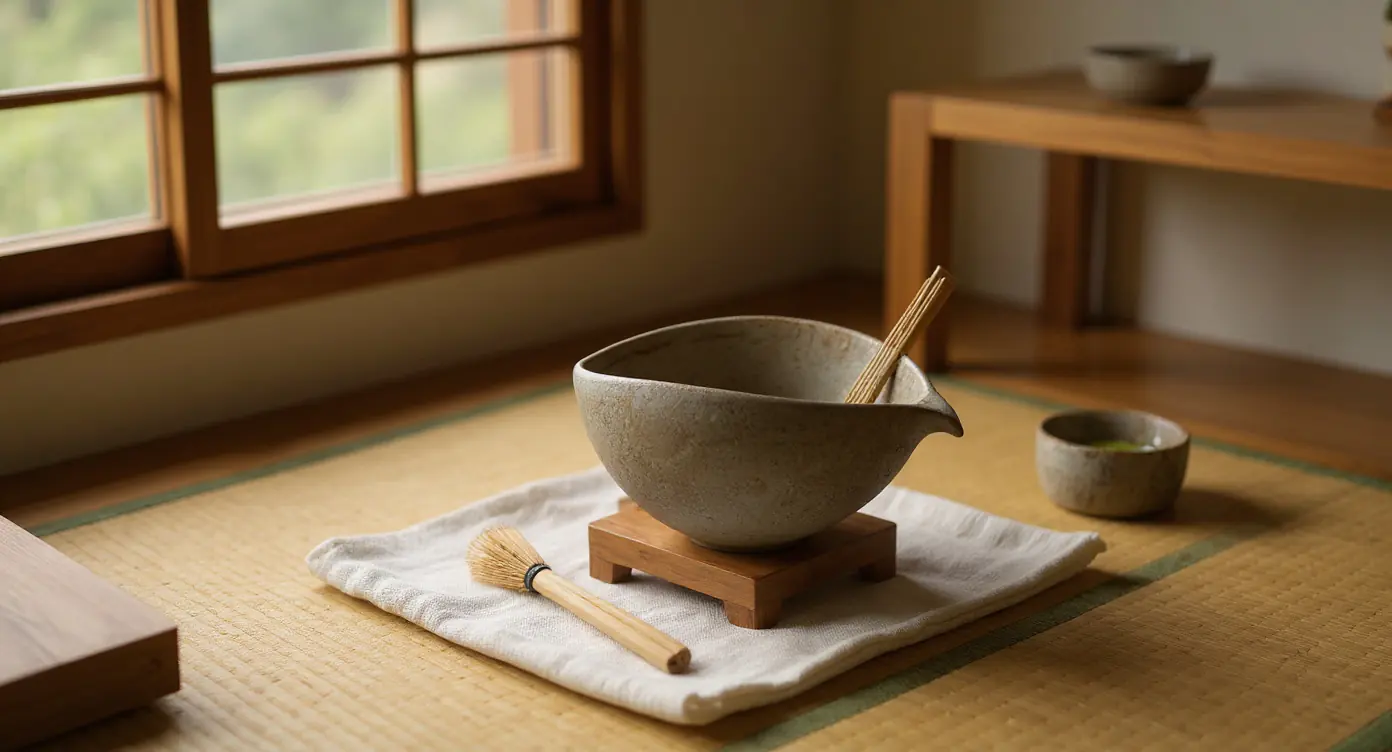
To cool your water without a thermometer, use the yuzamashi method: pour boiling water into the cups first, then into the pot. Each transfer drops the temperature by roughly 10°C. This is exactly why I keep a set of small Japanese tea cups next to my kettle rather than mugs: thin ceramic walls let the water lose heat fast, and the small volume forces me to sip a gyokuro instead of gulping it.

Kabusecha and bancha, the everyday leaf teas
Between the two sits kabusecha, shaded for about a week to ten days. It has some of gyokuro's roundness with sencha's freshness, and it forgives a slightly hotter kettle. Brew it at 65 to 70°C for 90 seconds.
Bancha is the later harvest, made of larger, coarser leaves. It is plainer, lower in caffeine, and happy with 90°C water for 30 seconds.
Hojicha and genmaicha: the roasted Japanese green teas
These two teas have already met high heat during processing, so near-boiling water does not hurt them. They are the easiest teas to serve to someone who says they dislike green tea, because the roasting removes most of the astringency.
Hojicha: roasted leaves brewed at 95°C
Hojicha is bancha or sencha roasted in a porcelain pot over charcoal or in a rotating drum until it turns reddish brown. The liquor is amber, not green, and it smells of caramel, toasted wood and roasted chestnut.
Use 6 g for 300 ml of water at 95°C (203°F) and steep 30 to 45 seconds. Roasting also lowers the caffeine content, which is why it is commonly served in the evening and to children in Japan.
Genmaicha: green tea with toasted brown rice
Genmaicha mixes bancha or sencha with toasted brown rice, some of which pops like small corn kernels. The rice adds body and a popcorn aroma, and it dilutes the leaf, so the cup is mild by construction.
Brew 5 g for 250 ml at 90 to 95°C for 30 to 45 seconds. You will also find matcha iri genmaicha, where a little matcha powder is blended in, turning the liquor bright green and adding a creamy edge.
Which of the two to serve with a meal
| Tea | Main aroma | Best moment |
|---|---|---|
| Hojicha | Caramel, toasted wood | After dinner, late evening |
| Genmaicha | Popcorn, toasted rice | During a savoury meal, rice dishes, bento |
Genmaicha holds up next to grilled fish, miso or a bento box because its cereal note echoes the rice on the plate. Hojicha suits the end of a heavy meal and pairs well with anything containing dark chocolate or roasted sesame.
Matcha (抹茶): how to whisk a bowl the traditional way
Matcha is not steeped. It is shade-grown leaf, de-stemmed, de-veined and stone-ground into a fine powder that you suspend in water and drink whole. Nothing is thrown away, which is why the texture and the dosing matter so much more than with leaf tea.
Usucha and koicha: two thicknesses of matcha
Usucha, "thin tea", is the everyday version: around 2 g of powder for 70 ml of water, whisked until a fine foam forms. Koicha, "thick tea", uses roughly twice the powder for half the water and is kneaded slowly rather than whisked, giving a glossy, paint-like liquid served in formal ceremony. Start with usucha; koicha demands a high-grade powder or it becomes harsh.
Sifting, dosing and whisking without lumps
Matcha clumps as soon as it meets humidity. Sift 2 g through a small strainer into the bowl, add a splash of 80°C water and make a paste, then add the rest of the water. Whisk briskly in a W or M movement for 15 to 20 seconds, wrist only, keeping the whisk near the surface at the end to build fine bubbles.
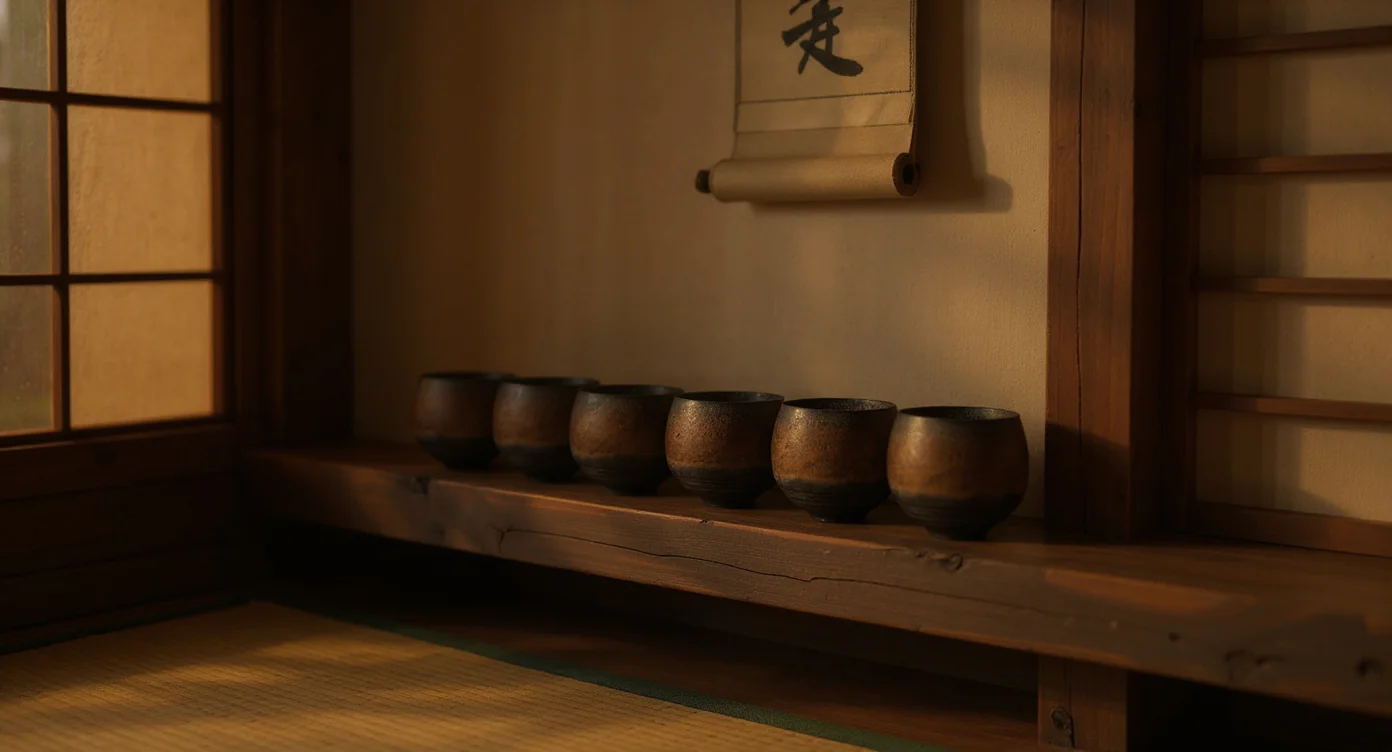
The bowl is not decorative. A wide, flat-bottomed chawan gives the chasen bamboo whisk room to move without hitting the walls. I always reach for a wide, slightly irregular ceramic matcha bowl rather than a mug, because the W movement simply does not fit in a narrow cylinder and the foam never comes.

Ceremonial grade vs culinary grade matcha
Ceremonial grade comes from the youngest spring leaves, tastes sweeter and is meant to be drunk with water alone. Culinary grade uses later harvests, is more astringent and stands up to milk, sugar and baking. Using culinary grade for a straight bowl is the second most common cause of "bitter matcha", right after water that is too hot.
Why is your green Japanese tea bitter? Fix the ratio
Bitterness has a simple chemistry behind it. Catechins, the compounds responsible for astringency, dissolve readily in hot water. Theanine and the other amino acids that give sweetness and umami dissolve at lower temperatures. Hot water extracts both; cool water favours the sweet ones.
Water temperature: the number one cause of bitterness
Boiling water at 100°C pulls out every catechin the leaf has. Dropping the steeping temperature to 70°C keeps most of them in the leaf while the amino acids still release. No thermometer? Boil, then let the kettle rest with the lid open: roughly 5 minutes brings you near 70°C in a standard kitchen, and each pour into another vessel removes about 10°C.
Leaf-to-water ratio and steeping times side by side
| Tea | Leaf / powder | Water | Temperature | Time |
|---|---|---|---|---|
| Sencha | 4 g | 200 ml | 70°C / 158°F | 60 s |
| Gyokuro | 4 g | 60 ml | 60°C / 140°F | 2 min |
| Hojicha | 6 g | 300 ml | 95°C / 203°F | 30 s |
| Genmaicha | 5 g | 250 ml | 90°C / 194°F | 40 s |
| Matcha (usucha) | 2 g | 70 ml | 80°C / 176°F | Whisk 15 to 20 s |
Weigh the leaf at least the first few times. A bamboo scoop is calibrated for this: one level scoop of matcha is about 1 g, so two scoops give you a standard bowl without a scale.
Water quality, second infusions and cold brew
Use soft, low-mineral water. Very hard water flattens the aroma and dulls the colour. Never leave leaves sitting in water between infusions: drain the pot completely, or the next cup will be bitter no matter what temperature you use.
For a guaranteed sweet result, try mizudashi, the cold-brew method. Put 10 g of sencha or gyokuro in 500 ml of cold water, refrigerate for 3 to 6 hours, then strain. Almost no catechins are extracted, so the cup is sweet, thick and completely free of astringency.
Japanese green tea FAQ: quick answers before you brew
Short answers to the questions I get most often by email, before you open your first bag.
What is the green Japanese tea called?
There is no single name. The general term is ryokucha (green tea), and the main types are sencha, gyokuro, kabusecha, bancha, hojicha, genmaicha and matcha. Sencha is the one most people mean when they say "Japanese green tea", since it represents the majority of domestic consumption.
What is different about Japanese green tea?
It is steamed rather than pan-fired, which preserves a fresh, grassy, marine flavour instead of a toasted one. Japan also uses shaded cultivation for gyokuro, kabusecha and matcha, which raises amino acid content and produces that savoury sweetness.
Is it good to drink Japanese green tea every day?
Many people in Japan drink it daily with meals, mainly for the taste and the routine. Its caffeine is real but moderate, and hojicha or bancha contain noticeably less, which is why they are often chosen in the evening.
Which Japanese green tea is the least bitter?
Hojicha, because roasting removes most of the astringency, followed by genmaicha, where the toasted rice softens the blend. Among the unroasted teas, a deep-steamed fukamushi sencha or a cold-brewed gyokuro will be the gentlest.
Can I brew sencha or matcha without special teaware?
You can brew sencha in any small teapot with a fine strainer, as long as you drain it fully. Matcha is harder: a metal whisk or a milk frother will mix the powder, but a bamboo whisk and a wide bowl give a finer, more stable foam and a smoother texture. If you buy one piece, buy the bowl first.
If you want to build your tea corner slowly, one object at a time, the cups, bowls and serving pieces in our Japanese tableware collection are a good place to start. Choose the piece you will actually use every morning, and let the rest follow.
Explore the Japanese Tableware collection
Find the cups, bowls and bamboo tools used in this guide in our Japanese Tableware collection.
Browse the collection →