Your friend just picked up the keys to her first apartment. Two people have already brought candles. You want to hand over something she will still own in ten years, something she will explain to guests who pick it up off the shelf. That is the test a good Japanese gift passes. It has a use, a shape, and a story that fits in one sentence.
If you want the short answer: give a maneki neko (招き猫, "beckoning cat") for a new home or a new shop, a daruma doll (達磨) for someone chasing a goal, and a matcha set or a sake set for anyone who likes a slow ritual. Below that, prints, folding fans, tabi socks and a hachimaki headband are easy wins at a smaller budget. Above it, clothing works beautifully, as long as you know the size.
I choose the pieces in our shop and I answer the messages about sizing, obi knots and occasions. So this list is not a catalogue dump. For each object you get three things: what it actually is and how it is used in Japan, what the person who receives it really does with it, and the occasion it suits. Ten objects, ten different occasions, from a palm-sized cat to a school jacket.
Key points
- The two safest gifts are a maneki neko and a daruma doll: no sizing, no taste risk, instant story.
- A matcha set or a sake set turns a gift into a shared ritual, which is why it keeps getting used.
- Japanese sizing runs about one size smaller than US and EU sizing, so order one size up on clothing.
- Avoid gifts in fours and nines, and avoid combs, knives, shoes and clocks.
- The handover matters: both hands, a small bow, modest words, and clean wrapping.
Five rules before you choose
- Think in three tiers: a small object for a desk or shelf, a set that two people use together, and one piece of clothing for someone whose size you know.
- The two safest choices are the maneki neko and the daruma doll. No sizing, no taste risk, and both are instantly readable, even to someone who knows nothing about Japan.
- Japanese sizing runs about one size smaller than US and EU sizing. For a hoodie or a jacket, order one size up. Our 14-day guarantee covers the swap if you guess wrong.
- Never give in fours or nines. The Japanese words for four and nine sound like the words for death and suffering, so sets of four prints or four cups are a poor idea.
- Avoid combs, knives, shoes and clocks as gifts in Japan. Each one carries a reading nobody wants: cutting ties, or telling the person to hurry up and work harder.
1. A matcha set for a five-minute morning ritual
Matcha (抹茶) is green tea leaf ground into powder. That changes everything about how it is prepared. You do not steep it, you suspend it, which is why the bamboo whisk exists. A matcha set brings the pieces together: the wide bowl, or chawan (茶碗), the bamboo whisk, or chasen (茶筅), and the curved bamboo scoop, or chashaku (茶杓). Check the listing for the exact contents before you order, since sets vary.

The reason this one lands well is that it creates a habit, not a decoration. Two scoops, hot water just off the boil, thirty seconds of whisking in a W motion, and the drink is ready. People who get a matcha set tend to use it several times a week, far more than they ever use a novelty mug. It suits anyone who already drinks tea, cooks slowly, or likes doing one thing properly before the day starts.
Here is what to look for on the page, in the plain terms of a product sheet. This is the Matcha Tea Set, also listed as a Set For Matcha, and it is the piece I point people to most often when they want one gift that covers the whole ritual.
- Contents: chawan bowl, chasen bamboo whisk, chashaku bamboo scoop; several sets also include a whisk stand and a small sifter.
- Material: glazed ceramic bowl, untreated bamboo for the whisk and scoop.
- Whisk prongs: a fine whisk of roughly 80 to 100 prongs is the usual choice for everyday thin tea, or usucha.
- Bowl size: a wide, shallow bowl gives the whisk room to move; narrow mugs do not work.
- Care: rinse the bowl by hand, rinse the whisk in warm water with no soap, and let both air dry.
- Not included: the matcha powder itself.
This is a good housewarming present. It arrives as a complete small world for a new kitchen shelf, and it is far more personal than a bottle. One honest note: in several parts of Japan, loose green tea is a standard funeral return gift, so if you are giving to a Japanese household for a happy occasion, give the tools and let them pick their own tea.
A practical detail that saves disappointment. Powdered matcha clumps if it has been open a long time, so tell the person to sift it through a small strainer before whisking. That one step is the difference between a smooth bowl and a gritty one.
Water temperature is the other thing worth passing on. Boiling water makes matcha taste harsh, so let the kettle stand for a minute or two before pouring. Around 70 to 80 degrees Celsius, roughly 160 to 175 Fahrenheit, keeps the flavour round. Written on a card tucked into the box, those two lines turn a nice object into something the person can use correctly on day one. If you want to build out the table around it, the Japanese tableware pieces pair well with the same bowl.
2. A Kyoto book nook to light up a shelf
Some gifts are opened once. This one is built, then looked at every evening after that. The Kyoto book nook slides into the gap between two books and turns it into a narrow lit alley: wooden shopfronts, paper lanterns, a staircase climbing out of sight. The light comes from a small LED strip hidden behind the facades, so at night the shelf reads as a street seen from a window.

It arrives as a kit. Laser-cut plywood, printed panels, glue and a plan, which means the person receiving it gets two gifts in one: an evening of building and the object that stays. Count a few hours for the assembly, done at a table with the parts laid out. Nothing about it needs tools beyond patience, and the finished model holds itself upright without a stand.
It suits the reader who has run out of shelf decoration that means anything, and it suits anyone who has walked a Kyoto back street at dusk and wanted to keep it. Measure the shelf first: the model needs its slot, and a row of paperbacks on each side makes it look like it was always there.
3. Tabi socks for sandal season and the house floor
Tabi (足袋) are socks split between the big toe and the rest of the foot. The split exists for a reason: Japanese sandals such as geta (下駄) and zori (草履) are held on by a thong that runs between the toes, and an ordinary sock makes that impossible. Construction workers in Japan still wear jika-tabi, the boot version with a rubber sole, because the split gives a better feel for a ladder rung.

That rubber-soled version has an unlikely footnote. The family firm that built its business on jika-tabi in the early twentieth century went on to become the tyre manufacturer Bridgestone. Rubber for work socks turned into rubber for wheels, and the name is a translation of the founder's family name, Ishibashi, meaning stone bridge.
They make a good small present because they are worn, not displayed. Tabi work with sandals in summer, with a kimono (着物) or yukata for a festival, and barefoot-style around the house on wooden floors. They also feel novel the first time, and then quickly become the pair someone reaches for.
Use them as a thank-you after staying at someone's home, close to the Japanese idea of omiyage (お土産), the gift you bring back. Sizing warning, since this is clothing: Japanese sizes run about one size smaller than US and EU sizes, so take the shoe size you know and go one up. Our tabi socks come in ankle and crew lengths, and the crew length is the one that works with a yukata.
Two more things I tell people. Wash them inside out on a cool cycle so the toe seam keeps its shape, and give two pairs rather than one. Nobody has ever complained about a spare pair, and two is a safe number.
4. The Harajuku hoodie that goes with everything already in the closet
Harajuku (原宿) is the district in Tokyo around Takeshita Street where Japanese street style became its own language. The method there is mixing: bold graphics over plain basics, layers that do not match on purpose, a traditional motif landing on a very modern silhouette. A Harajuku hoodie takes that print energy and puts it on the one garment nearly everyone wears.

This is the piece that gets worn the most out of anything on the list. It goes over a white t-shirt with black jeans and white trainers, and that is the whole outfit. For someone deeper into Japanese style, it layers under a haori (羽織), the open traditional jacket, which is the bridge between a streetwear wardrobe and wafuku, Japanese traditional clothing.
It is the right call for a teenager's birthday, and for the friend who already owns too much plain clothing. Sizing is the only trap. Japanese cuts run smaller than US and EU equivalents, so order one size up, and check the measurements on the product page rather than trusting the letter.
What to read on the listing before you buy a Japanese hoodie as a gift:
- Material: cotton blend, usually brushed on the inside.
- Fit: Japanese sizes run about one size smaller than US and EU sizes.
- Print: check whether the graphic sits on the front, the back or the sleeve, since that changes how loud the piece reads.
- Care: cold wash, inside out, and air dry to protect the print.
Colour is the other decision. A black or off-white hoodie with a single graphic will be worn weekly. A fully printed, all-over design is more fun to unwrap and gets worn on fewer days. If you are buying for someone whose wardrobe you have never seen, pick the quieter one.
5. The daruma doll and the goal you paint on it
A daruma doll (達磨) is a round, hollow figure modelled on Bodhidharma, the monk linked to the founding of Zen. It is weighted at the base, so you can tip it and it rights itself. That movement matches a Japanese saying, nanakorobi yaoki (七転び八起き): fall seven times, get up eight. Red is the classic colour. The eyes usually arrive blank, and that is deliberate.

Here is the custom that makes it a strong present. You name a goal, then paint in one eye. The doll sits in plain view, half finished, while you work. You paint the second eye when the goal is done. In Japan, people buy one at New Year, keep it on a shelf all year, and return the old one to the temple at the next New Year. It is a visible commitment, which is exactly our Kaizen principle in object form: small steady progress, in sight every day.
Offer it at New Year, to the person who has just announced a resolution they actually mean. It also fits anyone starting a long project: a thesis, a first business plan, a return to training after an injury. Add a fine black marker and the gift is complete.
The town of Takasaki, in Gunma prefecture, makes the large majority of Japan's daruma dolls, and its New Year fair sells them by the thousand. Faces differ from workshop to workshop, so the eyebrows and beard on one maker's doll look nothing like another's. When you pick one, look at the face first. The receiver is going to stare at it for a year.
One more reason I recommend it so often: it survives being given to someone who knows nothing about Japan. The rule is one sentence long, the object does the rest, and the gift keeps working for months after the wrapping is gone. Our daruma doll pieces come in several sizes, and the palm-sized ones travel well in a suitcase.
6. A maneki neko to greet everyone who walks in
The maneki neko (招き猫) is the cat figure with one paw raised. That gesture is not a wave. It is the Japanese way of calling someone over, palm forward, fingers folding down. You see these cats beside restaurant registers, in barber shops and at the entrance of family-run stores across Japan. A left paw up is said to call in customers; a right paw up is said to call in money. The gold version is the one tied to prosperity, which is why shopkeepers favour it.

Colour carries meaning too, and it gives you a way to match the person. White is the standard, read as good fortune in general. Black is the protective one. Pink is given for matters of the heart. The height of the raised paw is another small code: a higher paw is said to call in luck from further away. None of this needs to be explained for the gift to work, but it gives the receiver something to repeat when a visitor asks.
As a present it works because it needs no explanation and no instructions. It has a spot waiting for it the moment it arrives: a counter, a bookshelf, a desk beside the monitor, a kitchen window. People move it around, tell visitors what the paw means, and keep it for years. It is a small object that earns its place, not a trinket that ends up in a drawer.
Give it to someone opening a business: a first studio, a food truck, a tattoo shop, a freelance desk in a spare room. It is the single most appropriate Japanese present for a shop opening, and it reads as a wish for the work to go well without a word of speech. It also sits comfortably in a Japanese decor corner next to a lantern or a small print, where one figure anchors the whole shelf.
Two practical notes. Ceramic versions chip at the paw first, so avoid a spot on the edge of a desk. And dust the glaze with a dry cloth rather than a wet one, because painted details on the collar and bib are often applied over the glaze.
7. A gakuran jacket, straight out of the school hallway
The gakuran (学ラン) is the dark stand-collar jacket worn as a boys' school uniform in Japan. The shape comes from the Meiji era, when Japanese schools adopted European military tunics: high closed collar, straight front, metal buttons in a row. Anyone who watches anime or Japanese film knows the silhouette before they know the name. There is even a graduation custom attached to it, where the second button, the one closest to the heart, is asked for and given away.

The name itself tells the story. Gaku (学) means study, and ran is short for the old Japanese word for Holland, used for anything Western at the time. A study jacket in the Western style, which is exactly what it was. The girls' counterpart, the sailor-collar uniform, arrived from the same wave of borrowing.
It is the strongest statement piece here and more wearable than people expect. Worn open over a white t-shirt, the collar does all the work, and it functions as a light jacket rather than a costume. Worn closed and buttoned, it is a complete and recognisable cosplay base with no extra parts needed.
Graduation is the obvious moment, given the button story, and convention season is the other. Treat it as outerwear when you choose the size: order one size above your usual US or EU size so a hoodie or shirt fits underneath, and hang it rather than folding it to keep the collar standing.
A few factual points for the size and care question, which is where most gift buyers hesitate:
- Fit: outerwear cut, so size up once from your usual US or EU size, and once more if a hoodie goes underneath.
- Collar: the stand collar should close without pinching the throat, so check the neck measurement if it is listed.
- Material: polyester or a wool blend in most versions, with a lined body.
- Care: spot clean or dry clean, press the collar from the inside, and store on a wide hanger.
One honest limit. A gakuran is the least forgiving gift on this list, because the shoulders either fit or they do not. If you cannot ask for a size, keep this one for someone you shop with, and give a fan or a headband instead.
8. The Japanese fan you can fold into a pocket
There are two kinds of Japanese fan, and the difference is worth knowing. A sensu (扇子) folds; an uchiwa (団扇) is rigid and paddle shaped. The sensu is the one people carry. Japanese summers are humid, trains are crowded, and a folded fan lives in a bag all season. It is also a working prop: rakugo storytellers use one to stand in for a pipe or a sword, and classical dancers open and close one on the beat.

The folding fan was developed in Japan, during the Heian period, and travelled outward from there to the rest of Asia and later to Europe. That is one of the rare cases where a Japanese object is the original rather than an adaptation. Older court fans were slats of thin cypress tied with thread, and the paper-and-bamboo version came later, which is still the standard build today.
As a present it does real work. It is flat, it weighs almost nothing, it costs little to post abroad, and it gets opened on the first warm day. When summer ends, a sensu opens out as wall decoration above a desk or a bed. Few small objects switch between useful and decorative that cleanly.
This is my pick for Mother's Day, and for anyone who travels in hot weather. Open and close it from the rivet, slowly, rather than snapping it; the paper and the ribs last far longer that way.
What to check on the listing: bamboo ribs rather than plastic, paper or fabric glued cleanly along the top edge, and a sleeve or pouch included. A fan is one of the few gifts that fits inside a greeting card envelope, which makes it the obvious choice when you are posting something overseas and the parcel size decides the cost.
9. Pouring for each other with a sake set
A sake set is the serving gear for nihonshu (日本酒), rice wine: a small flask called a tokkuri (徳利) and little cups called ochoko (お猪口). The vessels matter because sake is served at different temperatures, chilled in summer and warmed in winter as atsukan (熱燗), and the narrow flask is built for both. Note that a set means the vessels only, never the alcohol.

The etiquette is the gift. At a Japanese table you do not fill your own cup. You pour for the person next to you, they notice and pour for you, and the evening organises itself around that small back and forth. Handing someone a sake set is handing them a two-person ritual. It also serves well for other spirits and for warm drinks, so it gets used even by people who do not love sake.
The warming method is simple enough to explain in a note. You stand the filled tokkuri in a pan of hot water off the heat for a few minutes, rather than microwaving it. Two or three minutes gets you nurukan, gently warm. Longer gets you atsukan, properly hot. Most sake sets hold a little under 300 ml in the flask, which is one small bottle shared between two people.
Give it for a wedding anniversary, or to a couple who entertain. Pair it with a bottle bought locally and the present feels finished on the night it is opened. Hand wash the cups; thin ceramic and dishwasher racks are a bad match.
Quick spec check before you order, in product-sheet terms:
- Typical contents: one tokkuri flask and two to five ochoko cups.
- Material: glazed ceramic or porcelain, sometimes with a reactive glaze that varies piece to piece.
- Capacity: roughly 200 to 300 ml for the flask, 30 to 50 ml per cup.
- Heat: hot-water warming is fine, direct flame and microwaves are not.
- Care: hand wash only, dry upside down so the flask neck drains.
Count the cups before you buy. A set of four is the one combination to skip for a Japanese household, and a set of two or five raises no eyebrows anywhere.
10. A Japanese print that finishes a bare wall
A Japanese print borrows from ukiyo-e (浮世絵, "pictures of the floating world"), the woodblock tradition behind Hokusai's great wave and Hiroshige's road scenes. The visual language is specific: flat planes of colour, a clean outline, weather treated as a subject, and empty space left genuinely empty. That restraint is Wabi-Sabi on paper, and it is why these images still sit well next to modern furniture.

It is the easiest present on this list to get right. No size to guess, no taste conflict with a wardrobe, light to post, and it solves a problem most people actually have: one bare wall they have been ignoring for a year. Our prints come in several designs, so you can match the room rather than hoping.
Christmas is the natural slot, because a print survives being wrapped flat and opened in front of a room full of people. Two notes. Check the dimensions before buying a frame, and give two or three prints rather than four, since four is the number to avoid in a Japanese household.
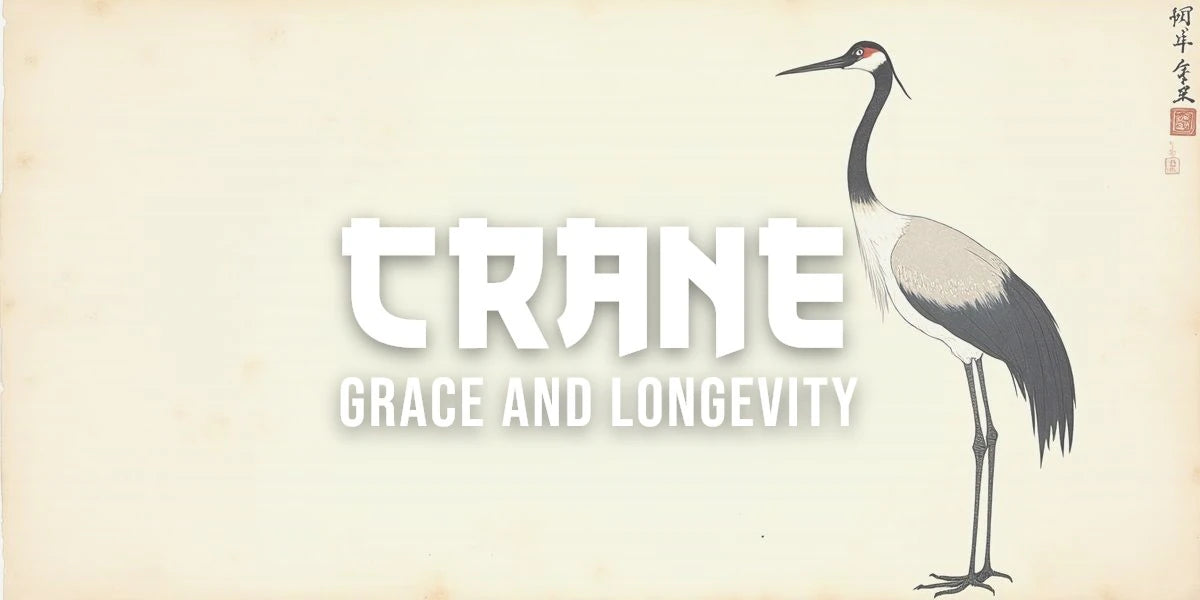
A word on how to choose the image. Landscape prints with a horizon line suit a hallway or a space above a sofa. Single-subject prints, a crane or a wave or a single branch, hold their own in a small frame on a desk or in a kitchen. Keep paper out of direct sunlight if the colours matter, because strong light fades the blues first. If the person already has one print, a second in the same palette turns a single picture into a small wall.
FAQ
What counts as a traditional Japanese gift?
Objects tied to a custom rather than a trend: the maneki neko for a business, the daruma doll for a goal, a sensu folding fan for summer, tabi socks, and the vessels for tea and sake. Inside Japan, food is the everyday gift, and it gets eaten within a week. These objects stay.
What is the most popular gift in Japan?
Food and drink, by a wide margin. Boxed sweets, fruit, and regional specialities make up most of the gifts exchanged at the two big seasons, ochugen in summer and oseibo at the end of the year. For someone outside Japan, an object with a custom attached travels much better than a box of sweets.
What are popular souvenirs to bring back from Japan?
Boxed regional sweets, chopsticks, ceramics, tenugui cloths, folding fans and stationery. Japanese shops wrap and box all of it for you, which is half the appeal. If you are shopping for someone who already loves Japanese style, buy the thing they cannot easily find at home instead: a specific print, a set of vessels, or a garment in the right size.
What is frowned upon as a gift in Japan?
Combs, because the word reads like suffering and death. Knives and scissors, which suggest cutting the relationship. Shoes and clocks, which read as telling someone to hurry up. White chrysanthemums, which belong at funerals. And anything in fours or nines. Loose green tea is also a common funeral return gift in several regions, so for a happy occasion give the matcha tools and let the person choose the tea.
What should I give someone who is leaving for Japan?
Not a Japanese souvenir they will find there cheaper. Give something useful for the trip: a folding fan for humid trains and platforms, tabi socks for sandals and slippers, and a small wrapped object from your own city that they can hand to a host. That last one spares them a frantic search on day two.