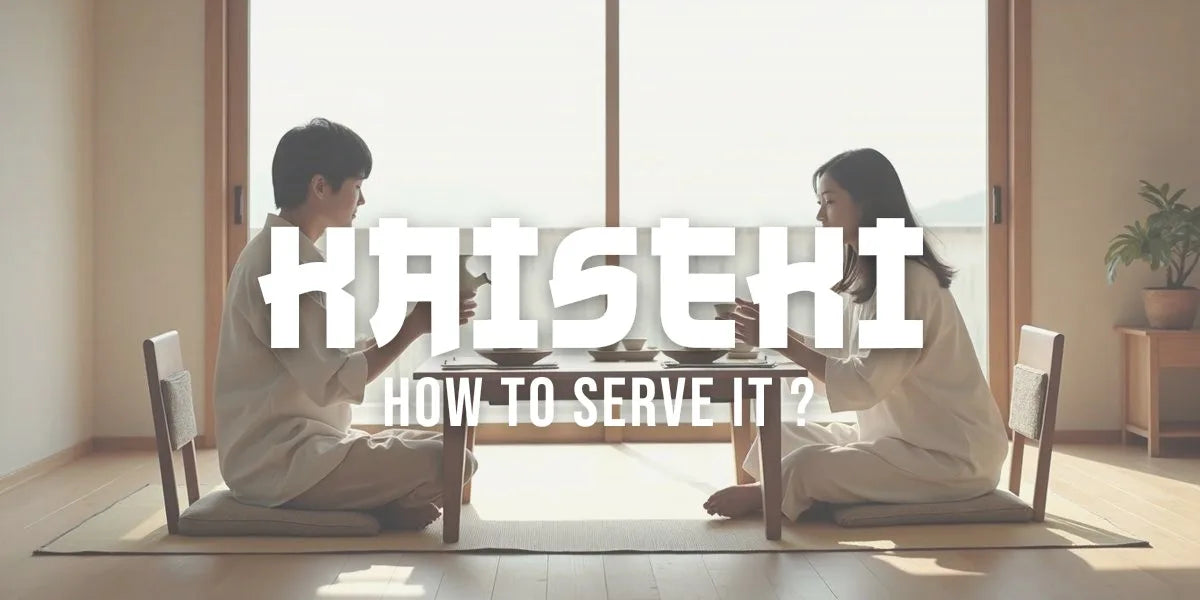
The first dish arrives in a lidded bowl no bigger than your palm. You lift the lid, steam rises, and inside there is one piece of fish, one leaf of kinome, and a clear broth. That is the entire course. A kaiseki (懐石) meal is a seasonal, multi-course Japanese dinner in which each small dish arrives in a set order, cooked with one technique per course (raw, simmered, grilled, steamed, fried) and served on ware chosen for that exact month. Unlike a classic dinner built around one main plate, kaiseki has no centrepiece. The rhythm, the seasonal ingredient and the bowl it sits in are the point. It grew out of the light meal served before a tea ceremony in 16th-century Kyoto, which is why restraint, timing and tableware matter as much as flavour.
In short
- Kaiseki began as cha-kaiseki, the modest meal served before matcha in the tea ceremony.
- Courses follow a fixed logic: appetiser, clear soup, sashimi, grilled, simmered, rice, then a light dessert.
- Every menu is rebuilt around the season, and the serving ware changes with it too.
- You can echo the spirit at home with a few bowls, small tea cups and a sake set, with no chef required.
What is a kaiseki meal and how does it differ from dinner?
A Western dinner builds towards one plate. Kaiseki removes that hierarchy. You receive eight to fourteen small courses, each complete in itself, each using a different cooking method so that no two dishes repeat a texture. The meal reads like a sequence of short chapters rather than a novel with a hero.
Kaiseki, kaiseki-ryori and the two ways of writing it
The word is pronounced kai-seh-kee, three even syllables. It is written two ways, and the difference matters. 懐石 is the tea meal, sober and small, served before matcha. 会席 is the banquet version, built around sake and social dining, and it is what most restaurants and ryokan serve today under the name kaiseki ryori. Both share a sequence and a seasonal logic. The tea version is stricter and quieter.
Why a kaiseki meal has no main course
Each course carries one technique: one raw dish, one grilled, one simmered, one steamed or fried. Repeating a method would break the structure, so the chef never grills twice. Portions stay small because the point is the progression, not volume. Kaiseki is often described as an expensive tasting menu. That is the wrong reading. The price follows the ingredients and the ware. The form comes from the tea room.
Ichiju-sansai: the everyday cousin of kaiseki
The traditional Japanese meal follows ichiju-sansai, meaning one soup and three dishes, served with rice. Kaiseki is that skeleton, expanded and slowed down. Knowing this makes any menu easier to follow: under the elaborate names, you are still eating rice, soup and a handful of side dishes.
Cha-kaiseki: how the tea ceremony shaped this cuisine
In 16th-century Kyoto, tea masters faced a practical problem. Thick matcha, koicha, is intense and bitter, and drinking it on an empty stomach is unpleasant. A small meal was served first. That meal became cha-kaiseki, and its restraint set the rules that formal Japanese cuisine still follows.
Sen no Rikyu, wabi-sabi and the stone in the robe
Sen no Rikyu, the tea master who shaped the wabi style of tea, stripped the meal down to the minimum a host could offer with dignity. The characters 懐石 mean "stone in the bosom", a reference to the heated stones Zen monks tucked against their stomachs to dull hunger during long fasts. The name is a promise of modesty: enough to steady you, no more. That is wabi-sabi at the table, beauty in the plain and the seasonal.
What cha-kaiseki serves before the bowl of matcha
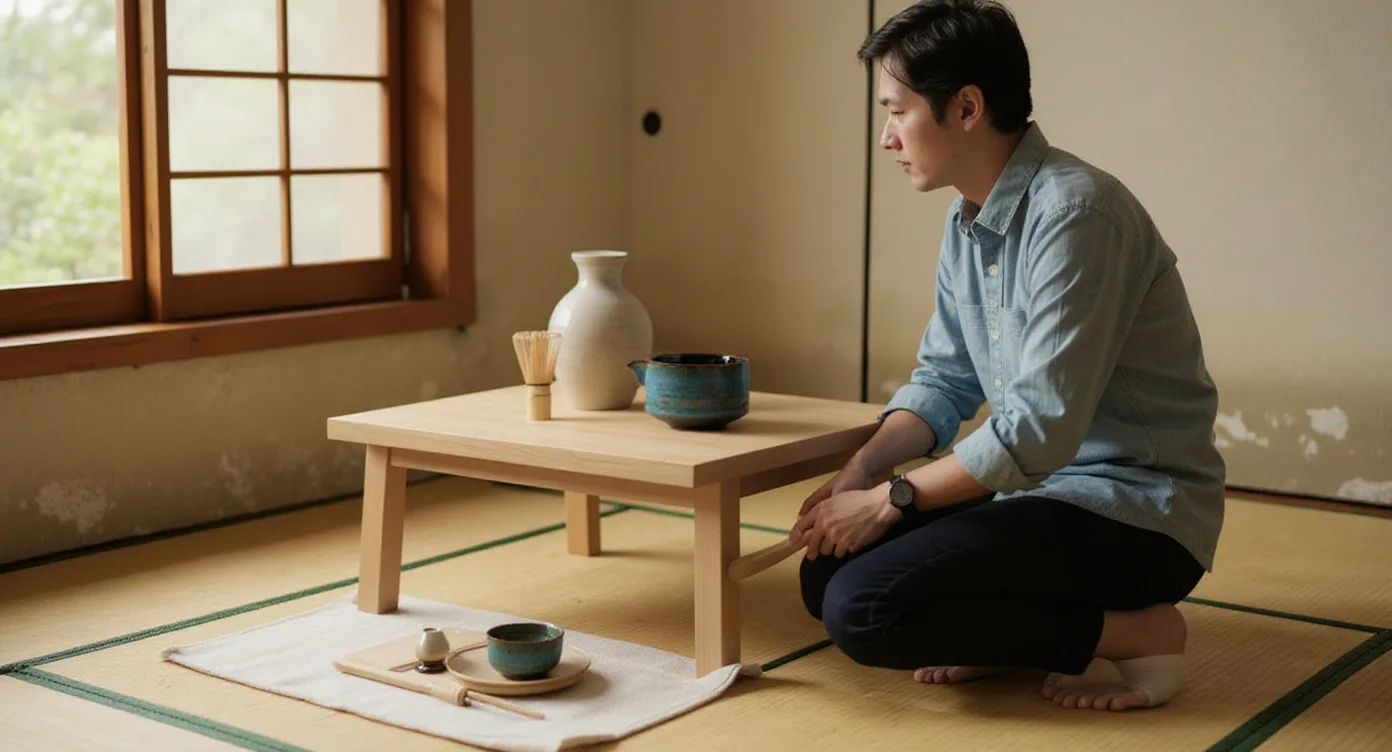
A cha-kaiseki follows the ichiju-sansai frame: rice, miso soup, a mukozuke of vinegared or raw fish, then a simmered bowl, a grilled dish, a shared seasonal platter, pickles and hot water poured over the rice crust. Sweets come last, and only then the tea. When I recreate that final moment at home I use a full matcha tea set with chasen and chawan, because whisking in a proper bowl turns the end of dinner into a small ceremony rather than a drink.

Ichigo ichie: one meeting, one menu
Tea culture holds that each gathering happens once and never repeats. The menu is written for the guests present, on that day, with what the market offered that morning. Two visits to the same kaiseki house in the same year produce two different dinners. It is also Ikigai in practice: a cook whose purpose is the meal in front of these people, tonight.
The kaiseki ryori course order, sakizuke to mizumono
The sequence is fixed, even if individual houses add or drop a course. It moves from light to rich and back to light, so you finish steady rather than heavy. Learning six or seven names is enough to follow any menu in Japan.
Sakizuke, hassun and the opening of the meal
Sakizuke is the opening bite, one or two mouthfuls, often served with the first cup of sake. Hassun follows in many houses: a shared tray pairing something from the mountains with something from the sea, the clearest statement of the season in the whole meal.
Mukozuke, wanmono, yakimono: the heart of the sequence
Mukozuke is the raw course, sashimi placed "on the far side" of the tray. Wanmono is the lidded clear soup, and it is the dish by which chefs are judged, because a thin dashi of kombu and katsuobushi hides nothing. Yakimono, the grilled course, is the richest point of the meal.
| Japanese name | Type of course | Technique | Typical example |
|---|---|---|---|
| Sakizuke | Amuse-bouche | Dressed, chilled | Tofu with sea urchin |
| Hassun | Seasonal platter | Mixed, shared | Sakura shrimp and mountain vegetables |
| Mukozuke | Raw course | Sliced | Sea bream sashimi |
| Wanmono | Lidded soup | Simmered in dashi | Clear broth with fish dumpling and yuzu |
| Yakimono | Grilled course | Charcoal grilled | Salt-grilled ayu or miso-marinated cod |
| Takiawase | Simmered vegetables | Slow simmered | Taro, pumpkin and lotus root |
| Shiizakana | Substantial dish | Hot pot or steamed | Beef shabu-shabu |
| Gohan, tomewan, kounomono | Rice, miso soup, pickles | Steamed, simmered, salted | Rice with bamboo shoots |
| Mizumono | Dessert | Fresh or chilled | Melon, warabimochi, matcha |
Rice, miso and mizumono to close
Rice arrives near the end, not at the start, and it signals that the meal is closing. It comes with pickles and a small bowl of miso soup. Mizumono literally means "water thing": seasonal fruit, a jelly, or a light wagashi, followed by tea. Nothing rich, nothing sugary.
Seasonal rhythm: spring to winter on the kaiseki table
Season is not decoration here. It decides the menu, the cooking, the ware and even the temperature of the sake. A kaiseki chef thinks in months rather than in four seasons, and often in 24 traditional micro-seasons.
Shun: cooking the ingredient at its exact peak
Shun is the short window when an ingredient is at its best. Bamboo shoots have a shun of a few weeks in spring. Matsutake mushrooms have theirs in autumn. Cooking within shun means doing very little to the ingredient, because it already tastes of its moment.
A kaiseki menu month by month, from bamboo shoots to crab
Spring brings bamboo shoots, clams, sakura leaves and pale green. Summer turns to hamo pike conger, ayu, chilled dishes and glass vessels. Autumn is matsutake, chestnut, saury and maple leaves laid on the tray. Winter means crab, turnip, yellowtail and slow simmered pots in heavy lidded ware.
Warm or chilled sake, depending on the season
Sake temperature shifts with the calendar and with the dish. Serving it correctly changes the aroma more than most people expect.
| Style | Approximate temperature | Season and use |
|---|---|---|
| Reishu (chilled) | 10 to 15 °C | Summer, with sashimi and light dishes |
| Hiya (room temperature) | Around 20 °C | Year round, with grilled fish |
| Nurukan (warm) | Around 40 °C | Autumn, with simmered dishes |
| Atsukan (hot) | Around 50 °C | Winter, with hot pots and miso |
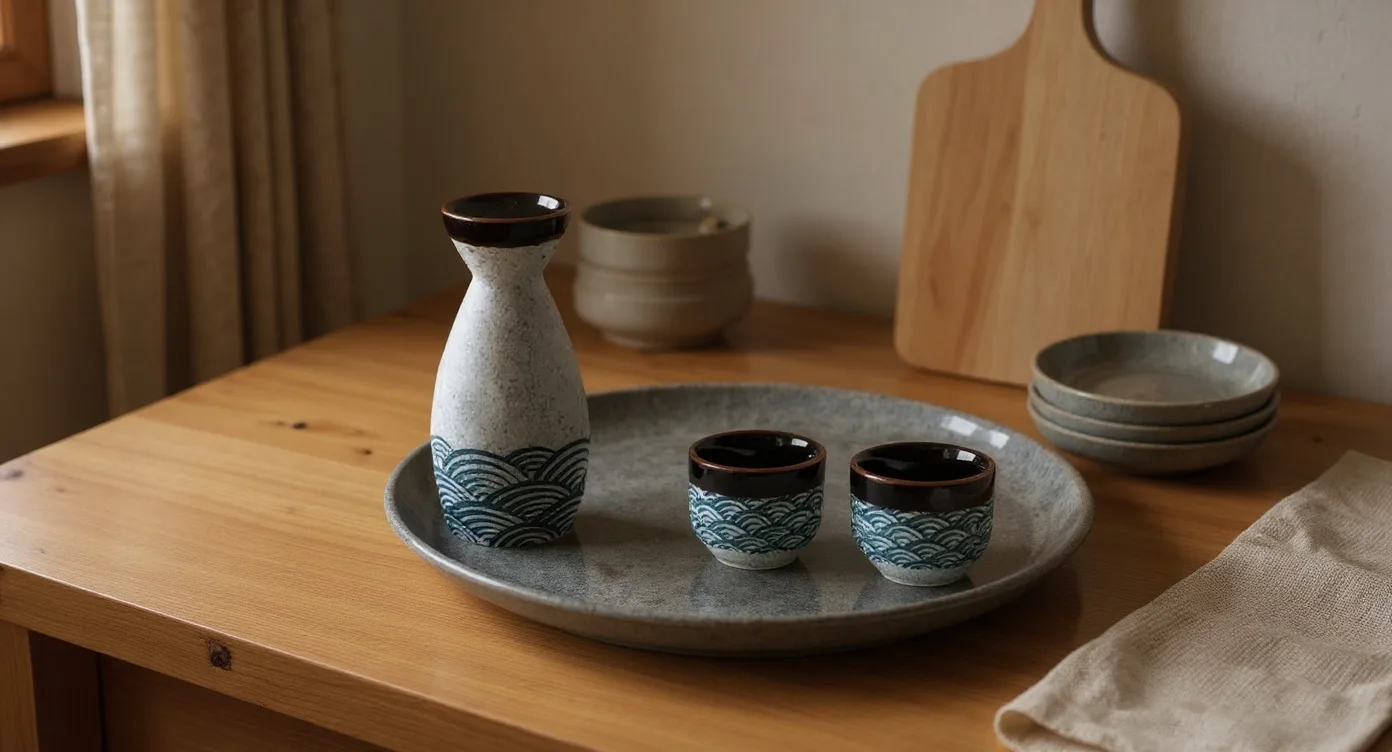
For warm service you need the pair kaiseki houses use: a tokkuri and ochoko, the flask and the small cup. The vintage sake set I keep for winter is the one I reach for with nurukan, because the thick ceramic holds heat long enough to pour two rounds.

Kaiseki serving ware: bowls, tea cups and sake flasks
In kaiseki, the vessel is part of the dish. A chef will choose the bowl first and cook towards it. Guests are expected to turn a piece over, look at the glaze, notice the potter. This is where the meal becomes an object lesson in craftsmanship.

Lacquer, ceramic and glass: choosing the vessel for the dish
Urushi lacquerware keeps soup hot and feels warm rather than scalding in the hand, which is why the clear soup arrives in a lidded lacquer owan. Stoneware suits grilled and simmered food. Porcelain suits sashimi. Glass appears in summer and almost never in winter.
| Vessel | Material | Course served in it |
|---|---|---|
| Owan (lidded bowl) | Lacquered wood | Clear soup, wanmono |
| Mukozuke (small deep dish) | Glazed ceramic or porcelain | Sashimi, vinegared fish |
| Kobachi (little bowl) | Porcelain, or glass in summer | Dressed vegetables, side dishes |
| Tokkuri and ochoko | Stoneware or porcelain | Sake, warm or chilled |
Why the ware changes with the season, not just the menu
Summer ware is shallow, pale and often transparent, so food looks cool. Winter ware is deep, dark and lidded, so it holds heat and looks substantial. Chefs also place a seasonal marker on the tray: a maple leaf in October, a sprig of pine in January.
Chopstick rests, trays and the empty space around the food
Nothing is centred and nothing fills the plate. Food sits slightly off-centre with generous empty space, a composition principle shared with ink painting. A hashioki, the small chopstick rest, keeps the tips off the table and gives the setting its finished look.
Setting a kaiseki-inspired table at home, step by step
You do not need a dozen matching sets. You need a few honest pieces and the correct layout, which takes ten seconds to lay once you know it.
The starter kit: bowls, small plates, tea cups, sake set
Rice bowl on the left, soup bowl on the right, side dishes behind them, chopsticks in front of you lying horizontally with the tips pointing left. A workable home kit is one rice bowl and one soup bowl per person, three or four small dishes each, a pair of tea cups each, and one sake set to share.
Plating small: portions, height and negative space
Halve the portion you would normally serve, then use a dish twice as large as feels sensible. Give the food a little height rather than spreading it flat. Leave the rim empty. One seasonal garnish is enough.
A simple three-course kaiseki-style dinner for guests
Serve a clear dashi soup with tofu and a strip of yuzu peel in a lidded bowl. Follow with a grilled fish fillet and a small dish of simmered seasonal vegetables. Close with rice, pickles and fruit. Then whisk matcha and serve it in a bowl, which returns the meal to where kaiseki started.
FAQ
These are the questions readers send me most often before a first trip to Japan or a first booking. They cover the difference with omakase, what a dinner costs, how long the sequence runs, where to eat one, and what to wear. Short answers, based on how kaiseki is actually served today.
What is kaiseki vs omakase?
Kaiseki follows a fixed course structure with a set order and one technique per dish. Omakase means "I leave it up to you", so the chef improvises around what was bought that day, most often at a sushi counter. A kaiseki meal is a form. An omakase is a delegation of choice.
How much does a kaiseki dinner cost?
It varies widely. A lunch kaiseki in a modest Kyoto restaurant is far cheaper than dinner at an established house, where the bill per person can reach several tens of thousands of yen. A ryokan dinner is usually included in the room rate, which makes it the most accessible way to try one.
How many courses are in a kaiseki meal?
Typically eight to fourteen. Cha-kaiseki in the tea ceremony is shorter, closer to the ichiju-sansai frame plus a shared platter and sweets. Restaurant kaiseki ryori tends to be longer because it adds sake courses.
Where can you eat kaiseki in Japan?
Kyoto is the historic centre, and the Gion and Pontocho districts hold many of the classic houses. Kanazawa is known for its seafood versions. Outside cities, a stay at a ryokan in an onsen town almost always includes a kaiseki dinner served in your room or a private dining room.
What should you wear to a kaiseki dinner?
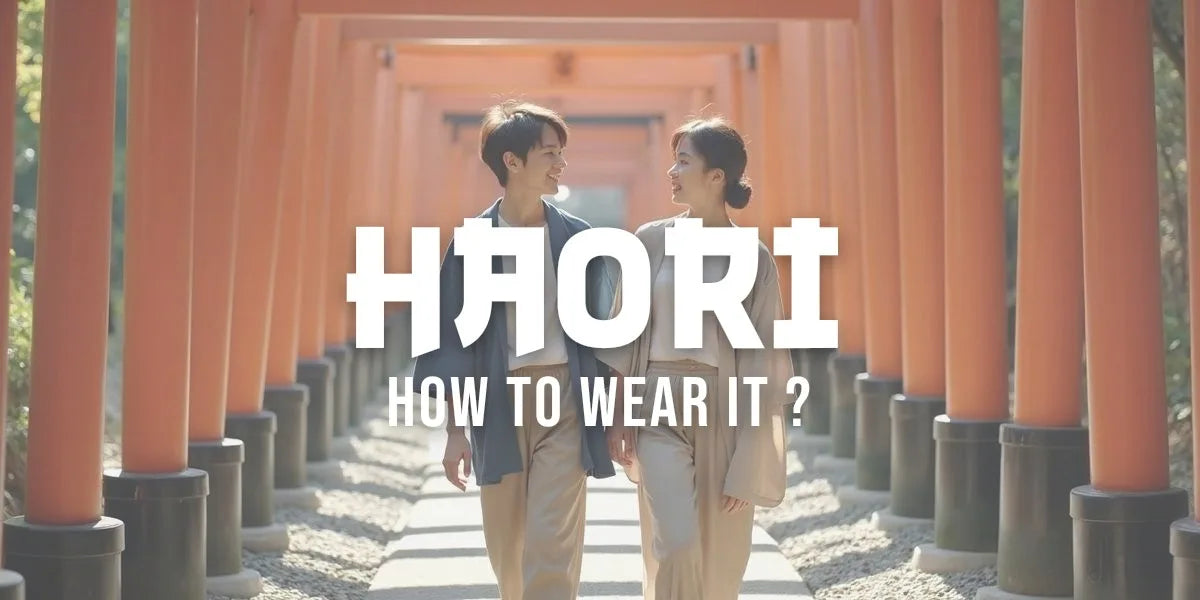
Smart and understated. You will often sit on tatami and remove your shoes, so wear clean socks and clothing you can kneel in comfortably. Skip strong perfume, since it interferes with the aroma of the dashi and the tea. A dark haori (羽織) over simple clothes works well and reads as respectful without looking like costume.
If you want to build the table before you build the menu, our selection of Japanese tableware is where I would start, with one soup bowl, one sake set and a pair of tea cups. Add the rest slowly, season by season.
Explore the Japanese Tableware collection
Browse our Japanese tableware to build your own table: lidded bowls, small plates, handleless tea cups, sake flasks and matcha sets.
Browse the collection →