
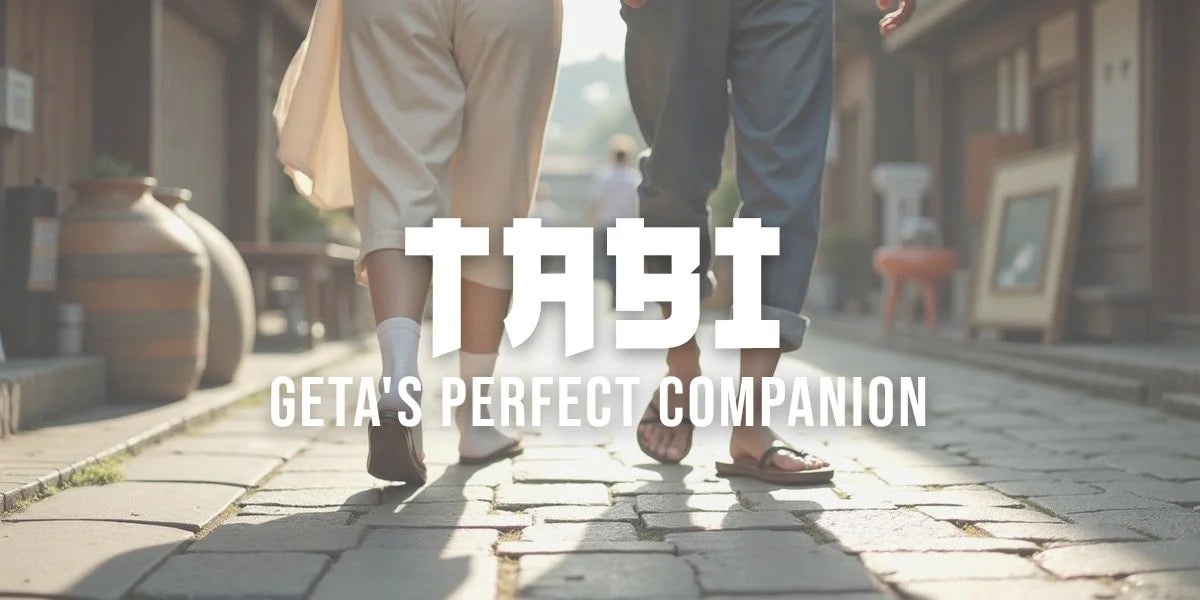
The first time I tried geta with ordinary cotton socks, I lasted about ten minutes before a red mark appeared across my toes. With geta sandals, the sock that works is the tabi: its split between the big toe and the second toe lets the hanao (the V-shaped thong strap) sit exactly where it should, so nothing rubs and nothing slides. Regular socks with geta sandals cause the strap to press a seam into your toes and your foot starts slipping on the wood. In Japan, geta (下駄, wooden clogs) are traditionally worn barefoot with a yukata in summer, and with tabi when it is cold or the occasion is formal. That is exactly how you should think about it.
In short
- Tabi socks (足袋) are split-toe, so the geta strap passes between your toes instead of pressing on fabric.
- Barefoot geta is the classic summer choice with a yukata; tabi are for cold weather, formal outfits and long walks.
- Regular socks cause slipping and toe pain because the hanao has nowhere to sit.
- Sizing matters more than with normal socks: tabi should fit snug, with the toe split landing exactly on your own toe gap.
Do you wear socks with geta sandals in Japan?
Both answers are correct, and the season decides. Geta are summer footwear in most of Japan, worn with a yukata (浴衣, unlined cotton kimono) at festivals and fireworks displays. In that context, bare feet are the norm. Once the weather cools, or the outfit becomes formal, tabi appear.
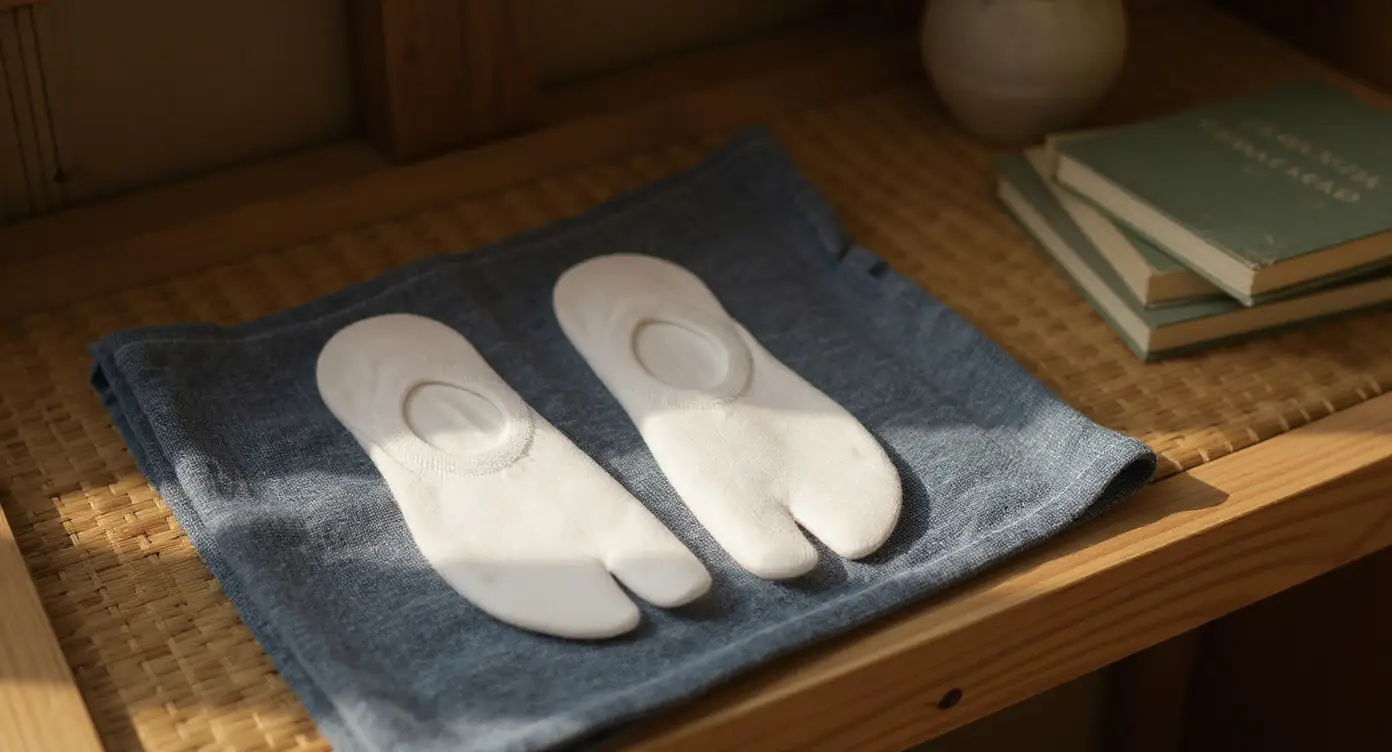
Barefoot geta with a yukata in summer
A yukata is casual summer wear. Geta worn with it are meant to be slipped on and off easily, and the raised wooden supports (called ha, the "teeth") keep the sole off hot or wet ground. Bare skin against the wood also grips better than any fabric. If you buy your first pair of geta for a summer festival, plan to wear them barefoot and break them in at home first.
When tabi socks come out: winter and formal wear
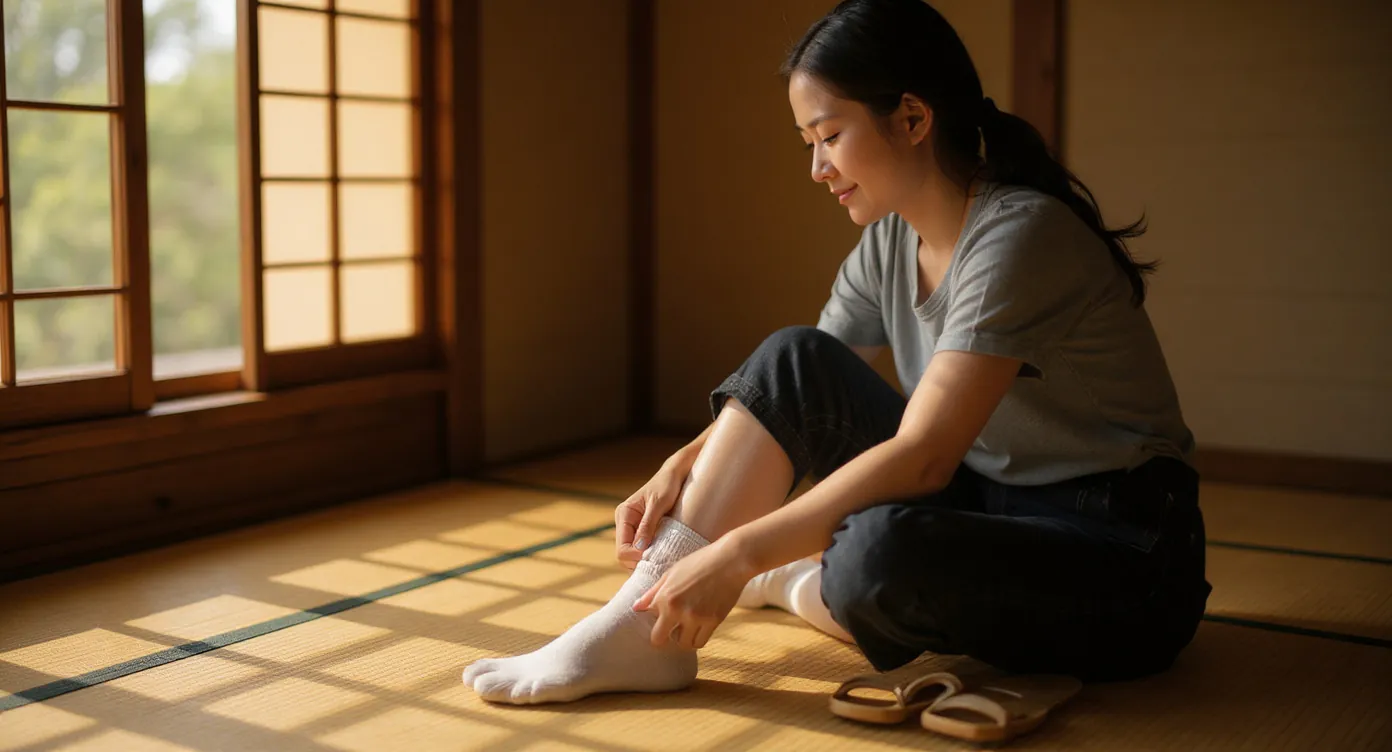
Tabi are the standard sock of Japanese formal dress. With a kimono, white tabi are worn with zori (草履, flat formal sandals), and the same split-toe shape works with geta in colder months. Autumn and winter outings, tea gatherings and weddings all call for tabi. Traditional tabi close at the back with small metal clasps called kohaze; modern stretch versions pull on like regular socks.
What locals actually notice about socks with sandals
The "socks with sandals is a fashion crime" idea is a Western reflex, not a Japanese one. In Japan, split-toe socks with thonged footwear are ordinary. What does get noticed is a mismatch: thick sports socks stuffed under a delicate strap, or white formal tabi worn with beach-style sandals. Match the sock to the level of the outfit and you are fine.
Why tabi socks fit geta better than regular socks
The difference is mechanical, not decorative. A geta holds your foot with a single V-strap anchored at three points on the sole. Everything depends on that strap sitting deep in the gap between your first and second toe. A tabi keeps that gap open. A normal sock closes it.
How the hanao strap sits between your toes
The hanao strap is meant to rest against skin or a thin split seam, with only light pressure. Your grip comes from the toes gently holding the strap, not from squeezing your foot into the sandal. Put a closed sock in between and the strap has to force a fold of fabric down into the gap. That fold becomes a ridge, and the ridge becomes the sore spot. The split-toe pairs I keep by the door are simply the plain cotton tabi socks I reach for when I want to wear geta on a cool evening without thinking about my feet.

Grip on a wooden sole: why plain socks slide
A geta's wooden sole is smooth, often lacquered or sanded to a fine finish. Cotton knit against smooth wood has almost no friction, so your heel travels forward on each step and you unconsciously curl your toes to stop it. Tabi are woven tighter and cut close to the foot, and many have a reinforced sole panel. Combined with the strap sitting properly, your foot stays put.
Seams, pressure points and blisters
Standard socks have a toe seam that runs straight across the ball of the foot. That seam ends up exactly under the strap. Two hours of walking with a seam pinned under a thong is how blisters form between the toes. Tabi move the seam to the sides of the split, away from the pressure line. If your geta are brand new, loosening the hanao slightly by hand where it crosses the top of your foot solves most first-wear pain.
Tabi socks vs regular socks with geta: a side-by-side
Here is the honest comparison, based on wearing all three options through a full day of walking. Bare feet win in summer, tabi win everywhere else, and regular socks are a short-term fix rather than a solution.
| Criterion | Tabi socks | Regular socks | Barefoot |
|---|---|---|---|
| Comfort on a long walk | Good, no seam under the strap | Poor after 30 minutes | Good once broken in |
| Hold on the sole | Stable | Slippery | Very stable |
| Formality | Suits kimono and formal wear | Casual at best | Casual, correct with yukata |
| Season | Autumn, winter, cool evenings | Emergency use only | Summer |
| Care | Machine wash cold, air dry | Standard wash | Wipe the sole, air the geta |
Formality: what works with yukata, kimono or jeans
With a yukata, bare feet or a discreet dark tabi. With a kimono, white tabi and, more often, zori rather than geta. With jeans, anything goes, and this is where coloured or patterned tabi are fun. The one pairing to avoid is white formal tabi with a very casual outfit; the contrast reads as a costume error rather than a style choice.
Price, durability and washing
Tabi are made from a cotton blend in most modern versions, which keeps them stretchy and easy to wash. Turn them inside out, wash cold, air dry flat. Heat shrinks the toe split, and a shrunken split lands in the wrong place.
How to size tabi socks for your geta
Tabi sizing is stricter than normal sock sizing because the split has to align with your own toe gap. A pair that is one size too big will fold at the toes and defeat the whole design. Japanese sizes also run about one size smaller than US and EU equivalents, so measure before ordering.
Measuring your foot in cm before ordering
Stand on a sheet of paper, mark the back of your heel and the tip of your longest toe, and measure the distance in centimetres. That number is your Japanese size. Japanese footwear and tabi are sold in cm, which removes most of the confusion of US/EU/JP shoe size conversion. If you are between two sizes, take the smaller one for tabi and the larger one for geta.
| Foot length | JP size | US women | US men | EU (approx.) |
|---|---|---|---|---|
| 23 cm | 23 | 6 | 4.5 | 36-37 |
| 24 cm | 24 | 7 | 5.5 | 38 |
| 25 cm | 25 | 8 | 7 | 39-40 |
| 27 cm | 27 | 10 | 9 | 42-43 |
JP, US and EU size equivalences explained
The table above is a guide, not a guarantee, because width varies more than length. If your feet are wide, look for stretch cotton pairs rather than rigid ones, and expect the ankle to sit slightly lower. The formal white tabi I keep for kimono occasions are the clearest example of why a snug fit matters: any wrinkle across the instep is visible on a dress outfit.

Ankle height, kohaze clips and stretch cotton
Everyday tabi stop just above the ankle bone. Formal versions sit higher and close with kohaze, the small metal clasps that hook into fabric loops at the back. Higher tabi stay put under a kimono hem; lower ones look better with trousers. Check that the toe split sits at your natural toe gap when standing, not when sitting.
Styling socks and geta beyond the yukata
Geta are not restricted to festival dress. Worn with modern clothes they read as a deliberate choice, and the tabi is what makes the outfit look intentional rather than improvised.
Geta and tabi with jeans and a white tee
Straight dark jeans cropped just above the ankle, a white t-shirt, black tabi and natural wood geta. The cropped hem is important; a long hem dragging over the sandal hides the shape and catches under the teeth. A black haori (羽織, short kimono jacket) over the same outfit turns it into an evening look.
Patterned Japanese socks for conventions and cosplay
For conventions, printed Japanese socks with waves, cranes or geometric motifs work with geta and photograph well. They are also the easy answer if a character wears tabi as part of the costume. Keep the pattern on one element only: patterned socks plus a patterned kimono fights for attention.
Socks with geta sandals: quick answers
A few practical points that come up in messages every summer, kept short.
Can I wear tabi with zori as well?
Yes, and that is their most common use. Zori are the flat formal sandals worn with kimono, and white tabi are the standard pairing.
Do geta hurt at first?
Usually a little, for the first two or three wears. The strap softens and your toes adapt. Ten-minute sessions at home speed this up.
How do I wash tabi without ruining the split?
Cold water, inside out, no tumble drier. Heat shrinks the toe area first, which shifts the split out of alignment.
Are tabi unisex?
Yes. Sizing is by foot length in centimetres, so the same design fits men and women.
FAQ
Do you have to wear socks with geta?
No. Geta are traditionally worn barefoot with a yukata in summer, and that remains the most common way to wear them in Japan. Tabi are added for cold weather, formal outfits or extra comfort on a long day.
Is it rude to wear socks with sandals in Japan?
Not at all, as long as the sock is a split-toe one. Tabi with thonged footwear is standard Japanese dress. The only awkward combination is a thick closed-toe sock jammed under a thin strap.
Can I wear normal socks with geta if I don't have tabi?
You can, for a short walk. Expect the strap to press the toe seam into your foot and your heel to slide on the wood. If it is your only option, choose the thinnest socks you own and keep the distance short.
Are tabi socks warm enough for winter?
Cotton blend tabi handle autumn and mild winter days well, especially with a kimono or a long coat. For genuinely cold weather, thicker knitted or fleece-lined split-toe versions exist.
What size tabi socks should I order?
Measure your foot length in centimetres and order that number as your Japanese size. Japanese sizes run about one size smaller than US and EU, so do not convert from your sneaker size. Between two sizes, take the smaller one so the toe split stays aligned.
If you want to try the split-toe difference for yourself, our tabi socks collection gathers the plain cotton pairs for everyday wear and the white ones for formal outfits. Take your foot measurement in centimetres first, and the rest is easy.
Explore the Tabi Socks collection
Browse our tabi socks: split-toe cotton pairs in JP, US and EU sizes, in plain colors and traditional patterns.
Browse the collection →