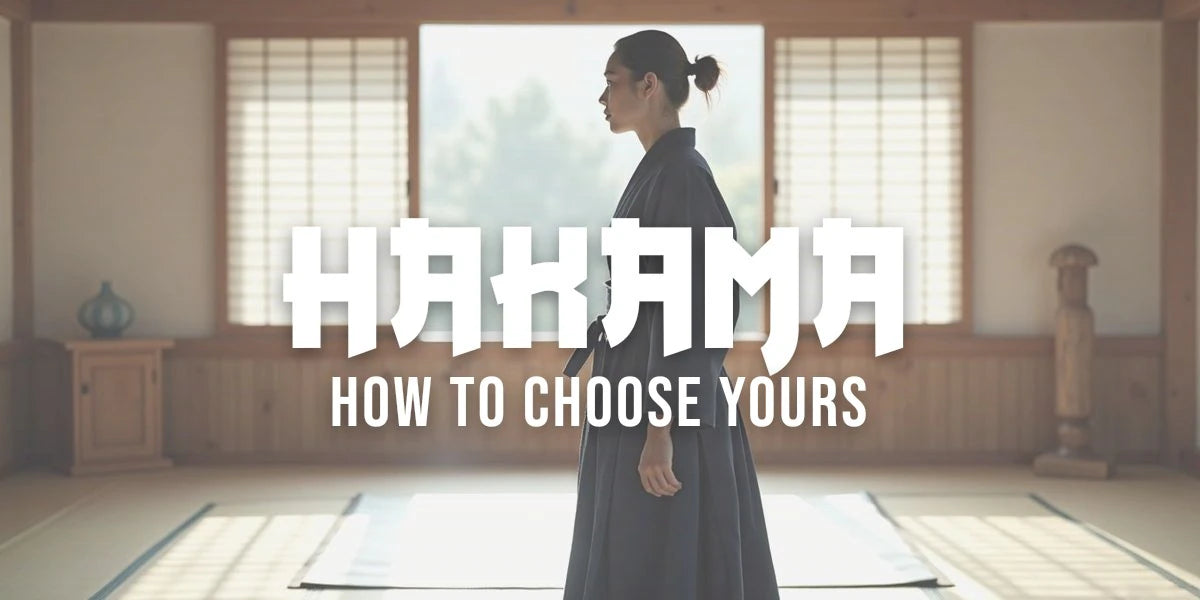
The first hakama I tied was too long. I knelt for seiza, stood up, and stepped straight onto my own hem. That is the moment most people learn the real rule. To choose a hakama size, measure the outside of your leg from the top of your hip bone down to the middle of your outer ankle bone: that number, not your waist or your trouser size, is what a hakama size refers to. The hem should finish just above the ankle bone so it never catches under your heel when you step or kneel. The himo ties then adjust the waist over a fairly wide range, which is why height and leg length decide the size while the waist only decides comfort.
Key points
- Hakama size follows leg length, not waist: measure from your hip bone straight down to the outer ankle bone.
- The hem should stop just above the ankle bone for training, and can sit slightly lower for ceremonies.
- Polyester holds its pleats through washing, cotton and indigo blends fall better but shrink and need ironing.
- The himo ties and the koshiita back plate do the real fitting work, so a waist measurement alone tells you very little.
The hakama (袴) is a pleated garment worn over a kimono or training top. It was worn by samurai, then kept alive by martial arts schools, shrine attendants and graduation ceremonies. It belongs to the wider family of wafuku, traditional Japanese dress.
How to choose hakama size with a tape measure
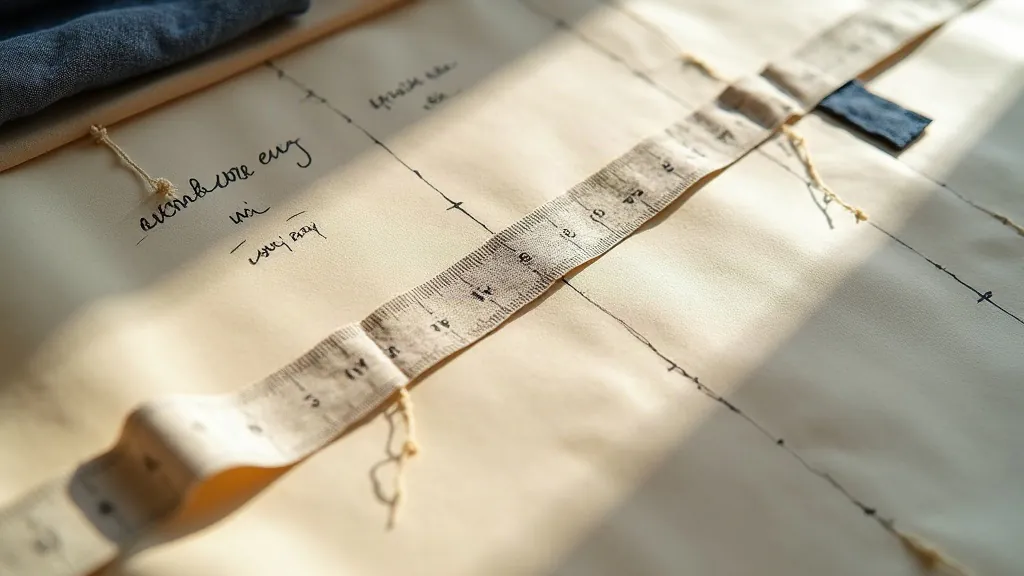
Japanese makers label hakama by the outer seam measurement in centimetres. Measure standing barefoot in thin clothes, with a soft tape flat down the outside of your leg from the top of your hip bone to the middle of your outer ankle bone. That figure is your hakama length. For training, order the size closest to it or one step shorter. For a ceremony, you can go one step longer so the hem drapes lower.
Hakama size chart: height, outer seam and himo lengths
Use your own measurement first. The height column is a sanity check, not a rule, because leg length varies a lot at the same stature.
| Japanese size | Outer seam | Suggested height | Front himo (approx.) | Back himo (approx.) |
|---|---|---|---|---|
| 23 | about 87 cm / 34 in | 155–163 cm | about 240 cm | about 165 cm |
| 25 | about 94 cm / 37 in | 163–170 cm | about 250 cm | about 170 cm |
| 27 | about 101 cm / 40 in | 170–178 cm | about 260 cm | about 175 cm |
| 28+ | about 105 cm / 41 in | 178 cm and up | about 270 cm | about 180 cm |
The himo ties are the long straps at the front and back. Larger waists need the longer himo of a bigger size even when the leg length says otherwise. When I want a safe first purchase, I point customers to the unisex Japanese Hakama Pants, because the cut is straight enough that a 94 cm measurement really does land on the size the chart promises.

Common hakama fit mistakes to avoid before ordering
- Measuring over jeans. Denim at the hip adds up to 3 cm and pushes you a full size up.
- Aiming at the floor. Measuring to the ground instead of the ankle bone gives a hem you will tread on.
- Using your US trouser size. A 32 waist tells nobody anything about your leg length.
- Measuring from the natural waist for a men's cut. The men's hakama sits lower, on the hips.
- Forgetting shoes. Martial arts are barefoot. Street wear with zori or boots may want one step longer.
Men's and women's hakama: what changes in the cut
The pleats and shape are the same. The women's hakama is tied higher, at the natural waist or just under the bust. Because the starting point is higher, the garment covers more of your body with the same length. Subtract 5 to 10 cm from your hip-to-ankle measurement depending on how high you plan to tie it. I suggest the Hakama Pants Women model to anyone tying at the waist for a ceremony.

Men's hakama and the koshiita back plate
The men's hakama sits on the hips, below the navel at the front and lower at the back, which gives the silhouette its length. The koshiita back plate is the stiffened panel at the back of the waistband. It should rest in the small of your back, flat and stable, sitting on top of your obi. If it rides up between your shoulder blades, your back himo are tied too high. If it digs in, the hakama has slipped down and needs retying.
Hakama kimono sets: sizing the top and the pants together
With a set, size the top and the bottom separately. The top is chosen by sleeve length and shoulder width, the hakama by leg length. A kimono or keikogi top that is too short will pull out from under the waistband every time you raise your arms. Check that the top reaches at least mid-thigh so there is enough fabric to stay tucked.
Black, white or navy hakama: choosing by practice
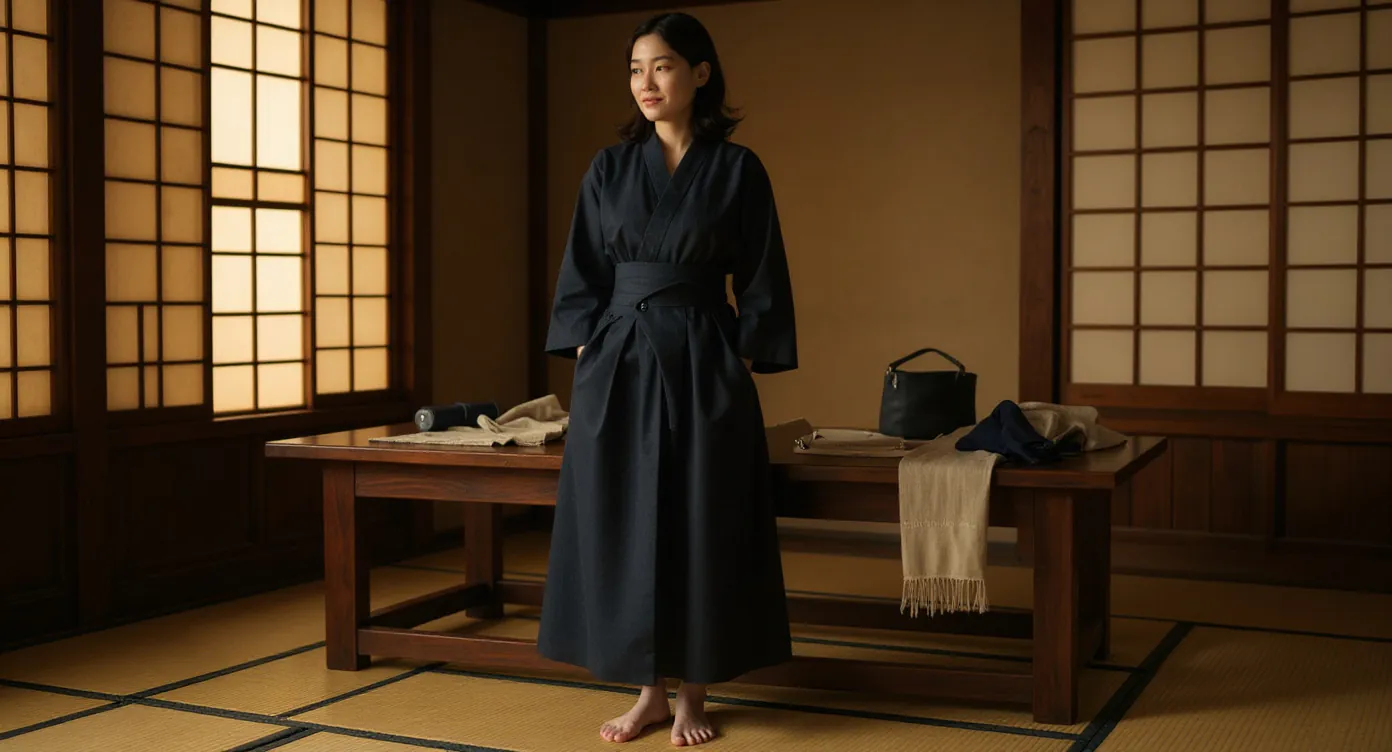
Colour is rarely a free choice. Many dojos set it, and some reserve the hakama itself for certain grades. Ask your instructor before ordering, because an unexpected white hakama in a black-only kendo hall is an expensive lesson.
| Colour | Where it is expected | Formality | Care |
|---|---|---|---|
| Black | Kendo, iaido, formal wear | High | Easy, hides marks, fades in sun |
| Navy / indigo | Kendo, aikido, iaido | High | True indigo bleeds at first |
| White | Ceremonies, demonstrations, some aikido | Very high | Marks fast, needs an underlayer |
Black and navy hakama for training and formal wear
Black and navy dominate martial arts and formal settings. A kendo hakama is almost always indigo or black. Aikido dojos usually allow either. Iaido leans formal, so black is the default. For a first purchase that will be accepted almost anywhere, I reach for the Black Hakama more than any other piece in the shop.
White hakama and indigo cotton
White reads as the most formal and fragile. It shows dust within one session and needs an opaque layer underneath because light fabric becomes see-through under stage lighting. Traditional indigo cotton hakama are dyed with a pigment that sits on the surface of the fibre. For the first weeks the colour transfers onto your hands and keikogi. Wash it alone in cold water several times before wearing it with white. The colour then ages slowly into something no new garment can imitate, fading at the pleat edges and knees, which is exactly what Wabi-Sabi describes.
Polyester vs cotton hakama: pleats, weight and washing
Fabric decides two things you will live with daily: how the pleats survive, and how heavy the garment feels after twenty minutes of movement. There is no best answer, only a trade between maintenance and drape.

| Fabric | Weight | Pleat retention | Shrinkage | Ironing |
|---|---|---|---|---|
| Polyester | Light | Excellent, permanent press | Almost none | Rarely needed |
| Tetron (poly-cotton) | Medium | Good | 1–2% | Occasional |
| Cotton / indigo | Heavy | Needs repressing | 3–5% | Yes |
Polyester hakama for pleat retention and fast drying
A polyester hakama keeps its folds through the washing machine, dries overnight and barely shrinks. It is the practical answer for anyone training several times a week. I recommend the lightweight Traditional Japanese Pants to anyone trying the garment without committing to a heavy indigo piece.

Cotton and tetron hakama: fabric weight and drape
Cotton is heavier and that weight is the point. It makes the hakama pleats swing and settle with each step instead of fluttering. Tetron blends sit in the middle: some of the drape of cotton, much of the easy care of polyester. Heavier cotton suits iaido and ceremonial wear; lighter fabric suits summer and travel.
Washing and folding a hakama without losing the pleats
- Wash cold, on a gentle cycle, alone for the first few washes if the fabric is indigo.
- Skip the tumble dryer. Hang it upside down by the himo so the weight pulls the pleats straight as it dries.
- Fold along the existing pleats while slightly damp, stack the folds, then keep it flat overnight.
- Iron only if needed, pleat by pleat, on medium heat.
What to wear with a hakama: shirt, obi and himo ties
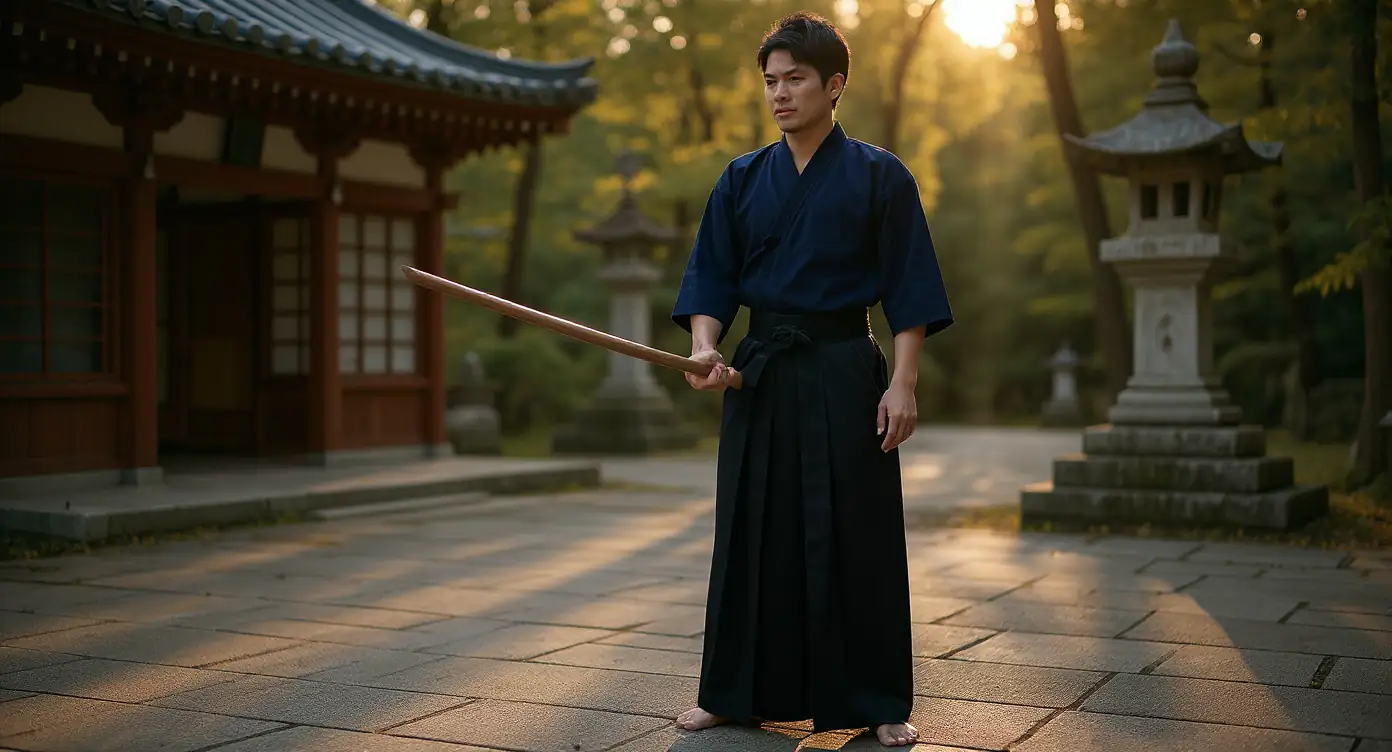
A hakama is never worn alone. It needs a tucked top underneath and a belt to sit on. Dress in this sequence: put on the top and tuck it smooth, front and back. Tie the obi at the waist, low enough to support the hakama. Bring the front himo around the back, cross them, return them to the front and knot them. Rest the koshiita on top of the obi knot at the back. Wrap the back himo forward and tie them off at the front.
Tying the hakama himo over an obi belt
The obi does the work a belt loop cannot. It gives the himo a firm ridge to grip and stops the waistband from sliding down over the hips. The one I tie most often under a hakama is the Samurai Obi Belt, because it is wide enough to hold the back plate flat without adding bulk at the front.

Japanese shirts and keikogi tops
For training, a keikogi in matching cotton is the standard. Outside the dojo, a plain white t-shirt or a Japanese-style shirt with a straight hem works well, tucked in fully. Avoid thick knitwear at the waist: bulk under the himo makes the knot slip. A black hakama over a white shirt with the pleats falling clean is one of the simplest ways to wear this piece in a city.
Tabi socks, zori and what goes under a hakama
Underneath, wear normal underwear plus a light base layer if the fabric is pale. For martial arts, feet stay bare. For ceremonies or street wear, tabi socks with zori or geta are the traditional pairing, though ankle boots work under a dark hakama with no awkwardness. Keep the hem just above the ankle bone and the footwear question mostly answers itself.
FAQ
Below are the questions I hear most often when customers are sizing their first hakama or choosing between fabrics. They cover fit, layering, care and the conversions that matter when you are ordering from outside Japan.
Can anyone wear a hakama?
Yes, the hakama is worn by men and women, and outside martial arts it carries no restriction. Within a dojo, the rules belong to the school. For ceremonies, graduations and everyday wear, anyone can wear one as long as it is worn respectfully and fitted properly.
What do you wear under a hakama?
A tucked-in top, usually a keikogi or a kimono, plus an obi belt at the waist. Underneath that, normal underwear and a light base layer if the hakama is white or thin. In martial arts the feet stay bare; otherwise tabi socks are the traditional choice.
Where should a hakama sit on the waist?
For men, on the hips, below the navel at the front, with the koshiita resting in the small of the back over the obi. For women, higher, at the natural waist or just under the bust. That difference is why a women's cut needs 5 to 10 cm less length than your hip-to-ankle measurement.
Do hakama shrink after washing?
Cotton and indigo cotton hakama shrink roughly 3 to 5% in the first washes, mostly in length. Polyester and tetron blends shrink very little. If you are between sizes in cotton, take the larger one.
How do Japanese hakama sizes convert to US and EU sizes?
They do not convert directly, because a hakama size is a length in centimetres rather than a body size. Measure from the top of your hip bone to your outer ankle bone and match that number to the chart. Japanese garments run about one size smaller than US and EU equivalents, so never order by your usual trouser size.
If you have your measurement in hand, you can compare lengths, weights and cuts across the hakama pants collection and find the one that matches your practice.
FAQ
` et `Can anyone wear a hakama?
`. J'ai inséré un paragraphe d'introduction de 2 phrases qui annonce le contenu de la section FAQ (fit, layering, care, conversions de tailles) dans la voix pédagogique et chaleureuse de Kumiko. Aucun autre élément n'a été changé.Explore the Hakama Pants collection
In the Hakama Pants collection you'll find men's, women's and ceremonial cuts with outer-seam measurements and height ranges listed for each size.
Browse the collection →